
How to Read Atul Gawande’s Books
Dr. Atul Gawande—a practicing surgeon, public health researcher, and staff writer for The New Yorker—has changed how both medical professionals and laypeople view healthcare. Rather than writing dry clinical analyses, Gawande uses narrative journalism, blending patient stories, history, philosophy, and personal reflections. Because all of his works are standalone non-fiction books, there is no fictional continuity or rigid timeline to worry about. However, his books follow a clear intellectual evolution. Reading them in a specific order highlights how his perspective expanded from individual surgical performance to global health systems, and finally to the existential questions of human mortality.
The Recommended Starting Point
If you are new to Atul Gawande, we recommend starting with one of two books, depending on your primary interest:
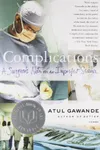
- For a gripping, behind-the-scenes look at the operating room: Start with his debut, Complications: A Surgeon's Notes on an Imperfect Science (2002). This book captures the raw anxiety, uncertainty, and learning curve of a young surgical resident. It is the perfect introduction to his honest, self-reflective style.
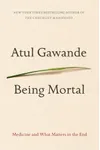
- For his most profound, emotionally resonant, and universally acclaimed work: Start with Being Mortal: Medicine and What Matters in the End (2014). This bestseller examines how modern medicine handles aging, frailty, and death, arguing that the quality of life is far more important than merely extending it through invasive procedures. It is a deeply personal book that resonates with anyone facing the aging of loved ones or their own mortality.
Atul Gawande Books in Publication Order
Following Gawande's core books in the order they were published allows you to join him on his career journey from a young resident to an experienced surgeon and policy advisor. Here is his main non-fiction bibliography in order of release:
1. Complications: A Surgeon's Notes on an Imperfect Science (2002)
Written while Gawande was still completing his surgical residency, this collection of essays is divided into three parts: Fallibility, Mystery, and Uncertainty. He pulls back the curtain on the medical profession, detailing surgical mistakes, unexplained medical phenomena (such as chronic pain and blushing), and the difficult decisions doctors must make with incomplete information. It was a finalist for the National Book Award.
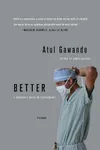
2. Better: A Surgeon's Notes on Performance (2007)
While Complications focuses on the inevitability of human error, Better explores how doctors can overcome these limitations to achieve excellence. Gawande examines three key virtues of successful medical practice: diligence (such as the simple, yet vital act of washing hands), doing right (handling malpractice and ethics), and ingenuity (improving treatment under constraint). It shows a writer transitioning into thinking about systemic, institutional improvement.
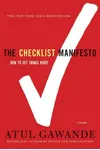
3. The Checklist Manifesto: How to Get Things Right (2009)
This book grew directly out of Gawande's work with the World Health Organization to design a global safe-surgery checklist. He argues that in our increasingly complex world, human memory and training are no longer enough to prevent avoidable errors. By examining industries like aviation and skyscraper construction, Gawande demonstrates how simple, structured checklists can save lives, reduce infection rates, and streamline teamwork in high-stress environments.
4. Being Mortal: Medicine and What Matters in the End (2014)
Gawande's most famous and impactful book shifts the focus from fixing the body to caring for the person. Inspired by his own patients' experiences and his father's struggle with terminal cancer, Gawande criticizes the medical establishment's tendency to prioritize survival over comfort, dignity, and personal autonomy. It is a landmark book that has reshaped end-of-life care conversations worldwide.
The Best American Science Writing & Anthologies
In addition to his four core books, Gawande is frequently listed in connection with various anthologies. It is helpful for readers to understand his role in these publications to avoid confusion:
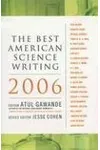
- The Best American Science Writing 2006 (Editor): Gawande served as the guest editor for the 2006 volume of this popular annual series published by Ecco Press. He selected and introduced twenty-one of the year's best science essays by various journalists and researchers. Note that while online retail databases sometimes list Gawande as an author across the entire Best American Science Writing series (spanning 2000 to 2012), he was only the guest editor for the 2006 edition.
- Anthology Contributions: Gawande’s own essays have been anthologized in collections like The Best American Science Writing 2000 and the unique essay collection Scoot Over, Skinny: The Fat Nonfiction Anthology (2005).
What to Know Before You Start
Gawande's writing is highly accessible, but knowing his background helps ground the reading experience. He grew up in Ohio, the son of two immigrant physicians. He studied biology and political science at Stanford, earned a Rhodes Scholarship at Oxford, and completed his medical degree at Harvard Medical School. Alongside his writing career, he is a professor at Harvard, founder of the health systems innovation center Ariadne Labs, and was appointed to a senior role at the U.S. Agency for International Development (USAID) in 2021.
His books are largely expanded from essays originally published in The New Yorker, such as "The Checklist" (which became The Checklist Manifesto) and "Letting Go" (which laid the groundwork for Being Mortal). If you enjoy his books, his archive of New Yorker articles is an excellent place to read his shorter, policy-focused commentary.