
Where to Start with Avi Loeb's Books
If you are looking to dive into the mind of the Harvard astrophysicist who captured global headlines by suggesting an alien spacecraft visited our solar system, you should start with his popular science duology. Unlike his dense academic works, these books are written for a general audience and read like scientific detective stories.
The Recommended Reading Order
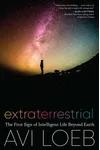
- Extraterrestrial: The First Sign of Intelligent Life Beyond Earth (2021) - This is the essential entry point. Loeb details the detection of the interstellar object ‘Oumuamua in 2017 and presents his controversial hypothesis that it was not a natural comet or asteroid, but rather a piece of advanced extraterrestrial technology.
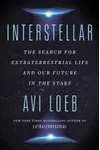
- Interstellar: The Search for Extraterrestrial Life and Our Future in the Stars (2023) - Once you have finished Extraterrestrial, this follow-up is the natural next step. It expands on the search for technosignatures, details the foundation of the Galileo Project, and proposes a pragmatic blueprint for how humanity should prepare for future encounters with alien intelligence.
Publication Order of Avi Loeb's Works
For readers who want to follow the evolution of Loeb's career—moving from deep cosmology to public advocacy for astrobiology—reading in publication order is highly rewarding. Here is how his major standalone books and textbooks appeared:
- First Light in the Universe (2008) - Co-authored academic monograph.
- How Did the First Stars and Galaxies Form? (2010) - Academic textbook.
- The First Galaxies in the Universe (2013) - Co-authored academic textbook.
- Extraterrestrial: The First Sign of Intelligent Life Beyond Earth (2021) - First major popular science book.
- Life in the Cosmos: From Biosignatures to Technosignatures (2021) - Co-authored graduate-level textbook.
- Interstellar: The Search for Extraterrestrial Life and Our Future in the Stars (2023) - Second popular science book.
Categorizing Avi Loeb's Books: Popular Science vs. Academic Textbooks
One of the most common pitfalls for new readers is buying one of Loeb's books expecting a casual popular science read, only to find themselves staring at complex differential equations and plasma physics diagrams. To avoid this, it is crucial to understand how his bibliography is divided.
1. Popular Science (Accessible to All Readers)
These books require no background in advanced mathematics or physics. Loeb focuses on narrative, philosophical implications, and the scientific method:
- Extraterrestrial (2021): Focuses on the anomalies of the interstellar object ‘Oumuamua.
- Interstellar (2023): Focuses on the search for interstellar meteors, anomalous aerial phenomena, and the future of human space exploration.
2. Academic Textbooks & Graduate Monographs
These are intended for physics students, researchers, and professional astronomers. They are highly technical and formula-heavy:
- First Light in the Universe (2008): Written with A. Ferrara and R. S. Ellis, this Springer publication covers the early stages of cosmic reionization.
- How Did the First Stars and Galaxies Form? (2010): Published by Princeton University Press, this serves as an introduction to cosmology for graduate students.
- The First Galaxies in the Universe (2013): Written with Steven R. Furlanetto, this Princeton University Press textbook delves deep into the astrophysics of early structures.
- Life in the Cosmos: From Biosignatures to Technosignatures (2021): Co-authored with Manasvi Lingam, this is a massive academic survey of astrobiology. While it contains technical equations, it is the most readable of his academic books for highly dedicated laypersons.
Key Reading Advice and Caveats
The ‘Oumuamua Controversy
Before picking up Extraterrestrial, it is important to know that Loeb's theories are highly debated within the scientific community. While Loeb argues that ‘Oumuamua's non-gravitational acceleration and unusual shape suggest an artificial origin (like a light sail), the consensus among most astrophysicists is that ‘Oumuamua was a natural object, potentially a hydrogen or nitrogen iceberg. Reading Loeb’s books with this context allows you to appreciate his arguments as a provocative challenge to scientific dogma rather than universally accepted facts.
The Galileo Project Tie-in
Loeb's second popular book, Interstellar, acts as a direct companion to his active research project, the Galileo Project. The project, founded in 2021, aims to build a network of mid-range telescope systems to search for UAP (Unidentified Aerial Phenomena) and interstellar technology. Reading Interstellar gives readers a front-row seat to the actual scientific instruments and expeditions Loeb is leading, including his controversial ocean voyage to retrieve magnetic spherules from the Pacific seafloor.
Co-authored works and Forewords
Readers may also come across The Elephant in the Universe: Our Hundred-Year Search for Dark Matter (2022) by Govert Schilling. Note that while Loeb's name is often prominently displayed on the cover in some listings, the book is actually written by Schilling. Loeb only provided the foreword to this comprehensive history of dark matter.