







Where Should You Start Reading Barbara Kingsolver?
Because the vast majority of Barbara Kingsolver's novels are standalone works, you have a lot of flexibility in how you approach her catalog. Depending on your personal tastes, there are three ideal entry points into her literary world:
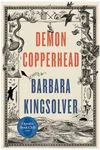
- For the Classics Lover: Start with Demon Copperhead (2022). This Pulitzer Prize-winning novel is a brilliant, modern reimagining of Charles Dickens's David Copperfield, set in the modern-day Appalachian mountains and tackling the devastating impact of the opioid crisis with incredible empathy and grit.
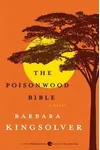
- For the Epic Historical Fiction Fan: Start with The Poisonwood Bible (1998). This is widely considered her masterpiece, tracking an evangelical Baptist family who moves from Georgia to the Belgian Congo in 1959. Told through the shifting voices of the fierce mother and her four daughters, it is a magnificent look at family, guilt, and colonial history.
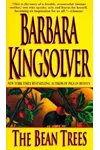
- For a Gentle, Character-Driven Debut: Start with The Bean Trees (1988). As Kingsolver's debut novel, it introduces readers to Taylor Greer, a young woman fleeing rural Kentucky who unexpectedly ends up caring for an abandoned Native American child. It is warm, accessible, and leads directly into her only narrative sequel.
The Greer Family Duology (Taylor Greer Series)
While almost all of Kingsolver's fiction is standalone, she has written one direct two-part series. It is highly recommended that you read these two books in order, as the second book directly handles the emotional and legal fallout of the events in the first:
- The Bean Trees (1988): We meet Taylor Greer as she travels west to escape her hometown, adopting a Cherokee toddler nicknamed Turtle along the way and finding a quirky, supportive community in Tucson, Arizona.
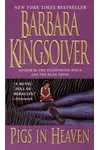
- Pigs in Heaven (1993): Set several years later, Taylor and Turtle's bond is threatened when a Cherokee attorney discovers the irregular nature of Turtle's adoption, launching a complex struggle over custody, heritage, and the meaning of family.
Barbara Kingsolver's Standalone Novels in Publication Order
If you want to witness Kingsolver's growth as a novelist, reading her standalone books in the order they were published is a rewarding experience. Each novel heavily incorporates her scientific background in biology and ecology, alongside her deep commitment to social justice:
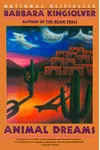
- Animal Dreams (1990): Set in a small Arizona town, this novel follows Codi Noline as she returns home to care for her ailing father, confronting family secrets and environmental pollution.
- The Poisonwood Bible (1998): A massive, multi-perspective historical novel exploring the tragic missteps of a missionary family during the Belgian Congo's transition to independence.
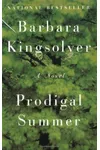
- Prodigal Summer (2000): A lush, sensuous novel set in the southern Appalachian mountains that weaves together three stories of love, human connection, and wildlife ecology.
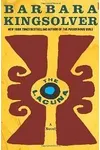
- The Lacuna (2009): A sweeping historical epic that follows Harrison Shepherd, a man caught between the political turbulence of 1930s Mexico (living with Frida Kahlo and Diego Rivera) and the anti-communist hysteria of post-WWII America.
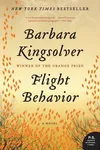
- Flight Behavior (2012): A powerful exploration of climate change, centered on a young Appalachian woman who discovers a bizarre migration of monarch butterflies on her family's forested property.
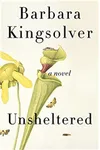
- Unsheltered (2018): A dual-timeline novel set in Vineland, New Jersey, contrasting the lives of two families living in the same unstable house in the 21st century and the late 19th century.
- Demon Copperhead (2022): A gripping, deeply human update of Dickens's classic, highlighting the struggles of a boy born in a southern Appalachian trailer park.
The Faber Stories and the "Homeland" Confusion
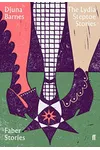
When looking at bibliographic databases, readers are often confused by the Faber Stories listing. The Faber Stories series is a collectible set of individual, slim booklets published by Faber & Faber to celebrate their 90th anniversary. It is a multi-author project featuring writers like Flannery O'Connor, Sylvia Plath, and James Joyce.
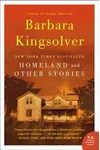
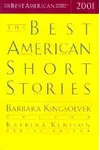
Barbara Kingsolver did not write all these books. Her single contribution to this series is her acclaimed short story "Homeland". If you want to read this story along with her other short fiction, you should pick up her first collection, Homeland and Other Stories (1989), which contains this piece alongside eleven other stories.
Non-Fiction, Essays, and Children's Literature
In addition to her novels, Kingsolver has written several celebrated collections of essays and collaborative works that focus on community, environmental activism, and sustainable living:
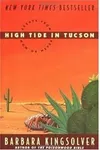
- High Tide in Tucson: Essays from Now or Never (1995): A warm, insightful collection of personal essays exploring home, family, and the natural world.
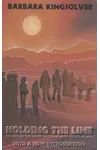
- Holding the Line: Women in the Great Arizona Mine Strike of 1983 (1996): A non-fiction account of the women who sustained a long labor strike against a copper mining company.
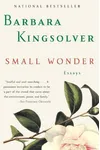
- Small Wonder: Essays (2002): Written in the wake of September 11, these essays advocate for global empathy, peace, and ecological sanity.
- Last Stand: America's Virgin Lands (2002): A collaboration with photographer Annie Griffiths Belt, documenting America's remaining wild spaces.
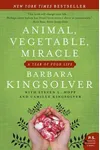
- Animal, Vegetable, Miracle: Our Year of Food Life (2007): A highly popular memoir, co-authored with her husband Steven L. Hopp and daughter Camille Kingsolver, documenting their family's year-long attempt to eat only locally grown food.
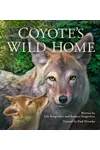
- Coyote's Wild Home (2023): A children's book co-authored by Barbara and her daughter Lily Kingsolver, illustrating the parallel journeys of a young girl and a coyote pup learning about the Appalachian woods.
What to Know Before You Start
Kingsolver's writing is heavily informed by her training as a biologist and ecologist. Because of this, nature is never just a backdrop in her books—it is an active character. Her novels also touch on heavy social issues such as poverty, colonialism, corporate greed, and systemic inequality. While her stories are deeply empathetic and ultimately hopeful, they do not shy away from the hard realities of life, particularly in Demon Copperhead and The Poisonwood Bible. If you prefer light, escapist reading, you might want to start with her early essays or The Bean Trees before diving into her weightier masterpieces.