
The Recommended Reading Path
For readers diving into the work of Belinda Huijuan Tang, the journey is straightforward but emotionally deep. As of current publication records, Tang has written one major debut novel alongside a selection of deeply personal essays and early short fiction. Because her major work stands alone, the ideal reading path focuses on experiencing her landmark novel first, followed by her autobiographical and shorter writings which provide rich thematic context to her fictional themes of migration, memory, and familial duty.
1. The Core Masterpiece: A Map for the Missing (2022)
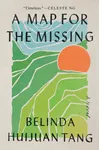
Start your reading journey with Tang's debut novel, A Map for the Missing. Published in August 2022 by Penguin Press, this novel is the cornerstone of her bibliography. The story is a mystery and a family drama wrapped into one, following Tang Yitian, a Chinese mathematics professor living in the United States, who must return to his rural village in China in 1993 when his father mysteriously disappears. It was longlisted for the 2022 Center for Fiction First Novel Prize and named one of the best books of the year by NPR.
2. Thematic Companions: Personal Essays & Short Stories
After finishing the novel, readers should explore Tang's shorter works to understand the real-life inspirations behind her fiction. These pieces explore the cultural straddling and maternal relationships that echo throughout her novel:
- "Dear Mother, from Okinawa" (2015): Published in Spitoon Magazine, this early short story showcases Tang's emerging voice and her interest in familial letters and distance.
- "Face Value: My Mother, Her Obsession with Luck, and Me" (2022): Published in Vogue in May 2022, this personal essay explores Tang's relationship with her mother, luck, and the cultural expectations of success. It serves as an excellent companion piece to the family dynamics in her novel.
- "Getting Outside" (2023): Published in Vogue in May 2023, this essay deals with themes of nature, space, and reflection in the aftermath of her debut novel's release.
Understanding the Dual Timelines in "A Map for the Missing"
When reading A Map for the Missing, it is helpful to understand its narrative structure. The book is not told in a simple linear fashion; instead, it utilizes two primary timelines to construct its emotional mystery:
- The Present Timeline (1993): This timeline follows Yitian's return to China to search for his missing father. During this search, he reunites with Tian Hanwen, his childhood friend and former love, who is now married to a local bureaucrat. Together, they navigate the bureaucracy of 1990s China, searching for clues.
- The Flashback Timeline (Late 1970s and Early 1980s): This timeline explores Yitian's youth, his relationship with his older brother Yishou (often viewed as the ideal Maoist son), and his intellectual bond with Hanwen. This period covers the end of the Cultural Revolution and the reintroduction of the National College Entrance Examination (the gaokao).
By alternating between these timelines, Tang illustrates how decisions made under the pressure of historical forces in the 1970s directly shape the regrets and struggles of the characters in the 1990s.
Historical Context: What to Know Before You Start
To fully appreciate Tang's fiction, readers should have a basic understanding of two major historical elements in post-Cultural Revolution China:
The "Down to the Countryside" Movement
During the Cultural Revolution, millions of urban youth (known as "sent-down youth" or rusticated youth) were sent to rural villages to be re-educated by peasantry. In the novel, the character Tian Hanwen is one of these sent-down youth, rusticated from Shanghai to Yitian's remote village. This background explains the initial class and cultural division between her and Yitian, as well as her desperate desire to return to the city.
The Gaokao (National College Entrance Examination)
Suspended during the Cultural Revolution, the gaokao was reinstated in 1977. For a generation of rural and rusticated youth, passing this incredibly difficult exam was the only legal way to escape poverty or rural exile. The intense preparation and high stakes of the gaokao serve as a major turning point in the novel, highlighting the divergence in Yitian and Hanwen's life trajectories.
Practical Reader Advice
Is A Map for the Missing a standalone? Yes, the novel is a complete, self-contained story with a definitive resolution to its central mystery, though it leaves room for readers to ponder the long-term choices of its characters.
What is the tone? Tang's prose is lyrical, precise, and quiet. It reads more like a reflective literary drama than a fast-paced thriller, prioritizing character interiority and emotional depth over plot twists.
Who will enjoy her work? Readers who appreciate the family sagas of Celeste Ng, the historical depth of Lisa See, or the melancholic reflections on memory found in the works of Ruth Ozeki will find Belinda Huijuan Tang's writing deeply resonant.