


How to Read bell hooks: The Recommended Starting Paths
Unlike standard fiction series with linear plots, bell hooks' books are mostly standalone collections of essays, cultural criticism, and theory. While you can read them in any order, diving headfirst into her dense, academic work might feel overwhelming. Depending on what interests you, we recommend taking one of these four thematic pathways:
Path 1: The Love & Relationships Path (Most Popular)
If you want to read hooks' most widely celebrated and accessible books, start with her famous Love Trilogy (sometimes referred to as the "Love Song to the Nation" trilogy). In these works, hooks explores love not merely as a personal feeling, but as a political, transformative force capable of healing individuals and communities. We recommend reading these in their order of publication to see how her ideas develop:
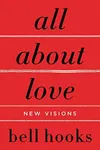
- All About Love: New Visions (1999/2000): This is the ultimate starting point for bell hooks. She dismantles conventional ideas of romance, defines love as an active practice, and argues for a society-wide "love ethic."
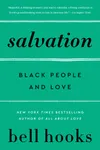
- Salvation: Black People and Love (2001): The second installment applies her love philosophy to the Black community, addressing historical trauma, racism, and the healing power of love in fighting systemic oppression.
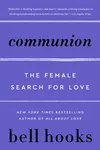
- Communion: The Female Search for Love (2002): The final book in the trilogy focuses on women’s unique search for love and fulfillment, addressing how changing roles and feminist self-determination intersect with intimacy.
Companion Work: Once you complete the trilogy, read The Will to Change: Men, Masculinity, and Love (2003). While not technically part of the core trilogy, it serves as a crucial companion piece that examines how patriarchy harms men and prevents them from giving and receiving love.
Path 2: The Intersectional Feminist Theory Path
For readers who want to understand hooks' groundbreaking contributions to feminist theory, the order is best structured from her most accessible primer to her most academic, historical analyses:
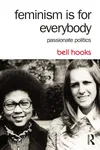
- Feminism Is for Everybody: Passionate Politics (2000): This short, friendly book was intentionally written to introduce feminist principles to a general audience. It is the perfect primer.
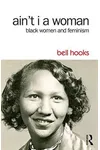
- Ain't I a Woman: Black Women and Feminism (1981): Written while hooks was still an undergraduate, this is her seminal historical analysis. It explores the combined impact of sexism and racism on Black women from slavery to the mid-20th century. Note that it is more academic and dense than her later work.
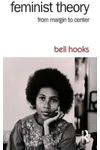
- Feminist Theory: From Margin to Center (1984): In this critical text, hooks argues that mainstream feminism has historically ignored marginalized and working-class women by centering white, middle-class experiences.
Path 3: The Pedagogy & Education Trilogy
For educators, students, or anyone interested in teaching and learning as a form of social liberation, hooks wrote a brilliant three-book series on education. These should be read in chronological order to follow the progression of her classroom theories:
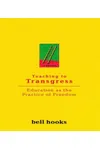
- Teaching to Transgress: Education as the Practice of Freedom (1994): Here, hooks introduces "engaged pedagogy," arguing that the classroom should be a place where critical thinking and freedom are actively practiced.
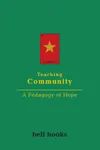
- Teaching Community: A Pedagogy of Hope (2003): This book expands her educational theory beyond classroom walls, discussing how communities can learn together and build spaces of hope against systemic bias.
- Teaching Critical Thinking: Practical Wisdom (2010): The final book offers practical advice, addressing the everyday challenges educators face when teaching students to think critically.
Path 4: The Memoir & Personal Reflection Path
If you want to understand the woman behind the name—Gloria Jean Watkins—her memoirs offer a poetic, personal look at her life:
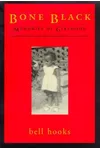
- Bone Black: Memories of Girlhood (1996): A beautifully written collection of vignettes detailing her childhood growing up in a segregated Kentucky town.
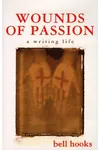
- Wounds of Passion: A Writing Life (1997): This memoir covers her early adulthood, focusing on her search for her voice, her early relationships, and her determination to become a writer.
- Belonging: A Culture of Place (2009): A highly personal exploration of her Kentucky roots, centering on the relationship between geography, home, and identity.
Complete Publication Order of bell hooks' Works
For readers who prefer to read hooks' major non-fiction chronologically to see her evolution as a thinker over four decades, here is the publication sequence of her primary non-fiction books:
- Ain't I a Woman: Black Women and Feminism (1981)
- Feminist Theory: From Margin to Center (1984)
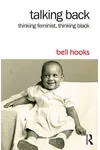
- Talking Back: Thinking Feminist, Thinking Black (1989)
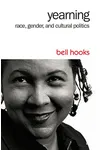
- Yearning: Race, Gender, and Cultural Politics (1990)
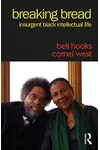
- Breaking Bread: Insurgent Black Intellectual Life (1991) - Co-authored with Cornel West, this dialogue explores Black intellectualism, religion, and culture.
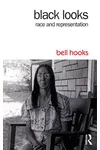
- Black Looks: Race and Representation (1992)
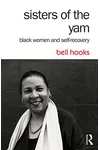
- Sisters of the Yam: Black Women and Self-Recovery (1993)
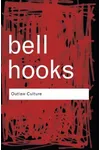
- Outlaw Culture: Resisting Representations (1994)
- Teaching to Transgress: Education as the Practice of Freedom (1994)
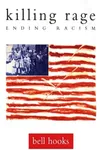
- Killing Rage: Ending Racism (1995)
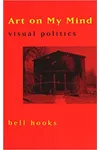
- Art on My Mind: Visual Politics (1995)
- Bone Black: Memories of Girlhood (1996)
- Reel to Real: Race, Sex, and Class at the Movies (1996)
- Wounds of Passion: A Writing Life (1997)
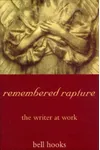
- Remembered Rapture: The Writer at Work (1999)
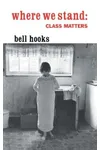
- Where We Stand: Class Matters (2000)
- Feminism Is for Everybody: Passionate Politics (2000)
- Teaching Community: A Pedagogy of Hope (2002/2003)
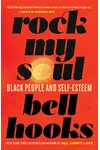
- Rock My Soul: Black People and Self-Esteem (2002)
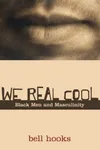
- We Real Cool: Black Men and Masculinity (2003)
- The Will to Change: Men, Masculinity, and Love (2003)
- Belonging: A Culture of Place (2004/2009)
- Homegrown: Engaged Cultural Criticism (2006) - Co-authored with artist Amalia Mesa-Bains, exploring connections between Black and Latino cultures.
- Soul Sister: Women, Friendship, And Fulfillment (2007)
- Teaching Critical Thinking: Practical Wisdom (2007/2010)
- Writing Beyond Race: Living Theory and Practice (2012)
- Uncut Funk: A Contemplative Dialogue (2017)
Other Collections, Children's Books, and Posthumous Works
Beyond her main essays and non-fiction treatises, hooks worked in several other literary formats:
Poetry Collections
Poetry was bell hooks' first love. She published several volumes of verse that explore nature, identity, and regional heritage:
- and there we wept (1978) - Her debut poetry collection.
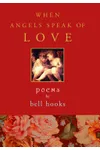
- When Angels Speak of Love (2005) - A collection of love poems.
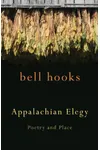
- Appalachian Elegy: Poetry and Place (2012) - A deeply moving tribute to the landscape and history of Kentucky.
Children's Books
To ensure that children of color saw themselves represented positively in literature, hooks authored several beautifully illustrated picture books:
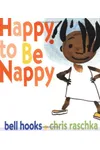
- Happy to Be Nappy (1999)
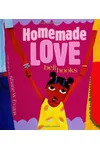
- Homemade Love (2002)
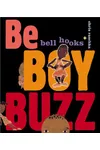
- Be Boy Buzz (2002)
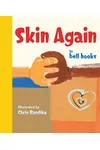
- Skin Again (2004)
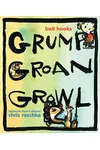
- Grump Groan Growl (2008)
The Last Interview Series
You may see bell hooks: The Last Interview: and Other Conversations listed as a book from 2023. It is part of Melville House's ongoing "The Last Interview" series, which compiles career-spanning interviews with iconic thinkers. While not a new book written by hooks, it is a fantastic retrospective collection of conversations detailing her life and work.
What to Know Before You Start
Before you begin your reading journey, keep these few context points in mind to enhance your appreciation of her writing:
- The Lowercase Name: Gloria Jean Watkins adopted the pen name "bell hooks" to honor her maternal great-grandmother, Bell Blair Hooks. She insisted on writing it in lowercase to emphasize the importance of the ideas and issues in her books over her personal identity.
- Conversational Style: One of hooks' primary missions was to make critical theory accessible. She deliberately avoided dense academic jargon in most of her works, choosing instead to write in a style that felt like a direct, warm conversation.
- Intersections of Oppression: Long before "intersectionality" became a common term, hooks was writing about how race, gender, and class are inseparable. Keep an eye out for how these three dynamics are interwoven in almost every critique she makes.