
The Recommended Reading Order for Ben Creed’s Revol Rossel Series
If you are diving into the atmospheric historical thrillers written under the pseudonym Ben Creed, the reading order is straightforward. Because the series follows a continuous narrative arc detailing the life, trials, and survival of protagonist Revol Rossel, it is highly recommended to read the books in order of publication. Chronologically, the events in the books line up directly with the order in which they were published.
Here is the recommended reading order for the Revol Rossel series:
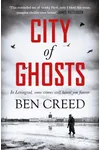
- City of Ghosts (2020)
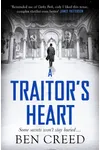
- A Traitor’s Heart (2021/2022)
- Man of Bones (2024)
Where to Start: The Ideal Entry Point
You should absolutely start your journey with City of Ghosts. The debut novel establishes the core foundation of Revol Rossel’s character, including his background as a brilliant violinist trained under the legendary conductor Ilya Musin at the Leningrad Conservatory. It explains the physical injury that cut his musical career short, his transition to a militia detective, and his complex relationship with the oppressive Soviet state. Starting with any of the later books will spoil major plot developments from the preceding novels and leave you missing critical context regarding Rossel’s shifting status with the authorities.
Revol Rossel Series: Book-by-Book Breakdown
City of Ghosts (2020)
Set during the freezing winter of 1951 in Leningrad, the novel introduces Revol Rossel as a junior detective in the militia. He is called to a gruesome crime scene on the ice where five bodies have been meticulously arranged in the shape of a star. As Rossel investigates, he finds that the murders are deeply tied to the city’s musical elite and his own past at the Conservatory. Navigating the paranoia of Stalin’s final years, Rossel must solve the crime while avoiding the watchful eyes of the MGB (state security) and keeping his own secrets hidden.
A Traitor’s Heart (2021/2022)
The story picks up in 1952. Rossel’s fortunes have taken a dark turn, and he is now a prisoner in a Siberian Gulag labor camp. However, he is abruptly pulled from his brutal labor and transported back to Leningrad under state guard. A high-ranking Soviet official has been murdered, and because of Rossel's unique investigative skills and musical knowledge, the state needs him to solve the conspiracy. He is forced to work with the very system that imprisoned him, knowing that failure means a swift return to the camps or a bullet to the head.
Man of Bones (2024)
Set during the brutal winter of 1953, the final installment of the trilogy finds Rossel once again surviving the margins of Soviet society. Having been released from another grueling stint in the camps, he returns to Leningrad with only one goal: to find his missing sister. His plans are derailed when he is forced to investigate a bizarre double murder at Leningrad’s Finland Station, where two bodies have been left next to a statue of Lenin. This investigation forces Rossel to confront the dark history of the Bolshevik revolution and the dangerous inner circles of a changing Soviet regime.
Publication vs. Chronological Order
For the Revol Rossel trilogy, the publication order and the chronological order are identical. The timeline progresses sequentially year-by-year from the winter of 1951 in the first book, to 1952 in the second, and finally to the winter of 1953 in the third. Because the historical setting, Soviet political backdrop, and Rossel’s personal situation change dramatically between books, skipping around the timeline is not recommended. The narrative depends heavily on the momentum of Rossel’s survival under the oppressive weight of Stalinist rule.
What to Know Before You Start: Atmosphere, Music, and Collaboration
Ben Creed is the joint pseudonym of authors Barney Thompson and Chris Rickaby. Thompson is a classically trained musician who studied conducting in St. Petersburg and is fluent in Russian. Rickaby is an experienced advertising copywriter and novelist. Their collaborative writing process combines Rickaby’s knack for gripping, high-concept thriller plotting with Thompson’s deep linguistic, historical, and musical expertise. This partnership results in a narrative voice that feels seamless, authoritative, and incredibly detailed.
Readers should prepare themselves for a dark, visceral, and uncompromising atmosphere. The novels do not shy away from the harsh realities of Soviet life in the 1950s, detailing the cold, hunger, paranoia, and the constant threat of state violence. A unique hallmark of the series is its integration of classical music. Because Rossel is an ex-violinist, musical structures, melodies, and theory are woven directly into the mystery plots, adding a haunting, intellectual layer to the gritty noir detective formula.