


Where to Start with Ben Lerner
If you are new to Ben Lerner's writing, the absolute best place to start is with his debut novel, Leaving the Atocha Station (2011). This relatively slim book introduces Lerner's signature autofictional style, sharp wit, and deep preoccupation with the authenticity of art and language. Starting here allows you to experience the origin of his narrative voice, making the thematic leaps in his later, more complex novels much easier to follow and appreciate. If you prefer to begin with his non-fiction, his short, provocative monograph The Hatred of Poetry (2016) serves as an excellent introduction to his intellectual worldview.
The Topeka Trilogy: Publication vs. Chronological Order
While Ben Lerner's three novels were not officially marketed as a standard series, they are widely considered by the author, critics, and readers to form an interconnected trilogy (often called the Topeka Trilogy). The books share the protagonist Adam Gordon (who serves as a clear stand-in for Lerner himself), recurring themes of psychological counseling, language pathology, and the landscapes of Kansas and New York.
We highly recommend reading the novels in publication order. Lerner's narrative voice and structural ambitions grow significantly from book to book, and experiencing them in the order he wrote them provides the most rewarding literary journey. Here is how the trilogy breaks down:
1. Leaving the Atocha Station (2011)
This novel follows Adam Gordon, a young American poet on a prestigious fellowship in Madrid. Adam spends his time smoking hash, avoiding writing, translating poorly, and experiencing a profound sense of fraudulence. He doubts his own ability to feel a "genuine aesthetic experience" and struggles to connect with others in a foreign tongue. It is a hilarious, cynical, and deeply introspective look at youth and the anxieties of artistic creation.
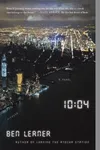
2. 10:04 (2014)
Picking up in New York City, 10:04 features an unnamed narrator who has recently achieved literary success (mirroring Lerner's real-life reception after Leaving the Atocha Station). Grappling with a potentially fatal medical diagnosis, helping a close friend conceive a child, and facing the impending threat of superstorms, the narrator attempts to write a new novel. This book is heavily metafictional, even incorporating a short story that Lerner published in The New Yorker as a chapter. Reading Leaving the Atocha Station first is helpful here, as it establishes the narrator's baseline anxieties before they are amplified by adult responsibilities and sudden literary fame.
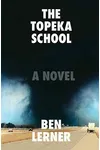
3. The Topeka School (2019)
The final term in the trilogy acts as a prequel. It steps back to the late 1990s in Topeka, Kansas, exploring Adam Gordon's high school years as a competitive debater. More expansive than its predecessors, the book shifts perspectives between Adam and his parents, Jonathan and Jane, who are both psychologists at a famous psychiatric foundation. It acts as an origin story for the toxic masculinity, political polarization, and linguistic decay of modern America. While you could read this chronologically first, reading it last delivers a powerful payoff, as you finally understand the psychological underpinnings of the character you have followed across three decades of narrative time.
The Poetry of Ben Lerner: Compilations and Context
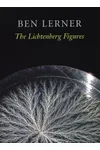
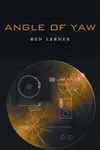
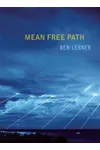
Before achieving widespread fame as a novelist, Lerner was an accomplished, award-winning poet. His poetry is highly experimental, utilizing formal and scientific structures to explore how language can break down or create meaning. For poetry lovers, his collections are best read in order of release to track his development: The Lichtenberg Figures (2004), followed by the National Book Award finalist Angle of Yaw (2006), and the rhythmically complex Mean Free Path (2010).
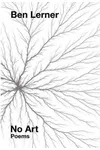
However, if you want to tackle his poetry efficiently, look for No Art (2016). This compilation brings together all three of his early volumes in their entirety, alongside a selection of new and uncollected poems, making it the definitive package for his early poetic career. Afterwards, you can pick up his most recent individual collection, The Lights (2023), which represents his latest evolution in the medium.
Non-Fiction and the Case of the Chiropractic Double
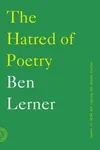
Lerner has published two major non-fiction works. The first, The Hatred of Poetry (2016), is a brilliant, book-length essay arguing that the structural failure of poetry is actually what makes it so vital. The second, Generation XL (2007), is frequently listed in online databases under Ben Lerner's name.
Important Reader Caveat: The 2007 book Generation XL: Raising Healthy, Intelligent Kids in a High-Tech, Junk-Food World was co-authored by a completely different individual named Dr. Ben Lerner, a chiropractor and wellness author. The novelist Ben Lerner did not write this health book, and it bears no relation to his literary work. Readers seeking Lerner's literary criticism should stick to The Hatred of Poetry.
Ben Lerner Books in Publication Order
- The Lichtenberg Figures (2004) — Poetry
- Angle of Yaw (2006) — Poetry
- Generation XL (2007) — Co-authored by a different Ben Lerner; included here to help readers identify the mismatch.
- Mean Free Path (2010) — Poetry
- Leaving the Atocha Station (2011) — Novel (Topeka Trilogy #1)
- 10:04 (2014) — Novel (Topeka Trilogy #2)
- No Art: Poems (2016) — Poetry Compilation
- The Hatred of Poetry (2016) — Non-Fiction / Essay
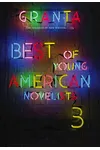
- Granta 139: Best of Young American Novelists 3 (2017) — Anthology contribution
- The Topeka School (2019) — Novel (Topeka Trilogy #3 / Prequel)
- The Lights (2023) — Poetry