

Recommended Reading Path for Benet Brandreth's Books
For readers diving into Benet Brandreth's historical thrillers, the best and only logical approach is to read the books in order of their publication. Since the series charts a continuous story during William Shakespeare's mysterious "lost years," reading the novels chronologically ensures you follow the evolution of the conspiracies, the character arcs, and the overarching political intrigue.
William Shakespeare Thrillers in Publication & Chronological Order
The series centers on a young, pre-fame William Shakespeare, reimagining him as an elizabethan protagonist thrust into high-stakes espionage. Follow this order:
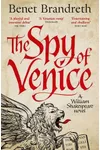
- The Spy of Venice (2016) – Set in 1585, the story follows Will Shakespeare as he flees legal troubles in Stratford-upon-Avon. He joins a group of actors and finds himself in Venice, serving as the English ambassador's steward. Soon, he is recruited into a dangerous spy ring to foil Catholic plots against Queen Elizabeth I.
- The Assassin of Verona (2017) – Picking up in 1586 immediately after the events of the first book, Will and his companions (including fellow actors Oldcastle and Hemminges) flee Venice. In possession of a list of Catholic conspirators, they run headlong into the Pope's agents and the sinister inquisitor Father Thornhill in Verona, while navigating local romance and diplomatic deceit.
Can the Books Be Read as Standalones?
While each novel resolves its primary immediate conflict, they are not designed to be read as standalones. The Assassin of Verona is a direct sequel that begins right where The Spy of Venice leaves off, dealing with the fallout of the Venetian conspiracy and carrying forward the same main cast. Skipping the first book will leave you confused about how Shakespeare ended up in Italy and why he is running for his life from the Inquisition.
What to Know Before You Start
Benet Brandreth's novels stand out in the crowded field of historical fiction due to the author's unique professional expertise. Here is some helpful context to keep in mind as you read:
- The "Lost Years" Premise: Between 1585 and 1592, historical records of William Shakespeare's life are virtually non-existent. Brandreth uses this blank slate to explain how the future playwright gained his intimate knowledge of Italian cities, courtly diplomacy, and human behavior that would later influence plays like The Merchant of Venice and Romeo and Juliet.
- Witty Rhetoric: As a rhetoric coach for the Royal Shakespeare Company, Brandreth infuses his dialogue with authentic Elizabethan wordplay, making the verbal sparring as sharp as the physical combat.
- Visceral Action: Brandreth is an instructor in Filipino martial arts, which directly informs the highly detailed, realistic, and kinetic swordplay and stage-combat sequences described in the text.
- Early Theater Companions: Readers will enjoy encountering early iterations of Shakespeare's historical actor friends, John Hemminges and William Oldcastle, who serve as his close companions and comic relief throughout the adventure.
The Non-Fiction Companion Work
If you enjoy the linguistic dexterity of Brandreth's fiction, he has also written a non-fiction book focusing on the Bard's language:
- Shakespearean Rhetoric: A Practical Guide for Actors, Directors, Students and Teachers (2021) – This guide explains the specific persuasive language techniques used by Shakespeare, offering practical advice on how to analyze and perform them.