
The Recommended Reading Path
Because Bernard B. Kerik's bibliography is divided between deeply personal memoirs and a standalone crime thriller, the ideal reading order depends on your interest. However, for the most complete experience of his work, we recommend reading his books in the order of their real-world timeline. This allows you to follow his meteoric rise, his sudden fall, and his subsequent transition into fiction writing.
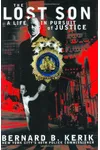
- The Lost Son: A Life in Pursuit of Justice (2001) – Start here to understand Kerik's early life, his military service, his rise through the ranks of the NYPD, and his leadership during the September 11 attacks.
- In the Line of Duty: A Tribute to New York's Finest and Bravest (2001) – Read this next as a historical companion. It is a photographic tribute to the first responders of 9/11, featuring a foreword by Kerik.
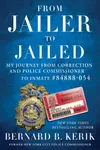
- From Jailer to Jailed: My Journey from Correction and Police Commissioner to Inmate #84888-054 (2015) – This memoir serves as the direct sequel to his life story, covering his legal troubles, his time in federal prison, and his evolution into a criminal justice reform advocate.
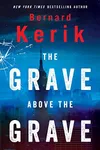
- The Grave Above the Grave (2018) – Conclude with his debut novel. It is a police thriller that channelizes his real-life law enforcement experience into a fictional narrative.
Bernard B. Kerik's Memoirs and Non-Fiction
The Lost Son: A Life in Pursuit of Justice (2001)
Published shortly after he gained national prominence as the 40th Police Commissioner of New York City during 9/11, this memoir is part autobiography and part detective story. Kerik details his turbulent childhood, his abandonment by his mother, and his career as a security officer, warden, and police officer. A central thread of the book is his personal quest to uncover the truth behind his mother's death, blending personal tragedy with street-level policing.
From Jailer to Jailed (2015)
Fourteen years after his first memoir, Kerik released a raw account of his fall from grace. Following tax fraud convictions and a sentence in federal prison, this memoir recounts his transition from managing prisons to living inside one as inmate #84888-054. The book serves as an eye-opening critique of the American penal system, detailing the psychological toll of solitary confinement and the need for sentencing reform.
In the Line of Duty (2001)
This is a commemorative photography book rather than a narrative text. Published in the immediate aftermath of the September 11 attacks, it documents the bravery of NYPD and FDNY personnel. Kerik, alongside FDNY Fire Commissioner Thomas Von Essen, provided the forewords. Profits from the book were donated to the New York Police & Fire Widows' & Children's Benefit Fund.
Bernard B. Kerik's Fiction
The Grave Above the Grave (2018)
In 2018, Kerik transitioned to thriller writing with this standalone police novel. The story centers on Rick Raymond, a fictional New York City Police Commissioner who, having lost his wife in the 9/11 attacks, must navigate political corruption and investigate a radical terrorist plot targeting the city. The novel is heavily grounded in the tactical realities, political maneuvering, and administrative challenges that Kerik experienced during his own career.
What to Know Before You Start
When reading Kerik's work, it is helpful to keep a few key contexts in mind:
- Real-Life Parallelism: The protagonist of his novel, Rick Raymond, shares many biographical parallels with Kerik himself—most notably holding the office of NYPD Commissioner and experiencing personal loss during the 9/11 attacks. Reading the memoirs first will help you spot these influences in the fiction.
- Tone and Style: The non-fiction works are candid, gritty, and direct. The tone transitions from the defensive pride of a decorated cop in The Lost Son to the reflective, reform-minded perspective of an ex-inmate in From Jailer to Jailed.
- Standalone Nature: None of Kerik's books require previous reading to make sense, as the memoirs are self-contained life eras and the novel is a standalone thriller. However, reading them chronologically provides deep insight into how his writing style and perspective evolved over two decades.