


Where to Start Reading Bernie Sanders
If you want to understand the political philosophy and personal history of Senator Bernie Sanders, you might be wondering where to dive in first. Unlike authors of complex fictional sagas, Sanders writes political non-fiction, memoirs, and policy guides. This means you do not strictly need to follow a chronological sequence to understand his message. However, reading his books in a thematic order will give you a much clearer picture of how his ideas evolved from local Burlington politics to a national progressive movement.
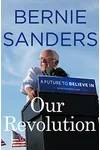
We highly recommend starting with Our Revolution: A Future to Believe In (2016). It serves as the ultimate gateway because it is divided into two distinct parts: a personal memoir of his early life and his historic 2016 presidential campaign, followed by a comprehensive outline of his progressive agenda. From there, you can move forward in time to his direct sequels, or look backward to his earlier memoirs to see how his ideas were forged.
The Modern Campaign Trilogy
The core of Bernie Sanders' contemporary bibliography is a trilogy of books that document his run for the presidency and its aftermath. These books are best read in publication order to track his thoughts in real-time as political events unfolded:
1. Our Revolution: A Future to Believe In (2016)
Published immediately after the 2016 Democratic primary campaign, this book is essential reading. Part memoir and part manifesto, the first half takes you behind the scenes of his grassroots campaign, detailing how a self-described democratic socialist from Vermont managed to win over 13 million votes. The second half shifts focus to the future, outlining specific policies regarding economic inequality, healthcare, climate change, and criminal justice reform.
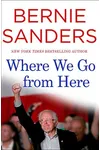
2. Where We Go from Here: Two Years in the Resistance (2018)
Serving as the direct sequel to Our Revolution, this book picks up in the aftermath of the 2016 election. Sanders chronicles his efforts to oppose the policies of the Trump administration while continuing to build a progressive coalition. It offers a fascinating look at the day-to-day work of a U.S. Senator trying to push ideas like a $15 minimum wage and Medicare for All into the political mainstream.
3. It's OK to Be Angry About Capitalism (2023)
Co-authored with journalist John Nichols, this is Sanders' most recent and urgent work. Written after his 2020 presidential bid, the book moves beyond campaign chronicles to deliver a scathing critique of what he terms "uber-capitalism." Sanders addresses systemic issues such as the billionaire class, corporate media, and the decline of the American working class, proposing a path forward to build a fairer society.
The Origin Stories: Memoirs and Famous Speeches
Before his presidential runs made him a household name, Bernie Sanders published two important works that lay the foundation for his entire political career. Reading these provides invaluable context for his later books:
Outsider in the House (1997) / Outsider in the White House (2015)
Co-authored with Huck Gutman, this political autobiography was first published in 1997 as Outsider in the House, chronicling Sanders' early life, his tenure as Mayor of Burlington, Vermont, and his transition to the U.S. House of Representatives. In 2015, ahead of his first presidential campaign, the book was revised, updated, and re-released by Verso Books as Outsider in the White House. It is a fantastic starting point for readers who want to understand his roots and how he built his political identity outside the traditional two-party system.
The Speech: A Historic Filibuster on Corporate Greed (2011)
On December 10, 2010, Bernie Sanders held the Senate floor for eight and a half hours, delivering a historic filibuster to protest the extension of the Bush tax cuts for the wealthy. The speech went viral and was later published in book form by Nation Books in 2011, with an updated version released in 2015. It is a raw, unedited look at Sanders' oratorical style and the core economic arguments he would later popularize on the campaign trail.
Young Adult Adaptations and Anthologies
Sanders has also adapted his message for younger audiences and contributed to progressive compilations:
Bernie Sanders Guide to Political Revolution (2017)
This is a YA adaptation of Our Revolution, specifically designed for teens and young adults. It breaks down complex systemic issues—like the wealth gap, climate change, and corporate influence—using accessible language, diagrams, maps, and infographics. It is an excellent resource for younger readers or anyone looking for a visually engaging summary of progressive ideals.
Collaborative Anthologies
If you want to read Sanders alongside other leading progressive voices, he has contributed essays to two notable 2017 anthologies:
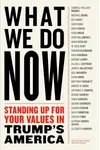
- What We Do Now: Standing Up For Your Values in Trump's America (2017): A collection of essays compiled by Dennis Johnson and Valerie Merians. Sanders contributed the essay "Where Do We Go from Here?" outlining strategies for progressive resistance.
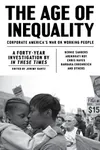
- The Age of Inequality: Corporate America's War on Working People (2017): Edited by Jeremy Gantz, this collection compiles essays from In These Times magazine. It includes a 2009 piece by Sanders critiquing Milton Friedman's economic theories.
What to Know Before You Start Reading
Before you begin your reading journey, keep a few things in mind. First, Sanders is not a literary stylist; his writing matches his speaking style—direct, urgent, and focused heavily on statistics, facts, and policy. Second, because his books are tied to specific political moments, you will encounter some repetition in the policy sections. For example, his arguments on universal healthcare and campaign finance reform remain consistent across all his works. If you are looking for fresh narratives rather than policy reiteration, focus on the biographical first halves of Outsider in the White House and Our Revolution, followed by the broader systemic critiques in It's OK to Be Angry About Capitalism.