











Where to Start Your Beryl Bainbridge Reading Journey
Beryl Bainbridge was a master of the brief, razor-sharp novel, packing massive emotional weight, psychological tension, and pitch-black humor into remarkably slim volumes. Because all of her novels are standalones, you do not need to worry about strict series continuity. However, her writing falls into two distinct eras: the early Liverpool-based domestic dark comedies and the later, highly researched historical tragedies. Depending on your tastes, there are two ideal entry points.
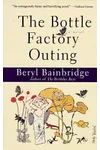
If you want to experience her signature dark, working-class humor, start with The Bottle Factory Outing (1974). Drawing heavily on her own experience working in a bottling plant, it tells the story of two female roommates whose mundane working lives spiral into a bizarre, macabre disaster during a staff outing. It is hilarious, deeply uncomfortable, and perfectly showcases her sharp eye for human frailty.
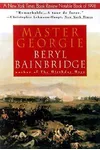
If you prefer grand historical fiction, start with Master Georgie (1998). Set during the Crimean War, this masterpiece follows a surgeon and photographer named George Hardy, told through the perspectives of the people swept up in his orbit. It won the James Tait Black Memorial Prize and was posthumously awarded a special 'Best of Beryl' Booker Prize, making it her most celebrated work.
The Liverpool and Domestic Dark Comedies (1967–1989)
Bainbridge's early novels are deeply personal, drawing on her volatile upbringing in Liverpool and her early struggles as a young actress and mother. These books are domestic in scale, focusing on family drama, bad relationships, and working-class struggles, but they are always undercut by a sense of impending doom.
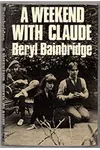
- A Weekend with Claude (1967) – Bainbridge's debut novel introduces her recurring theme of memory, focusing on a group of friends reflecting on a weekend gathering in the countryside.
- Another Part of the Wood (1968) – A bleakly comic look at a camping holiday in Wales that exposes the dysfunctions of its middle-class characters.
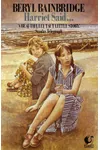
- Harriet Said... (1972) – Though written first in 1958, this chilling tale of two teenage girls who manipulate an older man was initially rejected by publishers for being too 'repulsive.' Its eventual publication launched her career.
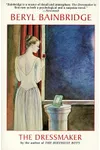
- The Secret Glass / The Dressmaker (1973) – Set in wartime Liverpool, this claustrophobic story explores the relationship between two aunts and their teenage niece, culminating in violence. It was her first novel to be shortlisted for the Booker Prize.
- The Bottle Factory Outing (1974) – A dark comedy about Italian factory workers in London that shifts from social realism into a gothic mystery.
- Sweet William (1975) – A sharp study of a charming, manipulative bohemian man who wreaks havoc on the lives of the women who love him.
- A Quiet Life (1976) – A semi-autobiographical look at a volatile post-war household, mirroring Bainbridge’s own parents' marriage.
- Injury Time (1977) – A dinner party hosted by a mistress and her married lover is suddenly derailed by a gang of fleeing bank robbers, blending middle-class social anxiety with hostage drama.
- Young Adolf (1978) – An early historical satire imagining a young Adolf Hitler visiting his relatives in Liverpool in 1912.
- Winter Garden (1980) – A surreal, dark story of an English artist who travels to the Soviet Union on a cultural exchange program, only for his mistress to disappear.
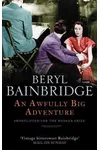
- An Awfully Big Adventure (1989) – Set in a gritty post-war Liverpool theatre company, drawing on Bainbridge's own acting background, this novel follows a naive teenager who becomes embroiled in the company's sexual and emotional intrigues.
The Historical Masterpieces (1991–2011)
In the 1990s, Bainbridge shifted her focus to major historical events, reimagining famous tragedies and real historical figures with her characteristic psychological depth and lack of romanticism.
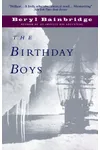
- The Birthday Boys (1991) – A multi-perspective retelling of Captain Scott's ill-fated 1912 expedition to the South Pole.
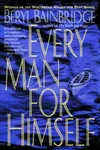
- Every Man for Himself (1996) – Set aboard the Titanic during its four-day maiden voyage, focusing on the hubris of the wealthy passengers before disaster strikes. It won the Whitbread Novel Award.
- Master Georgie (1998) – A devastating look at the Crimean War, focusing on the dark realities of combat, disease, and early photography.
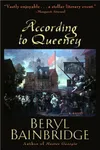
- According to Queeney (2001) – A reinterpretation of the final years of the famous lexicographer Samuel Johnson, seen through the eyes of Queeney Thrale, the daughter of his close friend.
- The Girl in the Polka Dot Dress (2011) – Published posthumously, this novel is a road trip across 1968 America that culminates in the assassination of Robert F. Kennedy.
Publication Order vs. Chronological Order
Because Bainbridge's novels are standalone works, you do not need to read them in any strict order. However, reading them in publication order allows you to appreciate her artistic evolution from claustrophobic, autobiographical domestic comedies to large-scale, research-intensive historical dramas. If you wish to read her works chronologically by the historical era in which they are set, the order changes significantly:
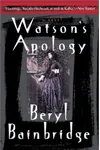
- Watson's Apology (1844–1872) – A novelization of a real-life Victorian murder case involving a clergyman who killed his wife.
- Master Georgie (1854) – Set during the Crimean War.
- Young Adolf (1912) – Imagining Hitler's fictionalized youth in Liverpool.
- The Birthday Boys (1912) – Detailing Scott's Antarctic expedition.
- Every Man for Himself (1912) – Set on the Titanic.
- The Secret Glass / The Dressmaker (1944) – Set in wartime Liverpool.
- An Awfully Big Adventure (1950) – Set in post-war Liverpool.
- Harriet Said... (Late 1950s) – Set in a coastal town post-WWII.
- The Girl in the Polka Dot Dress (1968) – Set during the RFK campaign in America.
- According to Queeney (Late 1700s) – Note that this stands apart, focusing on the late 18th-century literary circle of Samuel Johnson.
Important Book Variations and Caveats to Know
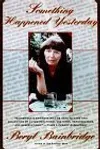
When tracking down Bainbridge's books, there are a few bibliographical quirks to keep in mind. First, The Secret Glass (1973) and The Dressmaker (1974) are the exact same book. The novel was published in the United Kingdom as The Dressmaker and renamed The Secret Glass for its American release. Second, some books listed under novels in online databases are actually non-fiction or essay collections. For example, Forever England (1987) is a non-fiction study of the English class divide based on a BBC television series, and Something Happened Yesterday (1993) is a collection of her weekly columns written for the London Evening Standard. Finally, The Dolphin Connection (1991) is a very rare, short standalone fiction piece that is hard to find in print and distinct from her main line of novels.
What to Know Before You Start
Bainbridge's novels are famous for their brevity, usually running under 200 pages. However, their short length is deceptive; her prose is highly compressed, requiring close reading to catch the subtle clues, ironies, and psychological undertones. Her stories are often populated by flawed, unsympathetic characters, and she frequently uses multiple narrators or unreliable memories to tell a single story. Do not expect tidy, happy endings—Bainbridge is famous for her tragic, often sudden, climaxes where dark humor quickly gives way to stark reality.