




The Recommended Reading Order
For readers looking to dive into the historical mysteries of Beverle Graves Myers, the best place to start is at the very beginning of her signature Tito Amato series. Myers's novels are best read in publication order. Because the books follow a linear timeline in Tito's life, reading them in order allows you to appreciate his character development, evolving relationships, and the shifting political landscape of 18th-century Italy.
The Tito Amato Series in Order
The Tito Amato series consists of six novels set in the mid-1700s. The publication order perfectly aligns with the chronological order of the historical events within the universe:
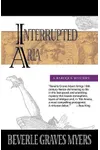
- Interrupted Aria (2004) — Set in Venice, 1731
- Painted Veil (2005) — Set in Venice, 1734
- Cruel Music (2006) — Set in Rome and Venice, 1740
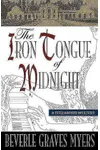
- The Iron Tongue of Midnight (2008) — Set in the Italian hills, September 1740
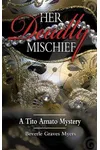
- Her Deadly Mischief (2009) — Set in Venice, 1742
- Whispers of Vivaldi (2014) — Set in Venice, 1745
The Tito Amato Series: A Closer Look
The heart of Myers's work is Tito Amato, a soprano castrato who possesses a beautiful operatic voice and a sharp mind for solving crimes. Unlike typical historical mysteries, the series leans heavily into the actual culture, music, and struggles of Baroque-era musicians.
1. Interrupted Aria (2004)
Set in Venice during the Carnival of 1731, this debut novel introduces us to Tito Amato. After returning to his home city to perform, Tito's life is upended when a fellow singer is poisoned. When Tito's close friend and patron is accused of the crime, Tito must navigate the decadent and dangerous canals of Venice to find the real killer.
2. Painted Veil (2005)
Set in 1734, the story remains in Venice, focusing on the theatrical world. When a scene-painter is found murdered behind the scenes of a production, Tito is drawn into a web of political intrigue, forbidden love, and artistic rivalries. The book details the mechanics of Baroque stagecraft and theater politics.
3. Cruel Music (2006)
The timeline jumps to 1740. Tito is forced to leave Venice for Rome to secure his brother Alessandro's release from prison. In Rome, Tito performs at the villa of a powerful cardinal while acting as a spy. The backdrop of the novel is the impending death of Pope Clement XII and the tense political machinations surrounding the conclave to elect a new pope.
4. The Iron Tongue of Midnight (2008)
Still set in 1740, this novel takes Tito away from the major cities to an isolated villa in the Italian hills. Invited to perform in a private operatic production, Tito finds himself trapped with a small group of guests when a murder occurs exactly at midnight. This book has the classic feel of a locked-room mystery set against a Baroque backdrop.
5. Her Deadly Mischief (2009)
Set in 1742, Tito returns to Venice and is hired to locate a missing soprano. The search draws him into the dark underbelly of the city, exposing secrets that threaten the reputations of some of Venice's most powerful families.
6. Whispers of Vivaldi (2014)
Set in 1745 during the War of the Austrian Succession, the final novel sees Venice filled with foreign troops and spies. Tito is tasked with investigating rumors of a lost opera score written by the late composer Antonio Vivaldi, leading him into a deadly web of international espionage.
What to Know Before You Start
Before diving into the Tito Amato series, it is helpful to understand the historical context of the protagonist. In the Baroque era, castrati were male singers who were castrated before puberty to preserve their high vocal ranges. They were the operatic superstars of their day, earning massive wealth and fame, but they also lived on the margins of polite society, often facing social stigma and personal isolation. Myers, drawing on her background as a psychiatrist, handles Tito's unique psychological perspective with empathy and depth.
Real historical figures also make appearances throughout the series. Most notably, the legendary composer Antonio Vivaldi is a recurring presence, serving as a mentor and occasional source of trouble for Tito.
Collaborations & Standalones: A Helluva War Mystery
Aside from her Baroque mysteries, Beverle Graves Myers co-authored a standalone historical mystery with writer Joanne Dobson:
- Face of the Enemy (2012)
This novel was intended to launch the Helluva War Mystery series. Set in New York City in December 1941, just after the attack on Pearl Harbor, the book follows nurse Louise Hunter and police detective Michael McKenna as they investigate a murder involving a Japanese-born artist. While it was conceived as the start of a series, it remains a standalone entry.
The Nicco Zianni Short Stories
In addition to her novels, Myers created a series of four short stories featuring Nicco Zianni, an 18th-century "private eye" operating in Venice. These stories were all published in Alfred Hitchcock's Mystery Magazine:
- "The Franklin Fiasco" (September 2004)
- "The Casanova Caper" (April 2006)
- "Brimstone P.I." (May 2007)
- "The Bookworm's Demise" (December 2007)
The third story in the series, "Brimstone P.I.", achieved critical acclaim, winning the 2007 Derringer Award and receiving a nomination for the Macavity Award for Best Mystery Short Story.