






Recommended Reading Path for Bill Napier
Because Scottish astronomer and author Bill Napier (born 1940) writes standalone techno-thrillers, there is no single chronological storyline you must follow. You can pick up any of his books in any order without worrying about character continuity or cliffhangers. However, to get the absolute best taste of his hard science fiction style, we recommend two prime starting points:
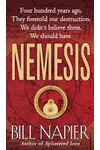
- The Science-First Route: Start with Nemesis (1998). As his debut novel, this book showcases exactly what makes Napier unique. It deals directly with his professional specialty: comet and asteroid hazards. If you love classic, high-stakes "impact hazard" disaster scenarios grounded in real orbital mechanics, this is your best entry point.
- The Extraterrestrial Conspiracy Route: Start with The Lure (2002). If you prefer code-breaking, SETI (Search for Extraterrestrial Intelligence), and political intrigue, this novel about decoding alien messages in Eastern Europe is a fantastic, fast-paced thriller that leans heavily into math and physics.
Publication Order of Standalone Novels
If you prefer to read Napier’s fiction in the order he wrote them, here is the complete publication order of his standalone novels. Reading in this order allows you to see how he transitioned from writing purely space-based disasters to incorporating historical mysteries and global conspiracies.
- Nemesis (1998): A fast-paced thriller following a US government agency racing against the clock to deflect an asteroid that is on a direct collision course with Earth. The novel heavily utilizes Napier's professional calculations on cosmic impact risks.
- Revelation (2000): This thriller shifts focus to the Arctic, where British scientist Dr. Fred Findhorn is hired by a Japanese corporation to locate a crashed 1950s Russian military aircraft. Inside the wreckage lies a frozen atomic scientist and a briefcase containing a diary with secrets that could alter the course of human history—or end it.
- The Lure (2002): When scientists at an Eastern European research station detect structured, subatomic signals from space, they realize they have received advanced alien technology. Protagonist Tom Petrie, an Irish mathematician, is pulled into a dangerous game of survival as global superpowers fight to control or destroy the data.
- Shattered Icon (2003) / Splintered Icon (2005): Merging history and modern thriller elements, this novel follows antique map dealer Harry Blake as he tries to decipher a 400-year-old journal and find a long-lost religious relic.
- The Furies (2009): A high-stakes adventure set in the American Southwest. When a long-lost Nazi doomsday weapon crashes in Arizona, a team of investigators must locate and disarm it before a massive catastrophe is unleashed.
Alternative Titles and International Editions
When tracking down Bill Napier's books online or in second-hand bookstores, you should keep an eye out for duplicate titles and translations to avoid accidentally buying the same book twice:
- Shattered Icon vs. Splintered Icon: This is the same novel. It was first published in the United Kingdom as Shattered Icon in 2003. When it was released in the United States in 2005, the title was changed to Splintered Icon. The text and plot are identical.
- The Lure vs. Dossier Andromeda: If you come across the book Dossier Andromeda, be aware that this is the Italian translation of The Lure, published by Newton Compton Editori in 2008. It is not a separate novel.
Non-Fiction Works: The Science Behind the Thrillers
To truly appreciate Napier's fiction, it helps to understand his career as a professional astronomer. Together with astrophysicist Victor Clube, Napier pioneered the theory of "coherent catastrophism." This theory suggests that giant comets entering the inner solar system fragment over time, creating dense streams of cosmic debris (like the Taurids) that have historically collided with Earth, causing ice ages, geological disruptions, and historical collapses of civilizations.
If you want to read the real-world science that inspired books like Nemesis, Napier has co-authored several landmark non-fiction books:
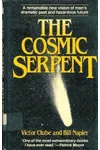
- The Cosmic Serpent (1982) – Co-authored with Victor Clube, this is the core text introducing the ideas of coherent catastrophism and comet-driven historical collapses.
- The Cosmic Winter (1990) – Co-authored with Victor Clube, this volume builds on their theory, combining archaeological, historical, mythological, and astronomical evidence to show how space debris impacts human history.
- The Origin of Comets (1990) – A highly technical academic work co-authored with astronomer M. E. Bailey and Victor Clube, detailing the dynamics and origins of comets in the solar system.
What to Know Before You Start
Before diving into Napier's bibliography, here are a few key insights to guide your reading experience:
- Academic Accuracy: Unlike many techno-thriller authors who use "sci-fi hand-waving," Napier is a working scientist (an honorary professor at Cardiff University and the University of Buckingham). The orbital mechanics, mathematical codes, and astronomical hazards in his books are highly accurate. He has even had an asteroid, 7096 Napier, named in his honor.
- Sci-Fi Influence: Napier's expertise on cosmic impacts is so well-regarded that he served as a scientific consultant for legendary science fiction author Anne McCaffrey on her Dragonriders of Pern novel, The Skies of Pern, ensuring the comet-impact scenes were scientifically plausible.
- Distinguishing the Authors: Be careful not to confuse the astronomer Bill Napier (born 1940) with the historical fiction writer William Napier (born 1965), who is famous for the Attila trilogy and Clash of Empires. Online retail listings and book databases frequently conflate the two authors.