
The Recommended Reading Order: The Crossover Connection
At first glance, Blue Balliett’s books appear to be divided into a single four-book series and a handful of standalone novels. However, readers who jump straight through the primary series will miss a massive payoff. Her 2015 novel, Pieces and Players, serves as a grand crossover event that unites protagonists from three separate books. To fully appreciate this puzzle-solving super-group, we recommend reading her fiction in publication order:
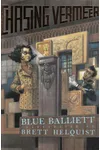
- Chasing Vermeer (2004) – Introduces Calder Pillay and Petra Andalee as they tackle a stolen painting mystery in Chicago.
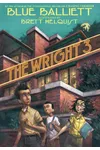
- The Wright 3 (2006) – The sequel following Calder, Petra, and their friend Tommy Segovia at Frank Lloyd Wright's Robie House.
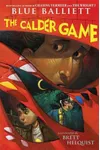
- The Calder Game (2008) – Takes Calder to England, where he disappears alongside an Alexander Calder sculpture.
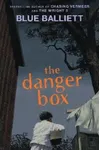
- The Danger Box (2010) – A standalone novel introducing Zoomy Chamberlain and a mysterious notebook linked to Charles Darwin.
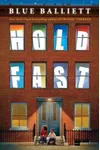
- Hold Fast (2013) – A standalone novel following Early Pearl as she searches for her missing father in Chicago.
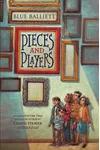
- Pieces and Players (2015) – The ultimate crossover event where Calder, Petra, Tommy, Zoomy, and Early team up under the guidance of Mrs. Sharpe to solve a museum heist.
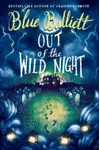
- Out of the Wild Night (2018) – A supernatural Nantucket ghost story that can be read completely independently of the Chicago-based universe.
The Main Series: Chasing Vermeer (The Pentominoes Series)
Often referred to by fans as the Pentominoes or Art Mysteries series, these books are set in Hyde Park, Chicago, and follow sixth-graders at the University of Chicago Laboratory Schools. They are heavily interactive and filled with real-world art history, geometry, and philosophy.
- Chasing Vermeer (2004): Petra and Calder search for Johannes Vermeer’s stolen painting, A Lady Writing. The book features illustrations by Brett Helquist that contain hidden pentominoes and frogs, spelling out a secret message ('THE LADY LIVES') for observant readers.
- The Wright 3 (2006): Tommy Segovia joins the duo as they try to save Frank Lloyd Wright’s famous Robie House from demolition, encountering suspicious construction workers and ghosts.
- The Calder Game (2008): Tommy, Petra, and Calder find themselves in Woodstock, England. When a local sculpture by Alexander Calder vanishes and Calder disappears with it, the children must use his signature pentomino codes to find him.
- Pieces and Players (2015): A massive art heist (modeled on the real-life Isabella Stewart Gardner Museum theft) hits Chicago. Mrs. Sharpe, a recurring mentor character, recruits her former students alongside Zoomy and Early to crack the case.
The Crossover Standalones
While published as standalone stories, these two novels are essential setup for the finale of the main series:
- The Danger Box (2010): Set in a small town in Michigan, this story centers on Zoomy Chamberlain, a legally blind boy who discovers a rare diary that may have belonged to Charles Darwin. Zoomy's distinct way of seeing the world and processing clues becomes a vital asset in the later crossover.
- Hold Fast (2013): Set in Chicago, this book follows Early Pearl, a girl whose family ends up in a homeless shelter after her father goes missing under mysterious circumstances. Early's deep love of language and poetry helps her piece together the conspiracy.
Nantucket Ghost Collections (Non-Fiction)
Before achieving fame with her children's fiction, Balliett lived on Nantucket Island and gathered local folklore. These collections are compilation books of true oral histories told by island residents:
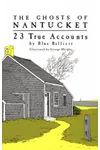
- The Ghosts of Nantucket: 23 True Accounts (Originally published in 1984, re-released in 1990)
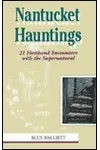
- Nantucket Hauntings (1990)
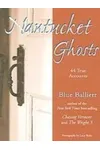
- Nantucket Ghosts: 44 True Hauntings (2006) – A consolidated volume that merges the accounts from her two earlier collections into one book.
What to Know Before You Start
Blue Balliett’s books are famous for treating young readers with respect, introducing complex themes like Fibonacci numbers, Darwinism, structural preservation, and the definition of art itself. To get the most out of the reading experience, readers should keep a set of pentominoes handy (or draw their own), as they are Calder's primary tool for thinking. Additionally, pay close attention to Brett Helquist's illustrations, as they frequently contain codes that interact directly with the plot of the novels.