




Who Was Bob Burton?
Before Bob Burton was a novelist, he was one of America’s most prolific and renowned bounty hunters. Born on August 9, 1938, Burton spent decades chasing bail jumpers, fugitives, and eventually tracking international child abduction cases. Operating out of Tombstone, Arizona—a town famous for its lawless history—Burton founded the National Association of Bail Enforcement Agents (NABEA), professionalizing an industry that had long operated in the shadows. He passed away on September 22, 2016, leaving behind a legacy that bridged real-world law enforcement and pulse-pounding thriller fiction.
Burton's fiction is co-authored with veteran action and Western writer L.J. Martin. Together, they channeled Burton's real-life tactical expertise and harrowing experiences into the page-turning Manhunter series, creating some of the most authentic tactical thrillers on the market. For readers looking to dive into his books, understanding the distinction between his fictional stories and his practical instructional guides is the key to enjoying his legacy.
The Recommended Starting Point
If you are looking to read Bob Burton's books, the best place to start is with his fiction. Specifically, you should begin with the first book in the Manhunter series: Crimson Hit (2004). Starting here introduces you to the gritty, realistic world of Dev Shannon, a bounty hunter whose life closely mirrors Burton's own career. The series relies on continuous character development and personal storylines, meaning that reading out of order will spoil significant narrative threads.
For readers who prefer non-fiction and want a historical look at the training, tactics, and legal realities of bail enforcement in the late 20th century, starting with Bail Enforcer: The Advanced Bounty Hunter (1990) is highly recommended. It serves as the definitive manual for his real-world techniques.
The Manhunter Series Reading Order
Bob Burton's primary fictional work is the Manhunter series, which is co-authored with L.J. Martin. It features high-stakes fugitive recovery, detailed tactical operations, and complex moral dilemmas. While the first two books follow the same protagonist, the third book shifts focus to a new team but remains set in the same universe under the same series umbrella.
1. Crimson Hit (2004)
In this series opener, readers are introduced to Dev Shannon, a cynical but deeply principled bounty hunter operating out of Santa Barbara, California. Shannon is hired for what seems like a standard skip-tracing job, but it quickly spirals into a web of corruption, murder, and personal danger. The book is notable for introducing Shannon's soft side—specifically, his relationship with his beloved Siamese cat, Futa, who provides a stark contrast to the violence of his daily job.
2. Bullet Blues (2004)
Picking up after the events of the first book, Bullet Blues follows Dev Shannon as he investigates the suspicious disappearance of a close friend's wife. Shannon must navigate a trail of lies that leads him into confrontation with dangerous criminals. This book is widely praised by fans for its gritty realism, snappy dialogue, and realistic depiction of the physical and psychological toll of fugitive recovery.
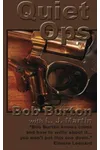
3. Quiet Ops (2012)
The third installment shifts the spotlight away from Dev Shannon to introduce a new protagonist: Brad Bennedict, a former Marine who runs a private intelligence and bail enforcement team called "Quiet Ops" based in Montecito. The team includes colorful characters such as the formidable ex-footballer Cocoa and the skilled agent Monique. In this novel, the team is hired to rescue a billionaire's drug-addicted daughters, leading them from the affluent neighborhoods of California to the treacherous Florida Everglades.
Publication Order of Bob Burton's Books
While reading the fiction in chronological order is straightforward, some readers prefer to intersperse his fictional stories with his real-world manuals to see where the inspiration for the novels came from. Here is the complete list of Bob Burton's works by their original publication years:
- Bounty Hunter (1984) — Non-Fiction
- Bail Enforcer: The Advanced Bounty Hunter (1990) — Non-Fiction
- Crimson Hit (2004) — Fiction (Manhunter Book 1)
- Bullet Blues (2004) — Fiction (Manhunter Book 2)
- Top Secret: The Dictionary of Espionage and Intelligence (2005) — Non-Fiction
- Quiet Ops (2012) — Fiction (Manhunter Book 3)
Understanding the Non-Fiction Manuals
Burton's non-fiction works are not story-driven, but they are essential reading for anyone wanting to understand the mindset of a real-life investigator. They provide the foundation of tactical details and jargon used in the novels.
Bounty Hunter (1984) and Bail Enforcer (1990)
These two books served as foundational texts for the National Institute of Bail Enforcement. Bail Enforcer is the more comprehensive of the two, covering surveillance, tracking, interrogation, weapons, and the legal framework of the industry. While some of the technology mentioned is now dated, the psychological tactics and tracking principles remain highly regarded.
Top Secret: The Dictionary of Espionage and Intelligence (2005)
This reference book is a comprehensive dictionary of espionage terminology, historical code names, and intelligence agency jargon. It offers a fascinating look into the global intelligence apparatus and is a useful companion piece for readers of military and political thrillers.
Practical Reading Guidance and Continuity Caveats
When diving into Bob Burton's bibliography, keep these tips in mind:
- Fiction vs. Non-Fiction: The two halves of Burton's writing career can be read completely independently. You do not need to read the non-fiction manuals to understand the plot of the novels, though doing so will give you a deeper appreciation for the authentic tradecraft Dev Shannon uses.
- Co-Authorship: All the novels were written in collaboration with L.J. Martin. Martin's clean prose style combined with Burton's real-life scenarios results in a pacing that is faster and more narrative-focused than Burton's dry instructional manuals.
- The Series Shift: Be aware that Quiet Ops acts more like a spin-off or thematic continuation rather than a direct sequel to Bullet Blues. Because it features Brad Bennedict's team rather than Dev Shannon, some database sites list it as a standalone novel. However, publisher listings and box sets officially group it as the third book of the Manhunter series.