





Where Should You Start?
Bob Reiss is a versatile author who writes under his own name as well as two main pseudonyms: Ethan Black and James Abel. Because his work spans different genres—from realistic police procedurals to scientific action thrillers and investigative non-fiction—your ideal starting point depends on your personal taste:
- For gritty, character-driven mystery lovers: Start with the Conrad Voort series (written as Ethan Black), beginning with The Broken Hearts Club (1999). It introduces a modern detective haunted by his family's long legacy in New York law enforcement.
- For fans of high-tech military and bio-thrillers: Start with the Joe Rush series (written as James Abel), beginning with White Plague (2015). It is a fast-paced thriller set in the freezing waters of the Arctic.
- For readers who prefer standalone suspense or environmental themes: Dive into his standalone fiction like Black Monday (2005) or his acclaimed non-fiction climate study, The Coming Storm (2001).
The Conrad Voort Series (As Ethan Black)
Writing under the pen name Ethan Black, Reiss created Conrad Voort, a wealthy NYPD detective who represents the eighth generation of his family to serve in New York City law enforcement. This series combines intense psychological suspense with the unique pressures of family tradition. The books are best read in publication order, as Voort’s personal life, relationships, and standing within the department evolve over the course of the series.
1. The Broken Hearts Club (1999)
This debut introduces Detective Conrad Voort as he investigates a terrifying support group for rejected, brokenhearted men who have turned their pain into a deadly conspiracy. Voort must navigate a trail of murders that hit close to home while dealing with his family's imposing legacy.
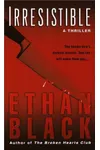
2. Irresistible (2000)
In this second installment, Voort is drawn into a deadly game of obsession when a prominent female therapist is accused of using her influence to manipulate men into committing crimes. The novel explores themes of control, desire, and psychological warfare.
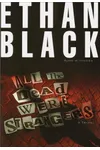
3. All the Dead Were Strangers (2001)
Voort faces a highly organized ring of killers who specialize in making murders look like tragic, unrelated accidents. When a friend warns Voort about the conspiracy shortly before dying in a suspicious accident himself, the case becomes deeply personal.
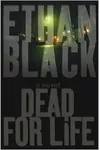
4. Dead for Life (2003)
This novel pits Voort against a brilliant and vengeful antagonist: a former priest and rogue intelligence officer who plans to unleash a devastating threat upon New York City. The investigation forces Voort to confront ethical boundaries to save lives.
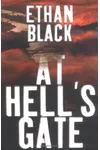
5. At Hell's Gate (2004)
The final book in the Voort series centers on a high-stakes conspiracy along the Hudson River. Voort must stop a highly sophisticated plan that threatens the security of the entire city while dealing with betrayal from unexpected quarters.
The Joe Rush Series (As James Abel)
Under the pseudonym James Abel, Reiss pivots to military bio-thrillers featuring Joe Rush, a Marine doctor, bioterror expert, and investigator. This series is heavily grounded in cutting-edge science, extreme weather environments, and geopolitical tensions. Readers should follow the publication order to fully appreciate the developing team dynamics and recurring plot threads.
1. White Plague (2015)
Joe Rush is sent to the Arctic to investigate a disabled submarine where the crew has fallen victim to a mysterious, rapidly spreading disease. Rush must find a cure and secure the submarine before a geopolitical crisis erupts.
2. Protocol Zero (2015)
Set in the freezing winds of Alaska, Rush investigates the horrific deaths of a remote research team. The search leads to a historical cover-up and a modern-day threat that could devastate the global food supply.
3. Cold Silence (2016)
Rush is called to the Horn of Africa and the deep deserts to stop a resurrected ancient plague. This installment emphasizes the terrifying speed of biological outbreaks and the logistical difficulties of containing threats in harsh terrain.
4. Vector (2017)
When a mysterious illness strikes down soldiers and civilians alike in the American heartland, Rush must uncover a hidden domestic bio-terror plot. The thriller explores vulnerabilities in public health and national defense systems.
Bob Reiss Standalone Novels
If you prefer self-contained thrillers that do not require committing to a series, Bob Reiss has written several standalones under his own name (and occasionally as R. Scott Reiss) spanning several decades. These can be read in any order:
- Summer Fires (1979): Reiss's debut novel, centering on corporate greed and environmental hazards in the coal-mining regions of the United States.
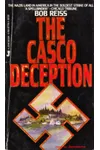
- The Casco Deception (1983): A historical World War II conspiracy thriller set on the coast of Maine.
- Divine Assassin (1985): A fast-paced political thriller detailing an international conspiracy and assassin hunt.
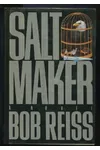
- Saltmaker (1988): A near-future speculative political thriller involving environmental crises and resources.
- Flamingo (1990): A thriller set against the backdrop of Florida's political and environmental battles.
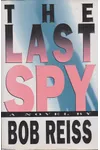
- The Last Spy (1993): A classic espionage novel dealing with the fallout of the Cold War.
- Purgatory Road (1996): A dark thriller set in the American Southwest, exploring themes of survival and justice.
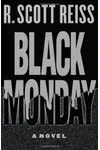
- Black Monday (2005): A highly prophetic thriller about an engineered virus targeting the global oil supply, grinding civilization to a halt.
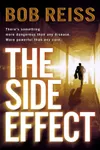
- The Side Effect (2006): A medical thriller focusing on a miracle drug with a horrifying, hidden cost.
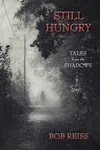
- Still Hungry (2022): A speculative short story collection that captures the eerie, reflective tone of classic anthology television.
What to Know Before You Start
Bob Reiss is unique in how closely his fiction matches his real-world investigative journalism. Before diving into his books, keep these details in mind:
First, the author’s environmental research heavily informs his plots. If you enjoy the scientific authenticity of the Joe Rush series or the resource-war themes in Black Monday, you will find their real-world counterparts in Reiss's non-fiction books, such as The Coming Storm (which details the early politics of climate change) and The Eskimo and the Oil Man (which covers the battle over Arctic drilling). Reading his non-fiction provides a fascinating look at the real science behind his bio-thrillers.
Second, although the Conrad Voort series is written under the name Ethan Black and the Joe Rush series under James Abel, they share Reiss’s signature fast pacing and meticulous technical research. You do not need to worry about cross-over events or shared universes between the Ethan Black and James Abel books; they are entirely separate continuities that can be enjoyed independently of one another.