




























Where to Start Reading Booker T. Washington
For anyone looking to understand the life, philosophy, and historical impact of Booker T. Washington, the absolute best starting point is his classic autobiography, Up from Slavery (1901). It is his most polished, widely read, and highly regarded work, detailing his journey from being born into slavery to founding the Tuskegee Normal and Industrial Institute. It serves as the perfect entry point into his pragmatic educational philosophy and his optimistic vision for economic self-reliance.
Once you have finished his masterwork, you can branch out into two different paths: his direct autobiographical follow-ups (which expand on his work at Tuskegee and his later life) or his social and political essay collections (which spark historical debates with contemporaries like W.E.B. Du Bois).
The Autobiographical Narrative Order
Although Booker T. Washington did not write a formal fiction-style series, he published four distinct works that detail his life, work, and institutional goals. Reading these in their narrative order provides a complete look at his life's progression:
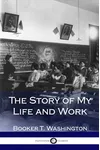
- The Story of My Life and Work (1900): Washington's first attempt at an autobiography, published as a subscription book. While less polished than his later works, it offers a raw look at his early struggles.
- Up from Slavery (1901): His definitive autobiography, tracking his rise from enslavement to national prominence and the early years of the Tuskegee Institute.
- Working with the Hands (1904): Explicitly subtitled as a sequel to Up from Slavery, this volume dives deep into his practical experiences implementing vocational and industrial training programs at Tuskegee.
- My Larger Education: Being Chapters from My Experience (1911): Washington's final autobiographical work, reflecting on his life beyond Tuskegee, his travels, and his interactions with national political leaders and philanthropists.
Publication Order of Non-Fiction Works
If you prefer to read Booker T. Washington's works in the exact order they were released to the public, follow this publication order. This sequence allows you to see how his public platform and rhetorical style evolved over time:
- The Future of the American Negro (1899) – Washington's first major collection of essays, outlining his beliefs on economic uplift and industrial education.
- The Story of My Life and Work (1900) – His initial, subscription-targeted autobiography.
- Up From Slavery (1901) – His masterpiece autobiography.
- Character Building (1902) – A collection of weekly Sunday evening chapel addresses delivered to the students and teachers at Tuskegee.
- The Negro Problem (1903) – A collaborative volume edited by Washington, featuring essays from other prominent Black leaders of the era, including W.E.B. Du Bois.
- Working with the Hands (1904) – The direct sequel to his autobiography, detailing the practicalities of Tuskegee's education system.
- Frederick Douglass (1906) – A full-length biography written by Washington about the famous abolitionist.
- The Negro in the South (1907) – A collection of lectures co-authored with W.E.B. Du Bois, capturing their differing visions for racial progress.
- The Story of the Negro (1909) – A comprehensive two-volume historical study tracing the history of the Black race.
- My Larger Education (1911) – His final reflective autobiography on his national and political influence.
- The Man Farthest Down (1912) – A sociological research study co-authored with Robert E. Park, investigating the conditions of the poorest working classes in Europe.
What to Know Before You Start
When reading Booker T. Washington, it is vital to understand the historical context of the post-Reconstruction and Jim Crow eras. Washington's philosophy focused on incremental progress, vocational education, and economic self-sufficiency rather than immediate political agitation. This stance famously placed him in opposition to W.E.B. Du Bois, who advocated for immediate civil rights and higher academic education. To get a complete view of this historical debate, readers should pair Washington's Up from Slavery and The Negro in the South with Du Bois's landmark work, The Souls of Black Folk.
For serious scholars and historians, the ultimate academic resource is The Booker T. Washington Papers, a definitive 14-volume project published by the University of Illinois Press between 1972 and 1989. Volumes 1 through 13 compile his extensive personal correspondence, speeches, and private diaries, while Volume 14 serves as a comprehensive cumulative index and bibliography.