




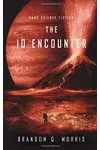
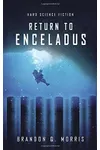

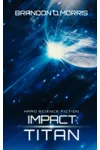
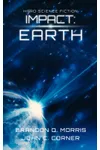

The Recommended Reading Path: Where to Start
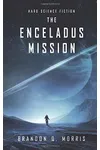
For readers looking to experience the full scale of Brandon Q. Morris's shared universe, the best starting point is The Enceladus Mission, the first book in the Ice Moon series. Starting here introduces you to the core themes of human space exploration, realistic orbital physics, and the recurring characters—most notably Dr. Dimitri Marchenko—whose legacy and eventual artificial intelligence incarnation echo across multiple sequels and spin-off series.
If you prefer a self-contained story that doesn't commit you to a multi-book universe immediately, the standalone novel Lost Moon: Lunar Eclipse or the tightly focused Mars Nation trilogy are excellent alternatives. However, for the true, interconnected experience, beginning with Saturn's moons in the Ice Moon series is the gold standard.
The Shared Universe Chronology
Although Brandon Q. Morris frequently emphasizes that almost all of his books can be read independently, the majority of his series exist within a shared timeline. The technology and political structures evolve sequentially, making a chronological or publication-order approach highly rewarding. The main narrative backbone flows as follows:
Phase 1: Exploration of Our Solar System
This phase is grounded in our immediate cosmic backyard, depicting humanity's first tentative steps toward finding life and setting up sustainable outposts.
- Ice Moon Series (Books 1–5): Beginning with The Enceladus Mission (2018) and ending with The Jupiter Catastrophe (2020). This series is foundational, introducing Dr. Dimitri Marchenko and setting up the technological leaps in robotics, AI, and fusion propulsion that shape future books.
- Solar System Series (Books 1–9): Expanding the focus to other planetary bodies. This series includes books like The Hole (2019), Silent Sun (2019), and The Triton Disaster (2020). It runs concurrently with or shortly after the events of the Ice Moon series. Notably, the laser-powered propulsion facility established on Triton in The Triton Disaster directly enables the interstellar journeys in the next phase.
- Mars Nation Trilogy (Books 1–3): Published in 2019, this trilogy details the grueling, realistic struggle of building a colony on Mars, running parallel to the planetary expeditions.
- Impact Duology (Impact: Titan and Impact: Earth): Published in 2020, focusing on immediate localized planetary crises within the system.
Phase 2: Interstellar Expansion
Once humanity establishes infrastructure across the solar system, the focus shifts to interstellar missions using laser-sail propulsion and AI-guided colony ships.
- Proxima Trilogy (Books 1–3): Comprising Proxima Rising, Proxima Dying, and Proxima Dreaming (all 2019). This trilogy tracks the first human expedition to the Alpha Centauri system (specifically Proxima Centauri b).
- Proxima Logfiles (Books 1–7): Beginning with Marchenko's Children (2021) and concluding with Earthbound (2022). This sequel series follows the AI entity Marchenko along with two humans, Adam and Eve, as they explore the system. It directly builds on the character and technological developments of the Proxima trilogy and the Ice Moon series.
Major Series, Spin-Offs, and Co-Authored Trilogies
Beyond the core Solar System and Proxima timeline, Morris has authored several distinct trilogies and co-authored series that explore different sci-fi subgenres, from cosmic horror to time travel loops:
The Dark Cloud Series
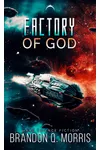
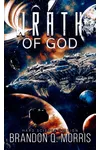
A four-book epic starting with The Factory of God (2022) and concluding with The Wrath of God (2023). This series shifts the focus toward mysterious alien megastructures and cosmic engineering projects in deep space.
Andromeda Trilogy
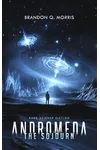
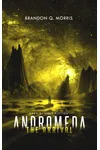
Consisting of The Encounter, The Sojourn, and The Arrival (all 2022). It tells the unique story of a sunless rogue planet drifting through the void, where generations of humans survive in subterranean caverns waiting to reach the Andromeda galaxy, only to be stopped by an invisible cosmic anomaly.
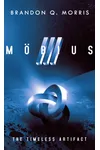
Möbius Series (The Timeless Artifact)
A mind-bending trilogy consisting of Möbius, Möbius 2, and Möbius 3 (2022). It blends mathematical theory with physics as researchers Max Webber and Elisabeth Gabai investigate a mysterious artifact that defies the linear progression of time.
Disturbance Trilogy
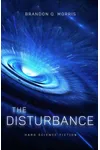
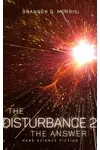
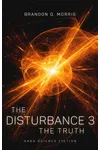
An accessible trilogy including The Disturbance (2022), The Answer (2022), and The Truth (2023) exploring localized anomalies and first-contact scenarios.
Tachyon Series
A recent space opera trilogy published in 2024 (The Weapon, The Ship, The Planet) centered on faster-than-light communication and a dangerous alien artifact in the Gliese system.
Co-Authored Works
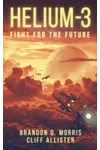
- Helium-3 Series (with Cliff Allister): A two-book series (Fight for the Future and Death from the Past) published in 2021. It won the 2019 Skoutz Award in its original German run. The plot features two distinct alien species clashing over a vital energy resource.
- Portal to Xibalbá Series (with Tim L. Rey): A 2024 adventure trilogy (The Portal, The Portal 2, The Portal 3) combining archaeology and hard sci-fi, following a search for a Mayan underworld gateway in underwater Mexican caves.
What to Know Before You Start
Brandon Q. Morris is the pen name of Matthias Matting, a German physicist. His background shines through in the structural design of his novels. A defining signature of his work is the inclusion of a detailed scientific afterword at the end of every book. In these sections, he breaks down the real-world astrophysics, geology, and orbital mechanics used in the plot, distinguishing fact from speculative fiction. For readers who enjoy hard sci-fi, checking these afterwords is highly recommended as it enriches the reading experience and details how close humanity is to achieving the technology depicted in the stories.