
The Recommended Brandon Taylor Reading Path
Brandon Taylor’s fiction is not bound by traditional sequels or chronological storylines, meaning you have complete freedom to choose your starting point. However, to fully appreciate his stylistic evolution, thematic growth, and structural experimentation, we highly recommend reading his work in publication order. This path allows you to witness how Taylor refines his sharp, clinical examination of intimacy, academic alienation, and queer relationships over time.
Here is the recommended reading path:
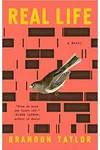
- Real Life (2020) – Start with Taylor’s debut novel. This Booker Prize-shortlisted campus novel provides the perfect introduction to his precise prose style and his interest in the quiet, structural microaggressions of academic spaces.
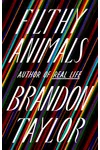
- Filthy Animals (2021) – Move next to this Story Prize-winning collection of interconnected short stories. It serves as a bridge between the singular perspective of his debut and the larger ensemble casts of his later work.
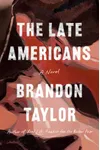
- The Late Americans (2023) – Dive into this multi-perspective, baton-passing novel set in Iowa City. It expands the focus from a single protagonist to a wider circle of friends and lovers.
- Minor Black Figures (2025) – Conclude with his latest novel, which shifts the setting from the American Midwest to the competitive art scene of New York City, tracking the creative and romantic struggles of a young Black painter.
Publication Order of Brandon Taylor’s Books
For readers who want to follow his release history exactly, including his major anthology contribution, here is the timeline of his published works:
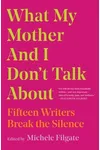
- What My Mother and I Don't Talk About: Fifteen Writers Break the Silence (2019) – Featuring Taylor’s non-fiction essay "All About My Mother".
- Real Life (2020) – Debut novel.
- Filthy Animals (2021) – Connected short story collection.
- The Late Americans (2023) – Ensemble novel.
- Minor Black Figures (2025) – Novel.
Deep Dive into the Works
Real Life (2020)
Taylor’s debut novel, Real Life, is a deeply intimate campus novel set over a single summer weekend at a unnamed Midwestern university. The story follows Wallace, a queer Black biochemistry graduate student who has spent years suppressing the trauma of his upbringing in Alabama. When a series of personal and professional confrontations occurs over the weekend—ranging from sabotaged lab experiments to awkward encounters with his predominantly white peers—Wallace is forced to confront the distance he has kept between himself and the world. The book was a major literary success, earning a spot on the 2020 Booker Prize shortlist.
Filthy Animals (2021)
Winner of the 2022 Story Prize, Filthy Animals is a collection of linked short stories set in the Midwest. The beating heart of the book is a series of five stories tracking a tense, emotionally complex sexual triangle between Lionel, a queer Black graduate student recovering from a mental health crisis, and a couple of modern dancers, Charles and Sophie. The other standalone stories in the collection explore similar themes of isolation, bodily vulnerability, and the difficult search for connection among young creatives, academics, and children.
The Late Americans (2023)
Set in and around Iowa City, The Late Americans is an ensemble novel that functions almost like a series of interconnected vignettes. Using a "baton-passing" narrative technique, each chapter shifts the focal point to a different member of a shared social and professional circle. Major characters include Seamus, a cynical and defensive poet; Noah, a dancer who links multiple social groups; Ivan, a former dancer trying to establish financial security; Fyodor, a mixed-race meat-packing plant worker; and Fatima, a dancer asserting her independence. The novel dissects how money, artistic ambition, sex, and race complicate the lives of young people on the cusp of adulthood.
Minor Black Figures (2025)
Published in October 2025, Minor Black Figures represents a shift in geography and focus for Taylor. The novel takes place in New York City and centers on Wyeth, a young Black painter battling a creative block while working on art restoration. During a tense summer, Wyeth enters into a complex relationship with Keating, a white former seminarian. Their romance sparks deep debates about faith, representation, and the purpose of art. As Wyeth researches the life of a forgotten historical Black artist, the novel asks profound questions about identity, legacy, and what it means to create art in the modern world.
What to Know Before You Start
Before diving into Brandon Taylor's bibliography, it is helpful to keep a few stylistic elements in mind. First, Taylor brings a scientist’s eye to his fiction. Having studied biochemistry at the graduate level before attending the Iowa Writers' Workshop, his writing is characterized by clinical precision, meticulous attention to physical detail, and a lack of melodrama. He describes bodies, laboratory procedures, and human gestures with acute detail.
Second, do not expect conventional, plot-driven narratives. Taylor’s works are character studies that prioritize interiority, atmosphere, and the slow accumulation of interpersonal tension over dramatic twists. The relationships in his books are often volatile, highlighting the ways people can hurt or alienate those they love most. Finally, his work is deeply grounded in the contemporary realities of class, race, and queerness in America, offering an authentic look at marginalized individuals navigating institutional spaces that are rarely designed with them in mind.