



























Where to Start with Brian Aldiss
Brian Aldiss was one of the most prolific and experimental voices of the science fiction New Wave. Because his style varies wildly—ranging from traditional space adventure to avant-garde literary puzzles—choosing your first book can be daunting. Depending on your tastes, there are three primary starting points:
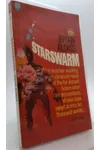
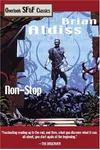
- For Classic Hard Sci-Fi Fans: Non-Stop (1958) (published in the US as Starship). This is Aldiss's debut science fiction novel and one of the finest generation starship stories ever written. It follows a tribe of primitive survivors traversing the overgrown, corridor-based world of a giant vessel, slowly discovering the truth of their environment.
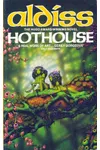
- For Science Fantasy and Dying Earth Lovers: Hothouse (1962) (published in the US in abridged form as The Long Afternoon of Earth). Set in a bizarre, far-future Earth locked in place facing a dying Sun, this Hugo-winning novel depicts an ecosystem dominated by giant, predatory vegetation. It is lush, imaginative, and highly eccentric.
- For Post-Apocalyptic Fiction Enthusiasts: Greybeard (1964). Written during the height of the Cold War, this poignant novel explores a world where nuclear tests have left humanity and most mammals entirely sterile. The narrative follows a small group of aging survivors searching for hope in a quiet, childless England.
The Helliconia Trilogy: Aldiss’s Magnum Opus
For many readers, the Helliconia trilogy is Brian Aldiss's crowning achievement. This sweeping science-fantasy epic chronicles the rise and fall of civilizations on the planet Helliconia, a world orbiting a binary star system that results in a massive "Great Year" where seasons last for centuries.
You must read this trilogy in publication order, which matches the chronological progression of the planetary seasons:
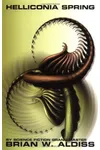
- Helliconia Spring (1982): Details the emergence of humanity from a devastating, centuries-long winter and their struggles against the native, cold-loving Phagor species.
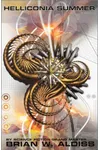
- Helliconia Summer (1983): Focuses on the height of human civilization during the hot season, exploring complex political, religious, and ecological conflicts.
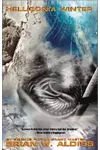
- Helliconia Winter (1985): Chronicles the slow decay of civilization as the planet returns to ice, focusing on survival and the preservation of knowledge.
What to know before you start: The trilogy is observed from a distant human space station called the Avernus, which acts as a bridge between the alien world of Helliconia and the future of Earth. Reading the books out of order will ruin the profound ecological and cultural evolution that underpins the entire narrative.
The Monster Trilogy: Reimagining Gothic Classics
In the 1970s and 1980s, Aldiss wrote a loose thematic sequence known as the Monster Trilogy (or the Unbound series). While these books feature different protagonists and function as standalone stories, they are united by time travel, literary homage, and the theme of scientific hubris.
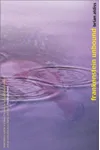
- Frankenstein Unbound (1973): A 21st-century politician is pulled back in time to 1816 Switzerland, where he meets Mary Shelley, Victor Frankenstein, and the real-life Creature. It was adapted into a film by Roger Corman in 1990.
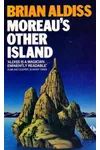
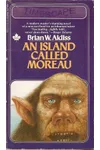
- Moreau's Other Island (1980) (also published in the US as An Island Called Moreau): A dark update of H.G. Wells's classic, following a shipwrecked U.S. undersecretary who discovers a remote island where a scientist is breeding mutant beast-men using modern genetic technology.
- Dracula Unbound (1991): A scientist travels through time to the era of Bram Stoker and ancient history to uncover the true, parasitic nature of vampires and defeat Dracula.
These books can be read in any order, though reading them in publication order highlights Aldiss's evolving commentary on 19th-century speculative fiction.
Mainstream Fiction: The Horatio Stubbs Trilogy and The Squire Quartet
Though famous for his science fiction, Aldiss wrote extensively in other genres. Readers looking for realistic fiction should seek out these two major sequences:
The Horatio Stubbs Trilogy
This semi-autobiographical coming-of-age trilogy follows a young Englishman named Horatio Stubbs. The books are known for their frank, humorous depiction of adolescent sexuality and the realities of military service during World War II.
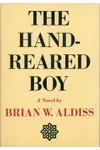
- The Hand-Reared Boy (1970): Focuses on schoolboy life and sexual awakening in the 1930s.
- A Soldier Erect (1971): Traces Horatio's experiences in the British Army during the Burma Campaign.
- A Rude Awakening (1978): Set in Sumatra immediately after the war, detailing the chaotic post-colonial transition.
The Squire Quartet
The Squire Quartet consists of four dense, contemporary novels that examine the state of Western culture, psychological trauma, marriage, and memory. They contain no science fiction elements:
- Life in the West (1980)
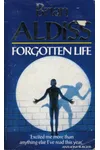
- Forgotten Life (1988)
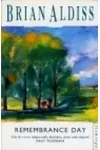
- Remembrance Day (1993)
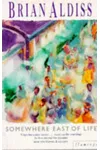
- Somewhere East of Life (1994)
Short Story Collections and "A.I."
Aldiss was a master of the short story, publishing dozens of collections. His most famous short work is "Supertoys Last All Summer Long" (1969), a poignant tale about an android child seeking his mother's love. Stanley Kubrick optioned the story and worked with Aldiss on a film adaptation for years; the project was eventually directed by Steven Spielberg and released as A.I. Artificial Intelligence (2001). The story, along with its sequels, can be found in the collection Supertoys Last All Summer Long and Other Stories of Future Time.
Key US vs. UK Title Differences and Caveats
If you are collecting physical copies of Brian Aldiss's books, be aware that many of his works were published under different names in the United States and the United Kingdom:
- Non-Stop (UK) is identical to Starship (US).
- Hothouse (UK) was published as The Long Afternoon of Earth (US). Note that early US paperbacks of this title were heavily abridged to fit standard page counts, so seek out the complete UK text if possible.
- Moreau's Other Island (UK) is identical to An Island Called Moreau (US).
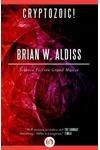
- Cryptozoic! (US) is identical to An Age (UK).
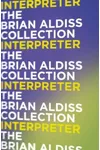
- Bow Down to Nul (UK) is identical to The Interpreter (US).
- Galaxies Like Grains of Sand is an expanded version of the collection also known as The Canopy of Time.