
How to Read Brian Greene: Recommended Reading Paths
As a leading theoretical physicist and co-founder of the World Science Festival, Brian Greene has a rare gift for translating dense mathematical physics into elegant, narrative-driven prose. Because his books are popular science non-fiction rather than serialized fiction, you do not need to read them in a strict chronological sequence. However, they do build upon one another conceptually. To get the most out of his work, we suggest following one of these curated pathways.
Path 1: The Core Cosmic Trilogy (Conceptual Progression)
If you want to understand the modern physics of space, time, and gravity from the ground up, read his three core books in order of thematic complexity:
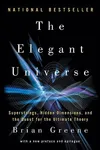
- The Elegant Universe (1999): Start here. This book introduces the foundational principles of special relativity, general relativity, and quantum mechanics before diving into superstring theory. It acts as the perfect primer for his subsequent, more detailed explorations.
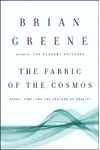
- The Fabric of the Cosmos (2003): Move here next. Greene shifts the focus to the nature of space and time. He explores whether space is an empty void or a physical fabric, details the arrow of time, and tackles quantum entanglement and cosmology.
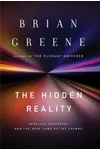
- The Hidden Reality (2011): Finish the trilogy here. This volume extends the physics introduced in the first two books to explore the multiverse, analyzing nine distinct theories of parallel worlds, from the quilted multiverse to the holographic model.
Path 2: The Philosophical & Existential Coda
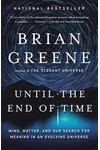
For a broader, more philosophical look at the universe and humanity's place within it, read Until the End of Time (2020). While it references string theory and thermodynamics, it is less about the mechanics of physics and more about the timeline of the cosmos, the emergence of consciousness, and how humans search for meaning in a universe destined for cold decay. It works beautifully as a standalone or as a final chapter to his core trilogy.
Path 3: Creative & Multimedia Collaborations
Greene frequently collaborates with artists, musicians, and filmmakers to bring science to life. These works are excellent entry points for younger readers or those looking for artistic adaptations of complex physics:
- Icarus at the Edge of Time (2008): A science-fiction children's book that retells the classic myth of Icarus. Instead of flying too close to the sun, a young space traveler steers his ship too close to a black hole, experiencing the mind-bending reality of relativistic time dilation.
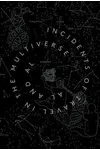
- Al and Al (Incidents of Travel in the Multiverse) (2016): A collaborative art catalog and book with the British artist duo AL and AL (Al Holmes and Al Taylor). It provides visual representations and essays detailing their multimedia collaborations, including the film adaptation of Icarus at the Edge of Time.
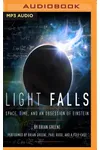
- Light Falls: Space, Time, and an Obsession of Einstein (2016): An Audible original theatrical audio production. Instead of a standard book, this is a dramatized narrative outlining Albert Einstein's grueling ten-year journey to unlock the General Theory of Relativity, featuring an original score and a full cast.
Brian Greene Bibliography: Publication Order
If you prefer to follow the evolution of Greene's explanations and the scientific discoveries of the last two decades, you can read his works in order of their release:
- The Elegant Universe: Superstrings, Hidden Dimensions, and the Quest for the Ultimate Theory (1999)
- The Fabric of the Cosmos: Space, Time, and the Texture of Reality (2003)
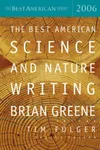
- The Best American Science and Nature Writing 2006 (2006) (Guest Editor & Contributor)
- Icarus at the Edge of Time (2008) (Children's Science-Fiction)
- The Hidden Reality: Parallel Universes and the Deep Laws of the Cosmos (2011)
- Al and Al: Incidents of Travel in the Multiverse (2016) (Art Collaboration Catalog)
- Light Falls: Space, Time, and an Obsession of Einstein (2016) (Multimedia Audio Play)
- Until the End of Time: Mind, Matter, and Our Search for Meaning in an Evolving Universe (2020)
What to Know Before You Start: Crucial Reading Caveats
1. Publication Year Discrepancies
Readers looking up The Fabric of the Cosmos might notice conflicting publication years across major databases. While some library systems and retail platforms record a late 2003 publication date, the book was widely distributed and officially released in early 2004. For reading order purposes, it sits firmly between his 1999 debut and his 2008 children's book.
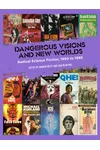
2. The Mistaken Identity of "Dangerous Visions and New Worlds"
In many automated bibliography listings, the anthology Dangerous Visions and New Worlds: Radical Science Fiction, 1950–1985 (published in 2021) is incorrectly attributed to the physicist Brian Greene. In reality, the essay contributor to this volume is a distinct writer and researcher who happens to share the same name. Physicist Brian Greene did not author any essays for this science-fiction history anthology. His actual anthology work is limited to guest-editing The Best American Science and Nature Writing 2006.
3. The Media Tie-Ins
Several of Greene's books have corresponding television adaptations that serve as fantastic visual companions. The Elegant Universe and The Fabric of the Cosmos were both adapted into multi-part PBS Nova specials hosted by Greene himself. Similarly, Light Falls was adapted into a televised theatrical presentation broadcast on PBS in 2019, which utilizes 3D projection mapping to explain general relativity. Watching these series alongside or after reading the books can help solidify the visual metaphors Greene uses, such as quantum billiards or cosmic vibrating strings.