

The Recommended Reading Order
Because all of Brian Selznick's novels are standalones, there is no strict chronological plotline connecting them. However, to appreciate the evolution of his unique visual storytelling style, readers should follow his thematic publication order. Reading his landmark books in order reveals how he transitioned from traditional novels to massive, film-like hybrid narratives.
1. The Cinematic Illustrated Trilogy (Recommended Starting Point)
While not sharing characters or settings, these three books are widely considered a thematic trilogy. They are defined by their hybrid structure, where hundreds of pages of continuous pencil drawings advance the plot, alternating with sections of traditional prose. Starting here is highly recommended to understand Selznick at his best.
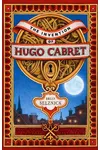
- The Invention of Hugo Cabret (2007) – Set in 1930s Paris, this follows an orphan clock-keeper, a mysterious automaton, and film pioneer Georges Méliès. This is the ideal starting point and won the 2008 Caldecott Medal.
- Wonderstruck (2011) – Tells two parallel stories set in different eras (1927 and 1977). One story is told entirely through pictures, and the other is told entirely through words, colliding in a heartwarming climax.
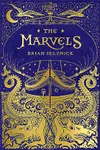
- The Marvels (2015) – The first half of the book is a 400-page visual story following a theatrical dynasty beginning in 1736, while the second half is a prose mystery set in 1990.
2. Prehistoric Adventure and Spielberg Collaboration
If you have finished the main trilogy, your next stop should be Selznick's epic nature-focused novel:
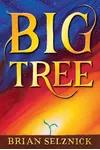
- Big Tree (2023) – This illustrated epic follows two tiny sycamore seeds, Louise and Merwin, trying to survive a prehistoric world filled with volcanoes and dinosaurs. It originated from a concept proposed by filmmaker Steven Spielberg and producer Chris Meledandri.
3. Experimental and Early Reader Standalones
After exploring his major illustrated epics, readers can dive into these distinct standalone formats:
- Kaleidoscope (2021) – A collection of short, dreamlike stories accompanied by abstract, gorgeous illustrations. It is best read after you are already familiar with Selznick's style.
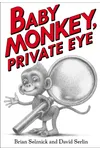
- Baby Monkey, Private Eye (2018) – Co-authored with his husband David Serlin, this is an oversized, heavily illustrated book aimed at early readers. It is a lighthearted detective tale about a baby monkey who solves cases but struggles to put on his pants.
4. Formative Early Works
Before developing his signature visual-heavy hybrid format, Selznick wrote and illustrated more traditional children's novels. These are excellent for younger readers looking for classic stories:
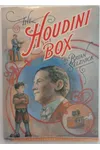
- The Houdini Box (1991) – Selznick's debut book, exploring a young boy's obsession with escape artist Harry Houdini.
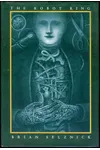
- The Robot King (1995) – A story of two siblings who build a robot out of spare parts that comes to life.
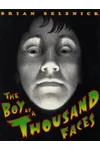
- The Boy of a Thousand Faces (2000) – A nostalgic tale of a monster-movie-loving boy waiting for a legendary filmmaker to visit his town.
Complete Book List by Publication Order
Standalone Novels
- The Houdini Box (1991)
- The Robot King (1995)
- The Boy of a Thousand Faces (2000)
- The Invention of Hugo Cabret (2007)
- Wonderstruck (2011)
- The Marvels (2015)
- Baby Monkey, Private Eye (2018) – Co-authored with David Serlin
- Kaleidoscope (2021)
- Big Tree (2023)
Companion Non-Fiction Books
These books offer behind-the-scenes insights into the cinematic adaptations of Selznick's work and are great companions for superfans:
- The Hugo Movie Companion (2011) – Explores the making of Martin Scorsese's Oscar-winning film adaptation, Hugo.
- The Wonderstruck Movie Scrapbook (2017) – Documents the production of Todd Haynes' film adaptation of Wonderstruck.
Co-Authored & Notable Illustrated Books
In addition to his own books, Selznick is a highly acclaimed illustrator for other authors. The following books are key additions to his artistic bibliography:
- Riding Freedom (1998) – Written by Pam Muñoz Ryan
- Amelia and Eleanor Go for a Ride (1999) – Written by Pam Muñoz Ryan
- The Dinosaurs of Waterhouse Hawkins (2001) – Written by Barbara Kerley (Earned Selznick a Caldecott Honor)
- When Marian Sang (2002) – Written by Pam Muñoz Ryan
- Walt Whitman: Words for America (2004) – Written by Barbara Kerley
What to Know Before You Start
Brian Selznick's books are famous for their sheer physical scale. Both The Invention of Hugo Cabret and Wonderstruck are over 500 pages long, while The Marvels exceeds 600 pages. However, because up to 70% of these pages consist of wordless pencil drawings that read like a storyboard or flipbook, they read much faster than traditional novels of similar length.
His works are highly interdisciplinary, frequently weaving in real historical figures and events, such as pioneer filmmaker Georges Méliès in Hugo Cabret, the history of deaf culture in Wonderstruck, and early dinosaur sculpture models in The Dinosaurs of Waterhouse Hawkins. Reading these books often sparks curiosity about history, film preservation, and science.