

The Recommended Reading Path
For the best experience, we recommend reading Brian Staveley’s books in publication order. The author has crafted a sprawling epic fantasy world where events in later books build heavily upon the lore, character histories, and magical systems introduced in his debut trilogy. Starting with the original trilogy ensures you learn the rules of this gritty world alongside the main characters before diving into prequels and sequel series.
Here is the recommended reading path for the main Annurian Empire sequence:
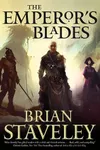
- The Emperor's Blades (Chronicles of the Unhewn Throne, Book 1)
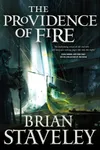
- The Providence of Fire (Chronicles of the Unhewn Throne, Book 2)
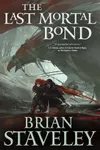
- The Last Mortal Bond (Chronicles of the Unhewn Throne, Book 3)
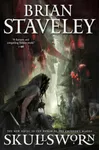
- Skullsworn (Prequel Novel)
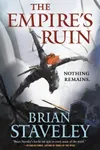
- The Empire's Ruin (Ashes of the Unhewn Throne, Book 1)
Chronicles of the Unhewn Throne: The Core Trilogy
The journey begins with the Chronicles of the Unhewn Throne trilogy. This is the backbone of Staveley's fantasy universe, introducing readers to the Annurian Empire and the three children of the assassinated Emperor Sanlitun: Kaden, Valyn, and Adare.
The Emperor's Blades (2014): The story splits between the three siblings. Kaden, the heir to the Unhewn Throne, trains in a remote mountain monastery learning the discipline of the Shin; Valyn trains with the Kettral, elite military forces who fly into battle on giant predatory hawks; and Adare remains in the capital city, navigating the lethal politics of the court to find her father's killer. It is a brilliant blend of training sequences, military action, and political intrigue.
The Providence of Fire (2015): As the empire begins to fracture, the siblings find themselves on different paths, often at cross-purposes. The conspiracy behind their father's death deepens, introducing ancient forces, religious fanaticism, and the threat of civil war. The scale of the world expands significantly in this volume.
The Last Mortal Bond (2016): The epic conclusion to the trilogy. The war reaches its climax as ancient gods interfere directly with human affairs. The fates of Kaden, Valyn, and Adare are resolved in a dark, emotionally heavy finale that changes the landscape of the empire forever.
The Dombâng Prequel: Skullsworn
Skullsworn (2017) is a standalone prequel novel set about a decade before the events of The Emperor's Blades. It shifts focus away from the royal family to the swampy, tropical city of Dombâng. The story follows Pyrre Lakatur, an assassin-priestess in training who must complete a trials sequence to prove her devotion to Ananka, the god of death. Her final trial requires her to kill seven people in fourteen days, including the one person she loves. Pyrre is a fan-favorite character who plays a significant role in the original trilogy, and this book offers a deep, intimate look at her origins, the assassin order, and the city's complex culture. Reading it after the trilogy is highly recommended, as it adds rich layers of context to her actions and beliefs in the main storyline.
The Sequel Saga: Ashes of the Unhewn Throne
Having finished the original trilogy and the prequel, readers should move on to the sequel series, Ashes of the Unhewn Throne. This series picks up approximately five years after the devastating conclusion of the original trilogy, focusing on a crumbling empire struggling to survive.
The Empire's Ruin (2021): This book follows a new cast of characters alongside a few familiar faces. The empire is falling apart, the giant hawks (Kettral) are dying out, and the magical defenses of the realm are failing. The story features three main points of view: Gwenna Sharpe, a soldier attempting a dangerous mission to recover giant hawk eggs; Ragnor, a priest trying to navigate religious shifts; and Akiil, a monk-like figure with unique talents. It is a massive, gritty book that successfully launches the next era of the world. As of 2026, the second book in this trilogy remains in development, with the author working diligently on revisions.
Publication Order vs. Chronological Order
For readers debating whether to read chronologically or by publication date, here is a breakdown of the differences and why publication order reigns supreme.
Under a chronological order, you would start with the prequel Skullsworn, followed by the original trilogy, and finish with The Empire's Ruin. The benefit of this path is that you get to see Pyrre's growth from the very beginning and understand the lore of the death priests before meeting them in the main trilogy. However, the downside is significant: Skullsworn assumes familiarity with the world's underlying mythology and can feel confusing to a new reader. Additionally, the shift in scope from the intimate, single-character focus of Skullsworn to the massive, multi-perspective epic of The Emperor's Blades can be jarring. Publication order allows the world-building to unfold naturally as the author intended.
Short Stories and Anthologies
Brian Staveley has also written short fiction, though not all of it is set within the Annurian Empire. Here is where the short stories fit:
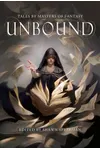
- "The Farmboy Prince" (2016): Published in the fantasy anthology Unbound, this short story is set within the Unhewn Throne universe. It is a localized, darker tale about hidden royal bloodlines and local unrest. While it offers neat flavor for dedicated fans, it is entirely optional and can be read at any point after finishing the first book.
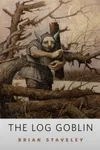
- "The Log Goblin" (2015): Published on Tor.com and later collected in the anthology Some of the Best from Tor.com, 2015 Edition, this is a standalone fantasy story. It is not connected to the Unhewn Throne universe and instead draws inspiration from the folklore of rural Vermont. It can be read as a quick standalone piece at any time.
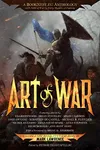
- "The Art of War" (2018): Contributed to the charity anthology of the same name, this is another standalone short story featuring a gladiator named General Dakesh. It has no ties to the Annurian Empire.
What to Know Before You Start
Before you begin your journey with Brian Staveley, it is helpful to understand the tone and themes of his books. His writing is often classified as "grimdark" or modern epic fantasy. The characters are deeply flawed, make terrible mistakes, and suffer realistic consequences. The story explores themes of political betrayal, the psychological weight of training to be a weapon, and the complex morality of religious devotion. Staveley's background in literature, history, and philosophy heavily informs the world-building, giving the empire's institutions, languages, and religions a tangible, lived-in feel. If you enjoy character-driven epic fantasy with unique military elements and dark political scheming, this is a world worth exploring.