
Where to Start Reading Bryan Stevenson
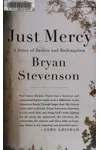
If you want to read Bryan Stevenson's work, the most essential starting point is Just Mercy: A Story of Justice and Redemption (2014). This landmark memoir is his most famous book and serves as the foundation for his entire public profile. The narrative follows Stevenson's journey as a young lawyer founding the Equal Justice Initiative (EJI) in Alabama and centers on his multi-year fight to free Walter McMillian, a Black man wrongfully sentenced to death row for murder.
Because it reads like a fast-paced legal thriller while presenting real-world human rights cases, it is the best entry point for any reader looking to understand his message of empathy, systemic reform, and justice.
Just Mercy: Original vs. Young Adult Edition
When selecting your copy of Just Mercy, you will find two primary versions available:
- Just Mercy: A Story of Justice and Redemption (2014): The unabridged adult edition. It contains comprehensive details of legal processes, secondary cases of juvenile and mentally ill inmates, and in-depth accounts of EJI's systemic advocacy.
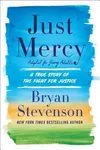
- Just Mercy (Adapted for Young Adults): A True Story of the Fight for Justice (2018): A streamlined version designed for middle and high school students. It simplifies complex legal terms and cuts roughly 55 pages of side narratives to make the book faster-paced, while fully preserving the emotional weight of McMillian's story.
Recommendation: Adult readers should opt for the 2014 original for the complete legal detail. Teachers, younger readers, or those looking for a quicker read will find the 2018 Young Adult version to be an exceptionally strong and respectful adaptation.
Collaborative Works and Anthologies
In addition to his memoir, Stevenson has contributed to collaborative publications that expand on the themes of racial equity and the law:
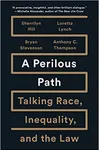
A Perilous Path: Talking Race, Inequality, and the Law (2018)
Co-authored with Sherrilyn Ifill, Loretta Lynch, and Anthony C. Thompson, this book is based on a spirited panel discussion held at the NYU School of Law. It explores the status of civil rights, the legacy of Jim Crow, and the role of legal advocacy in modern society. It is an excellent, quick follow-up for readers who want to explore policy-level discussions on systemic reform.
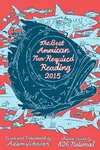
The Best American Nonrequired Reading 2015
Stevenson's writing also extends to literary anthologies. In this collection, edited by Adam Johnson, Stevenson contributed a poignant piece titled "The High Road," showcasing his skill at weaving personal narrative with social critique.
EJI Research Reports and Public History
To fully appreciate Stevenson's work, readers should look beyond traditional trade bookstores to the published materials of the Equal Justice Initiative. While technically research publications, these function as crucial historical texts:
- Lynching in America: Confronting the Legacy of Racial Terror: A comprehensive historical study documenting thousands of cases of racial terror.
- Slavery in America: An analysis tracing modern systemic bias back to the era of slavery.
- The Legacy Sites: A History of Racial Injustice: A print companion book that details the history behind EJI's Legacy Museum and the National Memorial for Peace and Justice in Montgomery, Alabama.
Recommended Reading Order
Because these books are non-fiction, they can be read in any order, but the following pathway is recommended to build a solid foundation:
- Just Mercy: A Story of Justice and Redemption (2014) — The essential introduction to Stevenson's legal career and worldview.
- A Perilous Path: Talking Race, Inequality, and the Law (2018) — A collaborative panel discussion to expand your understanding of policy issues.
- "The High Road" in The Best American Nonrequired Reading 2015 (2015) — A standalone essay highlighting his short-form narrative style.
- EJI Reports and Legacy Publications (Various) — Deeper research materials connecting historical injustice to modern reform.
What to Know Before You Start
Stevenson's work addresses very heavy themes, including wrongful execution, systemic racism, abuse of power, and juvenile life sentences. While these topics are intense, his writing style is ultimately defined by hope and redemptive justice. If you prefer visual media, the 2019 film adaptation of Just Mercy starring Michael B. Jordan and Jamie Foxx is highly faithful, though the book contains far more stories of other incarcerated individuals that the film had to exclude.