





Where to Start Reading Budd Schulberg
Budd Schulberg was a master of exposing the soft underbelly of the American dream, drawing directly from his childhood as Hollywood royalty and his time covering the docks and boxing rings. Because his novels are all standalone works, you do not need to follow a strict chronological plotline. Instead, the best way to read Schulberg is to start with his most influential masterpieces before branching out into his political dramas, screenplays, and sports reportage.
Here is our recommended reading path:
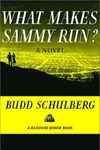
- The Essential First Step: Start with What Makes Sammy Run? (1941). This biting satire of Hollywood ambition is Schulberg’s definitive work and one of the greatest novels ever written about the movie industry. It introduces Sammy Glick, a ruthless hustler clawing his way to the top.
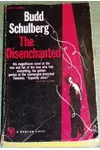
- The Next Masterpiece: Follow up with The Disenchanted (1950). This tragic novel is inspired by Schulberg's real-life, disastrous collaboration with a fading F. Scott Fitzgerald on a college film project. It offers a haunting look at generational disillusionment and the brutality of the studio system.
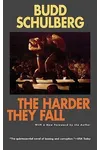
- The Sports Classic: Move to The Harder They Fall (1947). Drawing on real boxing scandals, this book exposes the corruption, fixed matches, and exploitation in the professional boxing world. It’s perfect for readers who love hard-boiled realism.
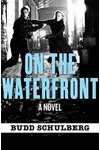
- The Cinematic Crossover: Read the novelization of On the Waterfront (1955) or watch the Oscar-winning 1954 film. Schulberg’s exploration of union corruption, racketeering, and moral redlines is just as powerful on the page as it is on the screen.
The Mystery of "Company House" (1935)
If you have browsed online bibliographies or book-tracking databases, you may have noticed a book listed as Schulberg's debut novel: Company House (1935). However, this is a known database error or "ghost title." Schulberg graduated from Dartmouth College in 1936 and did not publish a debut novel in 1935. His true novelistic debut was What Makes Sammy Run? in 1941. Do not waste your time searching for copies of Company House—it does not exist in his published canon!
Budd Schulberg’s Novels in Publication Order
If you prefer to see how Schulberg's writing evolved alongside the changing landscape of mid-century America, reading his novels in order of publication is a highly rewarding experience:
- What Makes Sammy Run? (1941) – The ultimate exposé of Hollywood's ruthless climb-to-fame culture, introducing the unforgettable archetype of the unprincipled opportunist, Sammy Glick.
- The Harder They Fall (1947) – A gritty, unflinching look at the boxing industry and the exploitation of a giant, naive fighter, inspired by the real-life career of Primo Carnera.
- The Disenchanted (1950) – A tragic, fictionalized account of a young screenwriter collaborating with a faded, alcoholic literary giant of the 1920s (modeled directly on F. Scott Fitzgerald).
- On the Waterfront (1955) – Published a year after the iconic film was released, this novelization allowed Schulberg to expand on the dockside corruption, local rackets, and internal moral struggles of Terry Malloy.
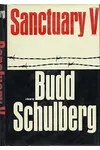
- Sanctuary V (1969) – A political drama detailing a failed revolution in a Caribbean country. Though sometimes listed with a 1971 copyright in later editions, this story of diplomatic asylum and disillusionment was originally published in 1969.
- Everything That Moves (1980) – A lean, fast-paced "documentary novel" centered on Joey Hopper, a ruthless labor boss modeled on Jimmy Hoffa, tracing his ties to the mob and his eventual downfall.
Plays, Screenplays, and Adaptations
Schulberg was a visual storyteller who frequently crossed the boundary between literature and film. To fully appreciate his work, you should explore his dramatic writings:
- A Face in the Crowd: A Play for the Screen (1957) – Adapted from his own short story "Your Arkansas Traveler," this screenplay is a shockingly prescient warning about the power of mass media, television, and populist demagogues.
- Across the Everglades: A Play for the Screen (1958) – A screenplay detailing the struggle of an early conservationist fighting bird poachers in the Florida Everglades.
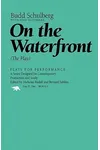
- On the Waterfront: The Play (1998) – Decades after the movie, Schulberg adapted his Oscar-winning story for the Broadway stage, focusing on the raw dialogue of the longshoremen.
Short Story Collections
For readers who want bite-sized portions of Schulberg's sharp dialogue and observational wit, his collections are an excellent option:
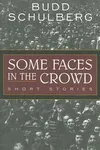
- Some Faces in the Crowd (1953) – First published in 1953 (though printings from 1964 are common in databases), this crucial collection contains the short story "Your Arkansas Traveler," which served as the foundation for the film A Face in the Crowd.
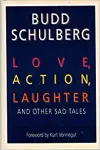
- Love, Action, Laughter (1990) – A later collection compiling stories that capture the humor, desperation, and warmth of characters living on the margins of fame.
Essential Non-Fiction and Boxing Reportage
Schulberg was an avid boxing fan and chronicler of mid-century culture. His non-fiction works contain some of his most personal and passionate writing:
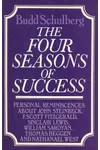
- The Four Seasons of Success (1972) – A series of essays analyzing how success, fame, and sudden wealth affected major American writers, including Sinclair Lewis, F. Scott Fitzgerald, and William Saroyan.
- Loser & Still Champion: Muhammad Ali (1973) – An early, insightful look at Ali’s cultural impact, his exile from the sport, and his legendary return to the ring.
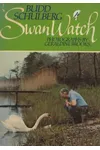
- Swan Watch (1975) – A unique, poetic non-fiction book documenting the lives of two swans living near Schulberg's home, featuring photography by his wife, actress Geraldine Brooks. (Note: Many databases erroneously list its publication date as 1994).
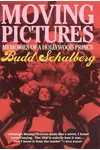
- Moving Pictures: Memories of a Hollywood Prince (1981) – An invaluable autobiography detailng Schulberg's youth as the son of Paramount Pictures mogul B.P. Schulberg, offering an authentic look at early Hollywood history.
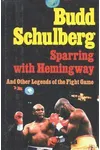
- Sparring with Hemingway: And Other Legends of the Fight Game (1995) – A collection of classic boxing articles, essays, and profiles of legendary fighters.
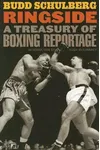
- Ringside: A Treasury of Boxing Reportage (2006) – A comprehensive compilation of Schulberg’s lifelong love affair with boxing, featuring classic articles from the mid-20th century to the modern era.
What to Know Before You Start
Schulberg’s writing is heavily shaped by his personal morals and political experiences. In 1951, he testified before the House Un-American Activities Committee (HUAC), admitting to past Communist Party membership and naming others—a decision that polarized the Hollywood community and influenced the themes of snitching and conscience in On the Waterfront. Despite this controversy, Schulberg remained committed to social justice, later founding the Watts Writers Workshop in Los Angeles to nurture marginalized voices. Expect his stories to be fast-paced, heavy on authentic slang, and deeply concerned with the ethical choices individuals make when confronted by powerful corrupt systems.