
Where to Start with Caitlin Moran
Caitlin Moran has built a career on making serious topics—feminism, class inequality, and the struggles of modern life—feel like a hilarious late-night chat with your smartest friend. Because her work spans semi-autobiographical fiction, deeply personal memoirs, and collections of newspaper columns, the best place to start depends entirely on what kind of book you want to read:
- For Fiction Lovers: Start with How to Build a Girl (2014). This is the first book in her semi-autobiographical coming-of-age duology. It is loud, funny, and captures the chaotic transition from a working-class Wolverhampton teenager to a fast-talking London music journalist in the 1990s.
- For Non-Fiction & Feminism: Start with her breakout bestseller How to Be a Woman (2011). Part memoir and part feminist manifesto, this book is widely credited with making feminism accessible and funny to a whole new generation.
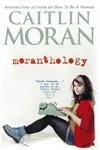
- For Quick, Witty Commentary: Start with Moranthology (2012), which compiles the best of her long-running columns from The Times, offering bite-sized observations on everything from pop culture to politics.
The Johanna Morrigan Fiction Duology
While Moran is widely known for her non-fiction, her fiction books are closely connected to her own life story. The Johanna Morrigan books should be read in chronological order to follow the character's growth and career progression:
1. How to Build a Girl (2014)
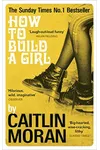
Set in 1990, the novel introduces fourteen-year-old Johanna Morrigan, a working-class, self-deprecating girl living on a council estate in Wolverhampton. Determined to escape her chaotic family life, she invents a new, dark, and biting persona: Dolly Wilde, a gothic rock critic who writes for a major London music magazine. It's a hilarious and raw exploration of teen identity, mistakes, and reinvention.
2. How to Be Famous (2018)
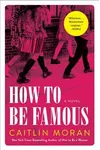
Picking up where the first book left off, nineteen-year-old Johanna (writing as Dolly Wilde) is now living in London during the height of the 1990s Britpop era. The story tackles the dark side of early success, double standards in the music industry, and what it means to build a career while remaining true to yourself. It functions as a direct continuation of Johanna's growth.
The Planned Trilogy Status
Although early press coverage suggested Moran planned to write a third novel to round out a Johanna Morrigan trilogy, no third book has been published as of 2026. Moran has shifted her focus back to non-fiction and other creative projects. However, she has hinted at writing a future novel exploring women who build robot husbands, showing that her fiction writing is still active.
The "How to Be" Non-Fiction Series
If you prefer Moran's real-life experiences, her memoir-manifesto series is highly recommended. These books track her personal life chronologically, moving from early adulthood to middle age:
1. How to Be a Woman (2011)
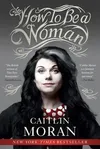
This groundbreaking book uses Moran's own childhood and twenties as a lens to discuss modern feminism. She addresses everything from puberty and underwear choices to careers, relationships, and abortion. It serves as the foundation of her non-fiction library.
2. More Than a Woman (2020)
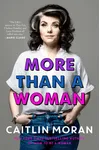
Designed as a direct sequel to her 2011 bestseller, this book catches up with Moran in her mid-forties. It shifts the focus from the chaotic energy of youth to the complex realities of middle age, addressing long-term marriages, raising teenagers, dealing with aging parents, and managing the invisible mental load that women carry.
3. What About Men? (2023)
In this companion book, Moran turns her attention to boys and men. Prompted by the frequent question she received during book tours—"what about men?"—she uses her signature conversational style to analyze the crises facing modern men, including high suicide rates, online radicalization (such as the rise of Andrew Tate), and the lack of healthy male role models.
4. How to Be Hopeful (Forthcoming September 2026)
Scheduled for release in late 2026, this book is Moran's response to the frantic and exhausting state of the modern world. Rather than looking for grand global solutions, she details a "domestic quest" to find hope in small, everyday actions like rewilding a garden, engaging with local community projects, and turning off the constant news cycle.
The Column Collections and Anthologies
As a columnist for The Times since the early 1990s, Moran has written hundreds of essays. Her collections are perfect for readers who prefer short, digestible pieces:
- Moranthology (2012): A compilation of her columns covering wide-ranging topics, from encounters with celebrities to everyday family life. It focuses on the sheer joy of observation.
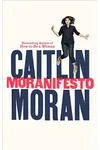
- Moranifesto (2016): A slightly more political and socially conscious collection. While still incredibly funny, these essays focus on issues like public transport, the NHS, class division, and how we can build a better society.
Anthology Contribution: The Booby Trap and Other Bits and Boobs (2013)
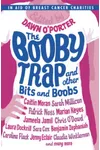
It is worth noting that while some bibliographies list The Booby Trap and Other Bits and Boobs under Moran's name, she did not write this book. The collection was edited by Dawn O'Porter to raise funds for breast cancer charities. Moran is simply one of many prominent guest contributors who shared essays and stories for the project.
Early Work: The Chronicles of Narmo (1992)
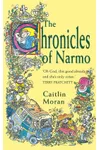
For die-hard fans, Moran's debut novel is a fascinating piece of literary history. Written when she was just fifteen years old, The Chronicles of Narmo is a semi-autobiographical story about Morag Narmo and her siblings navigating an experimental home-schooling program. While it is out of print and harder to find, it showcases the early spark of the humor and working-class Wolverhampton dynamics that would later inspire both the Johanna Morrigan novels and her television work.
Companion TV Series: Raised by Wolves
If you love Moran's books, you should also check out the British television sitcom Raised by Wolves (2013–2016). Co-written with her sister, Caroline Moran, the series is a highly fictionalized version of their childhood. It is set in Wolverhampton and follows a large, home-schooled, working-class family. It shares the exact same DNA, humor, and heart as The Chronicles of Narmo and How to Build a Girl.