


Where to Start Reading Campbell Armstrong
Campbell Armstrong (who also wrote under his birth name Thomas Campbell Black and pseudonyms like Thomas Altman and Thomas Weldon) was a master of building complex suspense around flawed, morally gray characters. For readers new to his bibliography, there are two primary entry points depending on your preferred subgenre:
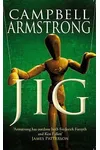
- For Spy & Political Thrillers: Start with Jig (1987), the explosive first entry in the Frank Pagan series. It introduces his signature Scotland Yard counterterrorism agent and remains Armstrong's most famous international bestseller.
- For Gritty Crime Fiction & Noir: Start with The Bad Fire (2001). Although it is sometimes cataloged as a standalone, this atmospheric novel introduces Glasgow's criminal underworld and detective Lou Perlman, setting up the subsequent Lou Perlman quartet.
What to Know Before You Start Reading
Before diving into Campbell Armstrong's work, it is helpful to understand his unique stylistic evolution. Born in Glasgow, Scotland, Armstrong studied philosophy at the University of Sussex, which heavily influenced the existential undertones of his thrillers. He lived and taught creative writing in the United States (including at Arizona State University and SUNY Oswego) for many years before eventually relocating to Ireland. This global perspective is reflected in his writing, which seamlessly transitions from local Scottish crime to international political stages.
His early novels, written under his birth name Campbell Black, were influenced by literary giants like Kafka and Camus, resulting in thrillers that are far more psychologically complex than standard genre fare. His protagonists, such as Frank Pagan and Lou Perlman, are rarely clean-cut heroes; they are cynical, battle-weary men dealing with personal grief and institutional corruption. Furthermore, because he wrote under multiple pen names to satisfy different publishers and genres, fans of 1980s paperback horror may know him as Thomas Altman without realizing he is the same author behind the acclaimed Scotland Yard espionage thrillers.
The Frank Pagan Series Reading Order
The Frank Pagan books are political and counterterrorism thrillers centered on a Scotland Yard Special Branch investigator. The series is best read in publication order, as Pagan's personal life, grief, and complex relationships evolve chronologically across the novels.
Note that while databases sometimes list six books in this series, there are actually only five distinct stories due to a major UK/US title variation for the second novel:
- Jig (1987) – Pagan is tasked with tracking down an elusive IRA assassin code-named Jig who has stolen a massive cash shipment meant for the Republican cause.
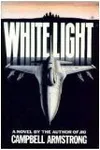
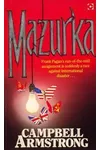
- White Light / Mazurka (1988) – This second entry follows Pagan into a high-stakes conspiracy involving Baltic nationalists, KGB elements trying to derail Soviet reforms, and international intelligence agencies. Note: Published as "Mazurka" in the UK and "White Light" in the US.
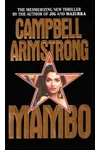
- Mambo (1990) – Pagan tracks a terrorist group across the United States after a suspect escapes his custody in London, leading to a cinematic chase.
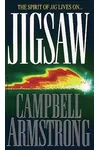
- Jigsaw (1994) – A complex web of neo-Nazi organizations and missing stolen loot forces Pagan back into action across Europe.
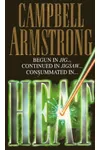
- Heat (1997) – The final novel in the series pits Pagan against a ruthless adversary in a high-stakes investigation that pushes him to his limits.
The Lou Perlman Glasgow Quartet
Later in his career, Campbell Armstrong turned to his roots, crafting a quartet of gritty police procedurals set in Glasgow, Scotland. The books feature Lou Perlman, a cynical but sharp Jewish detective-sergeant navigating corruption, gang violence, and family drama.
While the character of Lou Perlman is introduced as a supporting investigator in The Bad Fire, he takes center stage as the lead protagonist in the subsequent three novels. For the complete narrative experience, read them in this order:
- The Bad Fire (2001) – Eddie Mallon returns to Glasgow from the US to investigate his father's murder, crossing paths with Detective Lou Perlman.
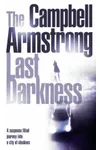
- The Last Darkness (2002) – Perlman investigates a brutal murder that uncovers secrets stretching back to the dark history of the city.
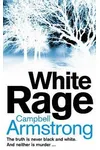
- White Rage (2004) – Perlman deals with racial tensions, gang turf wars, and institutional bias in a changing Glasgow.
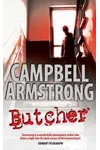
- Butcher (2006) – The final entry pits Perlman against a serial killer whose horrific crimes shake the local community.
Indiana Jones Novelizations
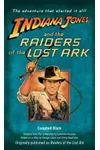
One of Campbell Armstrong's most famous mainstream projects was written under his birth name, Campbell Black. He was hired to write the official novelization for the landmark 1981 film Raiders of the Lost Ark.
- Indiana Jones and the Raiders of the Lost Ark (1981) – Released two months before the movie hit theaters, this book is highly sought after by fans because it includes extensive backstory elements and scenes cut from the final film (such as details on Indy and Marion's early relationship).
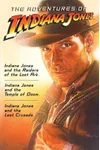
- The Adventures of Indiana Jones (1991) – An anthology release compiling the novelizations of the original film trilogy, featuring Black's version of Raiders.
Standalone Novels and Pen Names
Armstrong was a highly prolific writer who frequently hopped between genres, using different names to distinguish his work. Below is the list of his standalone novels categorized by the pseudonym under which they were originally published:
As Campbell Black (Early Literary & Thriller Works)
Writing as Campbell Black, Armstrong explored character-driven drama, psychological suspense, and early horror before his breakthrough as a political thriller writer:
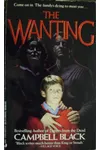
- The Wanting (1986) – A chilling horror novel about a family that relocates to an isolated California forest, only for their son to become the target of a dark, malevolent force. Note: While some local databases list the publication year as 1966, historical records indicate it was first published in 1986.
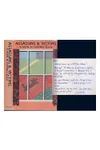
- Assassins and Victims (1969) – A dark comedy about two eccentric brothers plotting a murder, which earned Armstrong a prestigious Arts Council Award.
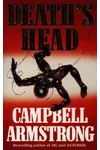
- Death's Head (1971) – A gritty, atmospheric thriller set in Germany.
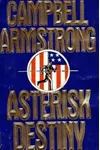
- Asterisk Destiny (1976) – A fast-paced conspiracy thriller.
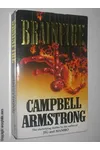
- Brainfire (1979) – A psychological thriller focusing on experimental mind control.
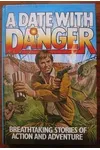
- A Date With Danger (1984) – A suspense novel published during his time living in the United States.
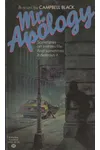
- Mr. Apology (1984) – A thriller inspired by a real-life telephone hotline where anonymous callers confessed to crimes.
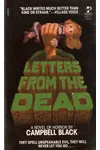
- Letters from the Dead (1985) – A supernatural mystery about letters received from a long-dead relative.
- The Piper (1986) – A chilling thriller concerning dark forces and secret pasts.
- Website of the Sands (2013) – Published posthumously, this final novel returned to his roots under the Campbell Black moniker.
As Thomas Altman (1980s Horror & Suspense)
Under the name Thomas Altman, Armstrong published several highly successful paperback horror and psychological suspense novels, capitalising on the 1980s horror boom:
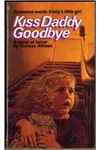
- Kiss Daddy Goodbye (1980) – A suspense novel about a mother fighting to protect her children from a sinister stalker.
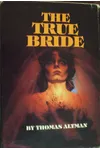
- The True Bride (1982) – A psychological thriller exploring dark romance and obsession.
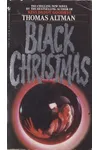
- Black Christmas (1983) – A seasonal horror thriller centered around a series of terrifying events during the holidays.
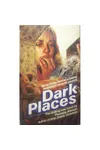
- Dark Places (1984) – A classic haunted house and possession novel.
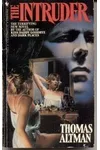
- The Intruder (1985) – A home-invasion thriller about a family terrorized in their own home.
As Thomas Weldon (Late 1990s Historical & Suspense Thrillers)
In the late 1990s, Armstrong adopted the name Thomas Weldon to write historical suspense and medical thrillers:
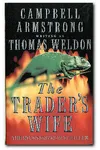
- The Trader's Wife (1997) – An adventure thriller set against the backdrop of late 19th-century colonial trade.
- The Surgeon's Daughter (1999) – A medical thriller involving corporate malpractice, family loyalty, and conspiracy.
Co-Authored & Secondary Pseudonyms
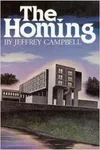
- The Homing (1980) – A horror novel published under the pseudonym Jeffrey Campbell, which was a joint pen name with co-author Jeffrey Caine.
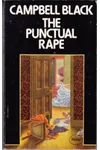
- Punctual Rape (1973) – Published under his own name Campbell Armstrong, this surreal psychological thriller won a Scottish Arts Council Award.
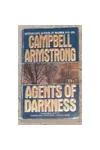
- Agents of Darkness (1991) – A standalone espionage thriller involving international conspiracies.
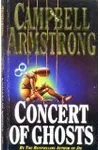
- Concert of Ghosts (1992) – A suspense novel exploring memory and long-buried secrets.
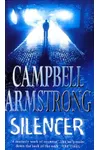
- Silencer (1998) – A high-octane thriller about an assassin seeking redemption.
- Deadline (2000) – A fast-paced journalistic thriller.
- Blackout (2012) – A tense mystery following an investigator uncovering a deep government cover-up.
Non-Fiction and Personal Memoirs
In addition to his fiction, Campbell Armstrong published a deeply moving memoir detailing a personal family tragedy. It was released under two different titles depending on the market:
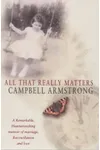
- All That Really Matters / I Hope You Have a Good Life (2000) – This non-fiction book details the emotional reunion between Armstrong's first wife, Eileen, and the daughter she had placed for adoption decades prior, written amidst both women being diagnosed with cancer. The book was a BBC Radio 4 "Book of the Week." Note: Published in the UK as "All That Really Matters" and in the US as "I Hope You Have a Good Life."