


Where to Start with Carol Edgarian
Because Carol Edgarian writes stand-alone novels, there is no single mandatory starting point or linear plot continuity to follow. You can pick up any of her books in any order without worrying about missing key backstories. However, depending on your reading preferences, we recommend two distinct entry paths:
- For Lovers of Classic Historical Fiction & Coming-of-Age Tales: Start with Vera (2021). Set against the dramatic backdrop of the 1906 San Francisco earthquake, it is her most fast-paced, atmospheric, and highly acclaimed recent work. It introduces readers to her signature lyricism while delivering a compelling, survival-focused narrative.
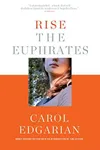
- For Fans of Deep Generational Sagas: Start with her debut, Rise the Euphrates (1994). This novel is a powerful, emotionally intense exploration of heritage, trauma, and maternal relationships spanning three generations of Armenian-American women. It remains a staple of modern diaspora literature.
Publication Order of Standalone Novels
Reading Carol Edgarian's novels in order of publication allows you to witness the evolution of her prose and thematic focus over nearly three decades. Here is the publication order of her novels:
- Rise the Euphrates (1994) – A multi-generational saga exploring the legacy of the Armenian Genocide within a family settled in Connecticut.
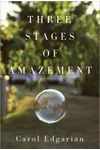
- Three Stages of Amazement (2011) – A contemporary drama exploring the strain of ambition, marriage, and financial crisis in modern San Francisco.
- Vera (2021) – A historical coming-of-age novel set during the aftermath of the 1906 San Francisco earthquake.
Setting Chronology: Reading by Historical Era
If you prefer to read Edgarian’s books based on the chronological timeline of their historical settings, the order shifts. Although the stories are entirely independent and feature different characters, reading them chronologically provides a fascinating look at the development of American society, particularly the city of San Francisco where two of her novels are set:
- Vera (Set in 1906) – Explores San Francisco at a literal and social turning point, capturing the corruption, class divides, and eventual destruction and rebirth of the city after the great earthquake.
- Rise the Euphrates (Set from 1915 through the late 20th century) – Begins during the 1915 death marches of the Armenian Genocide and tracks the subsequent decades as the family builds a new life in Connecticut, dealing with intergenerational trauma.
- Three Stages of Amazement (Set in 2008) – Fast-forwards to the Silicon Valley-adjacent world of San Francisco during the global financial crisis and the historic election of Barack Obama, focusing on modern marriage, economic panic, and healthcare innovation.
Detailed Breakdown of the Books
Rise the Euphrates (1994)
Edgarian’s debut novel is a deeply personal work informed by her own Armenian heritage. The story follows Seta Loon, a young Armenian-American girl growing up in Connecticut, who is caught between her mother Araxie and her formidable grandmother Casard. Casard is a survivor of the 1915 Armenian Genocide who witnessed her own mother's death in the Euphrates River. Having locked away her trauma under a shroud of silence she calls "the Indignities," Casard's unresolved grief creates ripples of tension that affect her daughter's rebellion and marriage. It is up to Seta to piece together the fragments of her family's past and find a way to heal the intergenerational rift.
Three Stages of Amazement (2011)
Switching gears from historical trauma to contemporary realism, this New York Times bestseller centers on Charlie Pepper, a surgeon working on a high-stakes medical robotics startup, and his wife Lena Rusch, a former documentary filmmaker. Living in San Francisco during the 2008 financial collapse, the couple faces the potential ruin of their dreams, the grief of a family tragedy, and the return of Lena's former lover. The book is a sharp, empathetic dissection of modern marriage, economic vulnerability, and the compromises required to sustain love in a chaotic world.
Vera (2021)
Set during the famous 1906 San Francisco earthquake and the fires that followed, this novel centers on fifteen-year-old Vera Johnson. The illegitimate daughter of Rose, the city's most powerful and glamorous bordello madam, Vera has been raised on the margins by a working-class Swedish foster family. When the disaster strikes, the social order crumbles. Vera must navigate the ruins of the burning city, forming an ad-hoc family of choice from street kids, displaced prostitutes, and minor grifters to survive and carve out her own future.
Collaborative & Non-Fiction Works
Beyond her novels, Carol Edgarian has contributed to the literary community as an editor and publisher. Her primary non-fiction release is a co-edited anthology:
- The Writer's Life: Intimate Thoughts on Work, Love, Inspiration, and Fame (1997) – Co-edited with her husband, Tom Jenks, this book compiles diary entries, letters, and personal notes from celebrated writers across four centuries (including Sylvia Plath, Charlotte Brontë, and Leo Tolstoy). It offers readers an intimate look into the creative process and struggles of history's greatest authors.
What to Know Before You Start
To get the most out of Carol Edgarian's work, keep these key details in mind:
- Thematic Continuity: While the characters and settings change, all of Edgarian's novels share a focus on resilience, identity, and how individuals reconstruct their lives after catastrophic disruptions (whether historical, natural, or economic).
- Narrative Magazine Connection: Edgarian co-founded the prominent digital literary platform Narrative Magazine in 2003. Readers interested in her broader literary impact can find her essays and editorial work there.
- Historical Accuracy: In Vera, Edgarian blends fictional characters with real-life historical figures who were in San Francisco during the 1906 disaster, including opera singer Enrico Caruso, political boss Abe Ruef, and socialite Alma Spreckels.