

Where to Start Reading Carol O’Connell
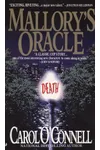
If you are new to Carol O’Connell’s dark, poetic crime fiction, the best place to start is at the very beginning with Mallory’s Oracle (1994). O’Connell is best known for her 12-book series featuring New York Police Department detective Kathleen Mallory. Mallory is one of the most unique protagonists in crime fiction: a computer-genius, feral former street child who was adopted by a police inspector and grew up to become a detective with sociopathic tendencies and a chillingly gray moral compass.
While the individual murder mysteries in each book are self-contained and resolved by the final page, the character arcs, recurring relationships, and slow revelations about Mallory's traumatic childhood build sequentially. Reading the books out of order will significantly spoil major plot developments and dilute the emotional impact of Mallory's gradual evolution. Therefore, following the publication order is highly recommended for the best reading experience.
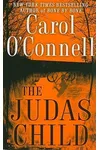
If you prefer to sample O’Connell’s writing style before committing to a long-running series, you can start with one of her standalone novels, such as The Judas Child (1998), which showcases her signature ability to weave haunting, psychological suspense in a self-contained story.
The Kathleen Mallory Series in Publication Order
The Kathleen Mallory series is Carol O'Connell’s signature work, spanning over two decades from 1994 to 2016. Because the novels were published with different titles in the United States and the United Kingdom, readers should pay close attention to these alternate titles to avoid accidentally purchasing the same book twice.
- Mallory’s Oracle (1994): The debut novel that introduces detective Kathleen Mallory. When her adoptive father, NYPD Inspector Louis Markowitz, is murdered while investigating a series of serial killings targeting wealthy elderly women, Mallory uses her illegal computer-hacking skills and cold determination to find his killer. This book was nominated for the Edgar, Anthony, and Dilys Awards.
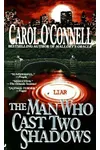
- The Man Who Cast Two Shadows (1995) (Also published in the UK as "The Man Who Lied to Women"): Suspended from the force and working undercover, Mallory hunts a serial killer who targets women by gaining their trust, while dealing with the public assumption that she herself has been killed.
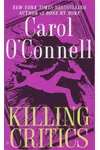
- Killing Critics (1995): Drawing on O'Connell’s background as a painter, this installment dives into the gritty New York art world. Mallory investigates a gruesome double murder at an art gallery opening that connects to a cold case from twelve years prior—a case originally worked by her late adoptive father.
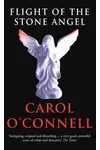
- Flight of the Stone Angel (1997) (Also published as "Stone Angel"): Mallory leaves New York City for the small town of Dayborn, Louisiana. This deeply personal investigation forces her to confront the mystery of her mother's murder, which occurred twenty years earlier, putting her in direct conflict with the tight-lipped locals.
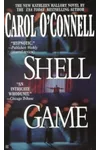
- Shell Game (1999): Set in the world of magicians, illusionists, and high-stakes scams. When a body is found inside a magic trick prop, Mallory must unravel a puzzle of illusions, old secrets, and historic grudges.
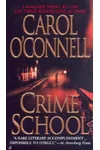
- Crime School (2002): Mallory is pulled into a case involving a serial killer whose signature matches a series of crimes from her past. The investigation forces her to look back at her own childhood survival on the streets of New York before she was adopted.
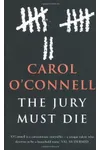
- The Jury Must Die (2003) (Also published in the UK as "Dead Famous"): After a high-profile murder trial ends in an acquittal, members of the jury begin dying one by one under suspicious circumstances. Mallory must step in to find the killer targeting the jurors.
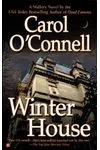
- Winter House (2004): When a burglar is killed inside a historic, trap-laden Manhattan mansion, Mallory uncovers a decades-old massacre. She must navigate family secrets and the return of a long-missing child to solve the present-day mystery.
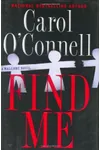
- Find Me (2006) (Also published in the UK as "Shark Music"): Mallory embarks on an unsanctioned road trip along Route 66, following a trail of bodies left by a serial killer. As she travels across the American West, she is pursued by her friends and colleagues who fear what she might do when she catches the murderer.
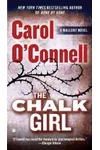
- The Chalk Girl (2011): A young, developmentally disabled girl wanders out of New Park Central Park with chalk on her hands, pointing Mallory to a horrific crime scene where bodies have been suspended in the trees.
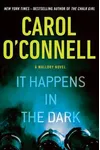
- It Happens in the Dark (2013): The series shifts to the Broadway theater world. When a writer is murdered during a production that seems to mirror a real-life unsolved crime, Mallory is called in to find the killer among the cast and crew.
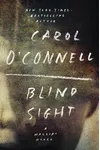
- Blind Sight (2016): In the final novel of the series, Mallory investigates the kidnapping of a blind child and the disappearance of a nun, leading her to uncover a complex conspiracy involving wealthy elites and organs harvested for transplant.
Carol O’Connell’s Standalone Novels
Between writing the Mallory books, Carol O'Connell authored two highly acclaimed standalone psychological thrillers. These novels do not feature Kathleen Mallory or any recurring characters from the NYPD series, making them perfect entry points for readers looking for self-contained mysteries.
- The Judas Child (1998): A haunting story focusing on the abduction of two young girls in a small town. The crime mirrors the unsolved kidnapping and murder of another young girl fifteen years earlier, prompting her brother—now a police officer—to search for the truth.
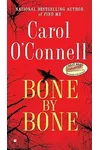
- Bone By Bone (2008): Set in a northern California town, this atmospheric thriller tells the story of a brothers' relationship and a dark secret. Decades after a boy goes missing, bones begin to appear on his family's doorstep one by one, forcing the community to confront a long-buried crime.
The Mysterious Profiles: "Mallory" (2022)
In 2022, Carol O'Connell contributed a unique entry to the Mysterious Profiles series, published by MysteriousPress.com and Open Road Integrated Media. Titled Mallory: A Mysterious Profile, this short non-fiction work is an essay and profile where O’Connell explores the psychology, origins, and creation of her famous protagonist. It is not a novel or a new case, but rather a companion piece that offers deep insights for dedicated fans of the series.
What to Know Before You Start
Before diving into Carol O'Connell's bibliography, it helps to understand her distinct style and thematic choices. Her writing is characterized by a surreal, painterly quality—likely influenced by her background as a surrealist painter before she turned to writing full-time. The atmosphere of her New York City is gritty, gothic, and stylized, resembling a noir graphic novel rather than a realistic police procedural.
Furthermore, Kathleen Mallory is not a traditional hero. She does not possess standard human empathy and is often described by critics as a sociopath. She relies heavily on her circle of protective companions—particularly Charles Butler, a gentle and brilliant civil engineer who functions as her external conscience, and Sergeant Riker, her late adoptive father's fiercely loyal partner—to keep her tethered to humanity. Observing the complex dynamics of this unconventional trio is one of the most rewarding aspects of reading the series in order.