
How to Read Caroline Criado Perez: The Recommended Starting Path
Caroline Criado Perez is not a novelist writing fictional sagas, so you do not have to worry about missing plot twists if you read her books out of order. However, her non-fiction works build a powerful, compounding argument about how the world is structured. If you want to get the most out of her writing, we recommend a specific conceptual path rather than sticking strictly to publication order.
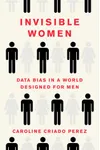
1. Start with the Masterpiece: Invisible Women (2019)
If you only read one book by Criado Perez, it should be Invisible Women: Data Bias in a World Designed for Men. This is her magnum opus and the book that sparked global conversations in boardrooms, medical schools, and parliaments. Starting here is essential because it introduces the core framework of her activism: the "gender data gap." By understanding how the "default male" assumption shapes everything from car safety tests to office temperatures, you will gain a new lens through which to view the stories in her other works.
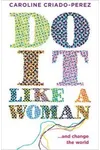
2. Move to the Human Stories: Do It Like a Woman... and Change the World (2015)
After absorbing the dense, statistic-heavy reality of systemic bias in Invisible Women, step back and read her debut, Do It Like a Woman. While Invisible Women focus on numbers and systems, this book focuses on the flesh-and-blood pioneers who are actively resisting those systems. It serves as an inspiring, narrative-driven counterweight that shows what happens when women refuse to accept the limits of a male-default society.
3. Anticipate the Future: Now You See Us (Upcoming)
To complete your reading journey, you will want to keep an eye out for her highly anticipated follow-up book, currently titled Now You See Us: How to Close the Gender Data Gap and Design a World That Works for Everyone. This upcoming release is designed to transition from identifying the data gap to providing actionable design and policy solutions to fix it.
Caroline Criado Perez Books in Publication Order
For readers who prefer to watch an author's research and literary style evolve over time, reading in publication order is a great option. Caroline Criado Perez's bibliography is focused and potent, consisting of key non-fiction volumes:
- Do It Like a Woman... and Change the World (2015) – A profile-based collection of female activists, pioneers, and rebels across the globe who are defying expectations and breaking barriers.
- Invisible Women: Data Bias in a World Designed for Men (2019) – A landmark investigative work exposing how the systematic exclusion of women from data collection poses serious threats to their health, career, and safety.
- Now You See Us: How to Close the Gender Data Gap and Design a World That Works for Everyone (Upcoming) – A solution-oriented sequel focused on rebuilding infrastructure, products, and policies that represent the whole of humanity.
Deep Dive: What You Will Find in Do It Like a Woman
Published in 2015, Caroline Criado Perez's first book is a rallying cry. She traveled the world to interview women who have achieved extraordinary things or fought system oppression. Rather than writing a standard biography of each figure, she weaves their testimonies into thematic chapters about voice, power, and defiance. Some of the notable profiles and themes include:
- Pioneers in Hostile Environments: The story of Afghan fighter pilots navigating a war zone and extreme cultural resistance, and the first woman to cross Antarctica entirely alone.
- Subversive Activism: Interviews with the Russian feminist punk rock group Pussy Riot, and Iranian journalists campaigning against mandatory hijab laws.
- Cultural Reclaimers: Women asserting their presence in male-dominated artistic spaces, including female beatboxers and street graffiti artists.
The tone here is urgent, passionate, and motivational. It is an excellent read if you want to feel energized by the power of collective and individual female resistance.
Deep Dive: The Architecture of Invisible Women
If you want to understand the sheer scale of the gender data gap, Invisible Women breaks it down across five distinct parts of human civilization. Understanding this structure helps explain why the book has become a textbook for modern designers, doctors, and urban planners:
Daily Life
Here, Criado Perez looks at the physical spaces we navigate. She details how urban transport systems are designed for male commuters who travel simple back-and-forth paths, ignoring the "trip-chaining" reality of women who make multiple short stops to drop off kids, buy groceries, and care for relatives. She also explores how snow-clearing schedules that prioritize main roads over sidewalks lead to higher injury rates for women, who are more likely to walk or use public transit.
The Workplace
This section outlines how tools, protective equipment, and office standards treat women as anomalies. Offices are kept freezing because thermostats are calibrated to the metabolic rate of a 40-year-old, 70kg man. Furthermore, personal protective equipment (PPE) like stab vests and dust masks are designed for male proportions, leaving female police officers, construction workers, and doctors dangerously exposed.
Going to the Doctor
Perhaps the most shocking part of the book explores the medical gender data gap. For decades, medical trials excluded female subjects (even female mice) under the excuse that their hormones were too complicated. As a result, heart attack symptoms in women (which differ from the classic male chest pain) go unrecognized, and women are regularly misdiagnosed or given drug dosages that are toxic to their bodies.
Public Life & Policy
Criado Perez analyzes tax codes, government budgets, and representation in this section. She explains how economic policies like austerity disproportionately strip services that women rely on, and how tax structures often penalize second earners, who are statistically more likely to be women.
After the Disaster
When natural disasters or conflicts hit, the lack of sex-disaggregated data means relief camps are built without separate toilets or lighting. This design failure directly exposes women to sexual violence and leaves them without reproductive healthcare in crisis zones.
What to Know Before You Start
Before diving in, it is helpful to know that Caroline Criado Perez is a campaigner first and foremost. Her books are extensions of her activism. In 2013, she successfully petitioned the Bank of England to keep a woman on British banknotes, resulting in Jane Austen appearing on the £10 note. She also led the campaign that erected the statue of suffragist Millicent Fawcett in Parliament Square—the very first statue of a woman in that location.
Because she writes with the urgency of an activist, her prose is direct, witty, and unapologetic. However, because of the heavy subject matter, particularly regarding medical neglect, domestic labor inequality, and online harassment, readers should prepare for a book that is as frustrating as it is educational. It is best read slowly, chapter by chapter, to process the dense array of statistics and real-world case studies.