


How to Read Carolyn Baugh’s Books
Carolyn Baugh’s fiction bibliography is compact but highly impactful, showcasing two distinct styles: deeply immersive contemporary women’s fiction and high-stakes law enforcement crime thrillers. Because her works are divided between a standalone novel and a serialized thriller, deciding where to start depends entirely on your preferred genre.
Option 1: The Nora Khalil Crime Thrillers (Recommended Start for Mystery Fans)
If you love police procedurals, FBI investigations, and complex character development, you should start with the Nora Khalil series. This series is best read in publication order because Nora’s career and personal life evolve significantly between the two books. You will watch her transition from a Philadelphia street cop battling local gang violence to an FBI agent tackling domestic extremism in a smaller Pennsylvania town.
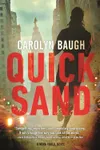
- Quicksand (2015) – Introduces Nora as a Philly officer joining a joint task force.
- Shoreline (2017) – Follows Nora as an FBI agent relocating to Erie, Pennsylvania.
Option 2: Standalone Contemporary Fiction
If you prefer rich cultural tapestries, multi-generational family sagas, and character-driven drama set in the Middle East, start with Baugh's standalone debut novel:
- The View from Garden City (2008) – Follows an American student in Cairo learning about the lives, struggles, and resilient spirits of local Egyptian women.
The Nora Khalil Series: A Deep Dive
Baugh’s crime thriller series is celebrated for bringing a unique and underrepresented perspective to the genre: that of an Egyptian-American Muslim woman working in American law enforcement. Rather than presenting a simple procedural, Baugh weaves Nora's cultural identity and personal battles into the heart of each investigation.
Quicksand (2015)
In the series opener, Quicksand, readers are introduced to Nora Khalil, a dedicated Philadelphia police officer and an elite runner. Nora is recruited into the Safe Streets Task Force, a joint operation between the Philadelphia Police Department and the FBI aimed at curbing violent crime. Her fluency in Arabic and deep familiarity with Arab culture make her indispensable when the mutilated body of a young Muslim woman is found in gang territory. As Nora digs into the investigation, she finds herself caught between the demands of the case and the pressure from her conservative, immigrant father. Baugh uses her background in Arabic studies to portray the community with nuance and authenticity, ensuring the cultural friction feels real rather than stereotyped.
Shoreline (2017)
The sequel, Shoreline, shifts the setting and the stakes. Seeking a quieter life and trying to recover from the traumatic events in Philadelphia, Nora transfers to the FBI field office in Erie, Pennsylvania. However, her hopes for peace are quickly dashed when a series of brutal, seemingly random violent crimes shake the community. Nora and her team uncover a sophisticated, well-funded network of domestic extremists intent on inciting a wider conflict. While dealing with the primary threat, Nora also faces personal challenges, including a strained relationship with a distant boyfriend and the ongoing weight of family expectations. Like its predecessor, Shoreline functions well as a standalone mystery, though reading Quicksand first provides valuable context for Nora’s emotional wounds and professional growth.
Standalone Fiction: The View from Garden City (2008)
Before launching her crime series, Carolyn Baugh debuted with The View from Garden City. Set in the bustling, historic Garden City district of Cairo, Egypt, the novel is told through the eyes of an unnamed American female student who has arrived to study Arabic. While she expects to learn from books and lectures, her real education comes from the local women she befriens.
The novel is structured as a series of interconnected stories spanning four generations of Egyptian women. Through these narratives, Baugh explores themes of arranged marriages, secret romances, mother-daughter relationships, and the heavy burden of patriarchal traditions. Key characters include Huda, who waits decades for her true love; Karima, who navigates marriage in a post-war landscape; and Selwa, who endures the tragic loss of her children. By centering the voices of these women, Baugh offers an empathetic, respectful, and complex view of Cairo’s domestic spheres that avoids western savior tropes.
Publication Order Timeline
If you want to read Carolyn Baugh's entire fictional catalog in the order she wrote them, follow this simple chronological timeline of her publications:
- The View from Garden City (2008) – Standalone Novel / Contemporary Women's Fiction
- Quicksand (2015) – Nora Khalil Book 1 / Police Thriller
- Shoreline (2017) – Nora Khalil Book 2 / FBI Suspense Thriller
What to Know Before You Start
Carolyn Baugh's fiction is deeply informed by her academic and personal background. Born in 1972 in Indiana, Baugh spent her childhood moving internationally due to her father's career in the Foreign Service. She later studied at Duke University and lived in Cairo, Egypt, where she rowed on the Nile and studied Arabic. Baugh went on to earn her Master's and PhD in Arabic and Islamic Studies from the University of Pennsylvania. Today, she is an Associate Professor of History at Gannon University in Erie, Pennsylvania, where she also directs the Women's Studies Program and works on social justice initiatives, including anti-human trafficking campaigns.
This extensive expertise shines through in her writing. Her depiction of Cairo in The View from Garden City and the Arabic cultural elements in the Nora Khalil series are highly accurate, drawing praise from critics for their cultural realism. Readers should expect stories that tackle heavy themes, including domestic abuse, religious and patriarchal expectations, extremism, and the struggles of immigrant communities, all handled with a respectful and educated touch.