
How to Read Carrie Fountain: Recommended Starting Points
Because Carrie Fountain works across three distinct literary forms—poetry, young adult fiction, and children's picture books—there is no single linear storyline to follow. Instead, your best starting point depends entirely on what kind of reader you are and what style of writing you want to experience first.
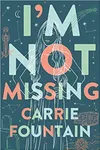
If you want a gripping YA novel: Start with I'm Not Missing (2018). This is Fountain's sole young adult novel, set against the backdrop of Las Cruces, New Mexico. It follows a half-Latina teenager named Miranda Black as she navigates maternal abandonment, the sudden disappearance of her best friend, and the messy realities of first love. It is a fantastic starting point for readers who enjoy character-driven, realistic contemporary young adult fiction.
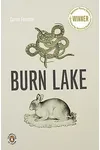
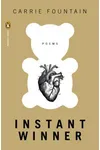
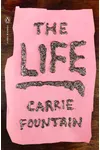
If you want to read her award-winning poetry: Start with her debut collection, Burn Lake (2010). Selected by Natasha Trethewey for the 2009 National Poetry Series, this collection is deeply rooted in the history, beauty, and violence of southern New Mexico. If you prefer a collection that focuses on the modern, domestic, and spiritual aspects of motherhood and parenting, you can also start with Instant Winner (2014) or her recent collection, The Life (2021).
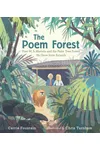
If you are looking for children's literature: Start with The Poem Forest: Poet W. S. Merwin and the Palm Tree Forest He Grew from Scratch (2022). Illustrated by Coco Tegano, this picture book tells the true story of how U.S. Poet Laureate W.S. Merwin turned a barren, ruined agricultural wasteland in Maui, Hawaii, into a lush, thriving palm forest. It is a perfect blend of ecological activism and poetic inspiration for young readers.
Carrie Fountain Books in Publication Order
Although her books do not share a continuous narrative, reading them in order of publication reveals Fountain's evolution from a regionally focused landscape poet to a multifaceted author exploring YA fiction, domestic spiritualism, and children's environmental biography.
1. Burn Lake (2010)
Fountain's debut collection of poetry focuses heavily on Mesilla and the Gadsden Purchase region of southern New Mexico where she grew up. The poems examine progress, history, family roots, and the landscape, blending historical weight with intimate personal narratives.
2. Instant Winner (2014)
Her second poetry collection moves closer to her current life in Austin, Texas. It addresses the overwhelming, often mundane holiness of motherhood, marriage, and domestic life, contrasting spiritual longing with everyday scenes like grocery shopping and clanging dumpsters.
3. I'm Not Missing (2018)
This young adult contemporary novel represents Fountain's transition into long-form fiction. Set in Las Cruces, New Mexico, the narrative focuses on friendship, abandonment, identity, and the complex process of finding oneself when the people closest to you disappear.
4. The Life (2021)
Fountain's third poetry collection is a mature exploration of parenting, aging, and searching for signs and symbols in everyday life. The poems focus on tiny, fleeting moments—such as watching children grow up—and the profound realizations that emerge from them.
5. The Poem Forest (2022)
Fountain's first children's book tells the ecological story of poet W. S. Merwin. It bridges her love for poetry and her passion for nature, documenting Merwin's decades-long project to plant thousands of trees on a former pineapple plantation.
What to Know Before You Start
Fountain's writing is highly accessible. Unlike some contemporary poetry that can feel abstract or hard to parse, her poems are narrative-driven, conversational, and deeply grounded in physical places. Her work is heavily influenced by the geography of the American Southwest—particularly the dry heat, dust, and cultural history of New Mexico, alongside the vibrant creative landscape of Austin, Texas, where she resides.
For those interested in the craft of poetry, Fountain also hosted the KUT & KUTX Studios podcast This Is Just to Say, where she interviewed other poets about their work. Listening to the podcast provides excellent companion context for her poetry collections, as it highlights her belief that poetry should be an active, accessible part of daily life.