









Where to Start Reading Carson McCullers
Because Carson McCullers wrote standalone novels, short stories, and plays rather than a continuous series, there is no single mandatory order to follow. However, her distinct voice, heavy themes of spiritual isolation, and Southern Gothic style are best experienced by following a path that builds from her most acclaimed masterpieces to her lesser-known, later works.
The Recommended Starter: The Heart Is a Lonely Hunter (1940)
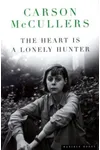
Without question, the absolute best place to start is McCullers' debut novel, The Heart Is a Lonely Hunter. Published when she was only 23 years old, this book remains her defining masterpiece. Set in a quiet Georgia mill town, it follows the deaf-mute John Singer and the various lonely individuals who project their hopes, frustrations, and longings onto him. It perfectly introduces readers to her empathetic treatment of societal outcasts, the struggle for human connection, and the moody, humid atmosphere of the American South.
The Accessible Alternative: The Member of the Wedding (1946)
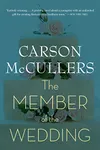
If you prefer a more focused, character-driven coming-of-age story, The Member of the Wedding is an excellent alternative starting point. It centers on Frankie Addams, a lonely 12-year-old girl who feels completely disconnected from the world and becomes obsessively fixated on her brother's upcoming wedding, wishing to join the couple on their honeymoon. It is deeply emotional, highly accessible, and captures the bittersweet angst of adolescent transition.
Carson McCullers Books in Publication Order
Reading Carson McCullers in publication order allows you to trace the evolution of her prose and themes, as well as the progression of her health struggles, which deeply impacted her later writing. Here is the chronological order of her major works:
- The Heart Is a Lonely Hunter (1940) – Her landmark debut novel exploring isolation in a Southern town.
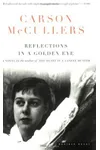
- Reflections in a Golden Eye (1941) – A short, intense novel tackling repressed desires and obsession on a peacetime military base.
- The Member of the Wedding (1946) – A poignant coming-of-age story set over a single summer.
- The Ballad of the Sad Café (1951) – A collection containing her famous title novella and six short stories.
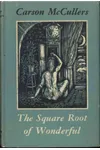
- The Square Root of Wonderful (1958) – Her second Broadway play, focusing on domestic relationships and healing.
- Clock Without Hands (1961) – Her final novel, addressing terminal illness, race relations, and the changing South.
- Sweet as a Pickle and Clean as a Pig (1964) – A collection of children's poetry.
- The Mortgaged Heart (1970) – A posthumous collection of early stories, essays, and articles.
- The Shorter Novels and Stories of Carson McCullers (1972) – A compilation of her major fiction.
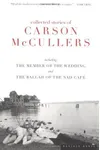
- Collected Stories (1987) – A comprehensive volume of her short fiction.
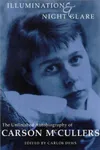
- Illumination and Night Glare (1999) – Her unfinished autobiography, dictated shortly before her death.
The Standalone Novels: Deep Dive
The Heart Is a Lonely Hunter (1940)
This novel is a cornerstone of American literature. Through characters like the tomboy Mick Kelly, the radical activist Jake Blount, the African-American doctor Benedict Mady Copeland, and the observant café owner Biff Brannon, McCullers paints a tragic portrait of human isolation. Each character is trapped in their own personal struggle, seeking solace in the silent, gentle presence of John Singer.
Reflections in a Golden Eye (1941)
McCullers' second novel shocked readers upon release due to its explicit exploration of repressed sexuality, voyeurism, and obsession. Set on a peacetime U.S. Army base in the South, it details a complex web of relationships involving a latent homosexual officer, his unfaithful wife, her lover, and a young soldier. It is her darkest, most Gothic, and most controversial work.
The Member of the Wedding (1946)
Reflecting McCullers' own feelings of childhood exclusion, this novel is celebrated for its psychological depth. It focuses on the interactions between the young Frankie, the family's African-American housekeeper Berenice Sadie Brown, and Frankie's six-year-old cousin John Henry West. The kitchen discussions among these three characters form the emotional core of the novel.
Clock Without Hands (1961)
Written over many years while McCullers suffered from severe health issues and strokes, her final novel is set in 1953 amidst the early days of the civil rights movement. It follows J.T. Malone, a local druggist diagnosed with terminal leukemia, alongside a retired judge and his grandson, exploring how individuals confront their mortality and their moral responsibilities in a deeply segregated society.
The Plays: Carson McCullers on Stage
McCullers was also a successful playwright who adapted her own prose for the stage, earning critical acclaim on Broadway.
- The Member of the Wedding (Stage Adaptation): In 1950, McCullers adapted her 1946 novel for the Broadway stage. It was a massive success, running for over 500 performances and winning the prestigious New York Drama Critics' Circle Award for Best Play.
- The Square Root of Wonderful (1958): This was her second and final play, written directly for the stage. It is a personal, domestic drama about a twice-divorced woman, Mollie Lovejoy, trying to break free from her abusive ex-husband and build a new life. While it had a short run on Broadway and received mixed reviews, it remains a key artifact in her bibliography.
Short Stories and Posthumous Collections
In addition to her novels, McCullers wrote several exceptional short stories and novellas. Many of these were first published in magazines like Harper's Bazaar, Mademoiselle, and The Saturday Evening Post before being anthologized.
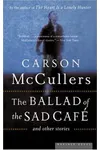
- The Ballad of the Sad Café (1951): This book contains her famous title novella, which features a bizarre love triangle between the masculine Miss Amelia, a hunchbacked dwarf named Cousin Lymon, and Amelia's vengeful ex-husband Marvin Macy. The collection also includes six other stories: "Wunderkind" (her first published story), "The Jockey", "Madame Zilensky and the King of Finland", "The Sojourner", "A Domestic Dilemma", and "A Tree, a Rock, a Cloud".
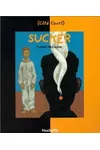
- Sucker (1986 Standalone / Written 1934): Written when McCullers was only 17, this poignant story about a young boy's devotion to his older cousin was first published in The Saturday Evening Post in 1963 and later reprinted in standalone and anthology forms.
- A Tree, a Rock, a Cloud (1989 Standalone / Written 1942): First published in 1942, this famous short story depicts a conversation between a paperboy and an old man in a café, exploring a philosophy of love. It was later adapted into a short film.
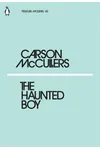
- The Haunted Boy (2018 Standalone / Written 1955): First published in 1955, this story follows a young boy returning home from school, terrified of finding his mother in a state of mental breakdown. It was released as a standalone volume in 2018 by Penguin Modern.
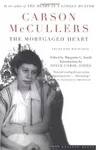
- The Mortgaged Heart (1970): Edited by her sister Margarita G. Smith, this invaluable posthumous collection gathers McCullers' early unpublished stories, essays, and articles, offering a fascinating look at her development as a writer.
What to Know Before You Start
Before diving into Carson McCullers' works, it is helpful to keep a few context points in mind:
- Southern Gothic Atmosphere: Her writing style is lyrical and deeply atmospheric, often focusing on the grotesque, the misfit, and the marginalized to explore underlying cultural and psychological tensions.
- Thematic Continuity: Across almost all of her fiction, the central theme is the absolute isolation of the individual and the near-impossibility of perfect communication. Love, in her universe, is often one-sided and painful.
- Adaptations: Several of her works have been adapted into major feature films, including The Member of the Wedding (1952), Reflections in a Golden Eye (1967, starring Elizabeth Taylor and Marlon Brando), The Heart Is a Lonely Hunter (1968, starring Alan Arkin), and The Ballad of the Sad Café (1991, starring Vanessa Redgrave).