
Where to Start with Cassie Chambers
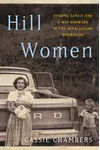
For readers looking to dive into the work of Cassie Chambers (who now publishes and serves under her married name, Cassie Chambers Armstrong), the starting point is simple: her sole published book, the 2020 memoir Hill Women: Finding Family and a Way Forward in the Appalachian Mountains. Published by Ballantine Books, this singular volume has earned critical acclaim and a dedicated following for its authentic, raw, and deeply loving portrayal of Eastern Kentucky.
Because Chambers has only published this single memoir, there is no complex reading order or series chronology to navigate. However, reading Hill Women offers more than just a personal story; it serves as a gateway to a broader, rich tradition of Appalachian literature that challenges mainstream narratives about the region.
Understanding "Hill Women"
The Story and the Inspiration
Hill Women is a memoir that double-acts as a socio-economic exploration of rural Appalachia. Growing up in Owsley County, Kentucky—historically one of the poorest counties in the United States—Chambers was surrounded by tobacco fields, tight-knit families, and systemic hardships. The book chronicles her journey from these Appalachian hollers to the halls of Yale College, the London School of Economics, and Harvard Law School.
Importantly, Chambers does not frame her achievements as a solo triumph of personal grit. Instead, she attributes her success to the generations of strong, resilient women who paved the way for her. She focuses heavily on her grandmother, who raised seven children in a home without running water, and her mother, Wilma, who defied the odds to become the first in her family to graduate high school and college. By centering these figures, Chambers honors the unpaid, unrecognized labor and emotional strength of rural women who hold their communities together.
The Feminist Counter-Narrative
Many readers and critics view Hill Women as a direct, feminist response to J.D. Vance’s bestselling memoir, Hillbilly Elegy. While Vance’s book often attributes regional poverty to individual moral failings and cultural decay, Chambers offers a structural critique. She explores the lack of access to legal aid, healthcare, and educational resources, all while highlighting the local agency and collective resilience of the women living there. It is an empathetic, community-focused account that replaces condescension with solidarity.
Publication Order of Cassie Chambers' Works
For historical completeness, here is the publication timeline of Cassie Chambers' literary contributions:
- Hill Women: Finding Family and a Way Forward in the Appalachian Mountains (2020)
Expanding Your Appalachian Reading List
Since Hill Women is currently a standalone book, readers who connect with Chambers' themes of resilience, community, and regional advocacy will find these excellent companion memoirs and non-fiction works to expand their understanding of the region:
- What You Are Getting Wrong About Appalachia by Elizabeth Catte: An essential primer that dismantles common myths, media stereotypes, and historical generalizations about the Appalachian region and its working class.
- Another Appalachia: Coming Up Queer and Indian in a Mountain Place by Neema Avashia: A brilliant collection of essays that explores intersectional identity, race, and queer experience within the traditional landscapes of West Virginia.
- All Over but the Shoutin' by Rick Bragg: A Pulitzer Prize-winning journalist's classic memoir dedicated to his mother, detailing his childhood in the rural South with similar themes of poverty, sacrifice, and family devotion.
- Appalachian Reckoning: A Region Responds to Hillbilly Elegy edited by Anthony Harkins and Meredith McCarroll: A powerful collection of essays and creative work from various Appalachian writers providing a authentic counter-narrative to popular media depictions.
- Praisesong for the Kitchen Ghosts by Crystal Wilkinson: A beautiful blend of memoir, history, and recipes that centers the overlooked stories and culinary traditions of Black country cooks in the Appalachian region.
What to Know Before You Start
Before cracking open Hill Women, it helps to understand that Cassie Chambers Armstrong's writing is deeply connected to her active work in public policy and law. After graduating from Harvard Law, she returned home to Kentucky to work as a pro bono lawyer representing domestic violence survivors in rural communities. Her legal advocacy led directly to the passage of Jeanette's Law in 2018, which removed unfair financial barriers for incarcerated or low-income domestic violence survivors seeking a divorce.
In addition to her writing and legal practice, Chambers has taught as a law professor at the University of Louisville and serves as a Kentucky State Senator (having previously served on the Louisville Metro Council). When you read her work, you are reading the perspective of someone who is actively working to dismantle the very systemic issues she describes on the page.