

The Recommended Reading Order for Cate Glass
Cate Glass is the pen name of award-winning epic fantasy author Carol Berg. Writing under this pseudonym, she created the Chimera series, a highly focused fantasy-adventure trilogy. Because the series follows a continuous narrative arc with evolving character relationships, ongoing political conspiracies, and a deepening exploration of the world's forbidden magic, there is only one logical way to read these books: by publication order. There are no prequels, spin-offs, or side stories to complicate the timeline, making this an exceptionally straightforward reading journey.
Here is the recommended reading path for the Chimera series:
- An Illusion of Thieves (2019) – The essential starting point that introduces the city-state of Cantagna, the protagonist Romy, and the assembly of the Chimera crew.
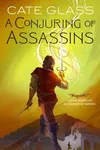
- A Conjuring of Assassins (2020) – The second installment, where the team acts as secret agents for the Shadow Lord, taking on a dangerous infiltration mission.
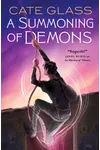
- A Summoning of Demons (2021) – The final book in the trilogy, wrapping up the overarching political conflict and the mysteries of Cantagna's magic in the wake of a devastating earthquake.
Deep Dive into the Chimera Trilogy
An Illusion of Thieves (Book 1)
The series begins with An Illusion of Thieves, introducing readers to Romy (whose birth name is Cateline). Once a favored courtesan and trusted advisor to Sandro di Gallanos, the reform-minded ruler of Cantagna known as the Shadow Lord, Romy is cast out of her comfortable life at court when her reckless younger brother, Neri, is caught using forbidden magic to steal. To save him from execution, Romy strikes a deal that results in her banishment to the impoverished Beggar's Ring.
Forced to survive on her wits, Romy must hide her own secret magical gift: the ability to immerse herself so deeply in personas that she can project perfect illusions and alter others' perceptions. When she uncovers a deadly plot to overthrow the Shadow Lord and plunge Cantagna into a bloody civil war, she gathers a group of fellow outcasts to stop the coup. This marks the formation of the Chimera, a team that must use their outlawed magic to pull off a series of daring heists to save the city-state.
A Conjuring of Assassins (Book 2)
In the second volume, A Conjuring of Assassins, the Chimera team has transitioned into a functioning unit of covert operatives working directly under Sandro, the Shadow Lord. Their new mission is incredibly high-stakes: they must infiltrate the palace of the Mercediaran Ambassador to locate a hidden prisoner and recover a list containing the names of individuals who have sworn to assassinate Sandro's primary rival.
The mission quickly goes awry. The prisoner is not who they expected, and Romy finds herself saving a mysterious man named Teo from drowning. Teo possesses bizarre, shifting markings on his skin and heals from mortal wounds at an unnatural speed. As Romy tries to manage these new mysteries, the crew is forced to dodge old enemies, guard their secrets, and execute their plans under the constant threat of discovery. The novel expands the lore of the world and pushes the crew's trust in one another to its absolute limits.
A Summoning of Demons (Book 3)
The trilogy concludes with A Summoning of Demons. Following a massive earthquake that shatters Cantagna, the city-state is thrown into panic. The local Philosophists capitalize on the fear, claiming the disaster was caused by an ancient monster trapped beneath the earth, and that magic-users are attempting to free it. This triggers a wave of violent persecution against anyone suspected of sorcery.
Amidst this tense environment, the Chimera crew is hired to investigate a suspicious marriage contract between a dull nobleman and a brilliant, wealthy young woman. What begins as a straightforward investigation quickly unravels into a deeper web of murder, corruption, and ancient mythology. Romy is plagued by terrifying, prophetic dreams that suggest the warnings about subterranean monsters might be real. The final book successfully ties together the personal arcs of the team members and resolves the political fate of Cantagna, bringing the trilogy to a satisfying close.
The Magic and Setting of Cantagna
The setting of the Chimera series is heavily inspired by Italian Renaissance city-states, featuring a rich tapestry of noble houses, political factions, and detailed urban environments like the Beggar's Ring. In Cantagna, the use of magic is viewed as a corrupting, demonic force and is treated as a capital crime. This creates a constant sense of tension, as every time the characters use their powers, they risk execution.
Unlike soft magic systems where sorcerers can cast any spell, the magic in the Chimera series is highly individualistic and practical. Each magic-user possesses a single, specialized gift. The team's dynamic relies on combining these unique abilities:
- Romy can project illusions, adopt flawless disguises, and influence the minds of others.
- Neri can walk through solid walls, making him an unmatched infiltrator.
- Placidio is a master swordsman whose supernatural reflexes allow him to defend the team.
- Dumond is a metalsmith whose affinity for materials allows him to manipulate locks and metals with ease.
This distinct magic system turns the fantasy adventure into a series of tactical capers where raw power is useless without clever strategy, coordination, and timing.
Cate Glass vs. Carol Berg: The Pseudonym Explained
For readers familiar with Carol Berg's work, the transition to the Cate Glass pen name represented a deliberate shift in tone and storytelling structure. Carol Berg is famous for writing complex, multi-volume epic fantasies with dark themes, intense physical and psychological suffering, and sweeping world-changing stakes. Her series like the Lighthouse Duet and Rai-Kirah are known for their emotional weight and intricate, slow-burn plotting.
Under the name Cate Glass, Berg wanted to write something lighter, faster, and more action-oriented. The Chimera series focuses on ensemble dynamics, clever dialogue, and heist structures reminiscent of caper television shows. By using a pseudonym, Berg allowed new readers to jump in without expecting her traditional epic style, while still delivering the high-quality character development and logical world-building that her long-time fans love.
Practical Reader Advice
If you are deciding whether to dive into the Chimera series, here are the key things to keep in mind:
- Best Starting Point: You must start with An Illusion of Thieves. Reading the books out of order will spoil major plot points and undermine the emotional impact of the characters' relationships.
- Standalone Potential: While each book features a self-contained heist or mystery that is resolved by the end of the volume, they are not true standalones. The character growth, romance subplots, and political developments build directly from one book to the next.
- Completeness: The series is a fully completed trilogy. You can read the entire story from beginning to end without waiting for future installments.
- Transitioning to Carol Berg: If you finish the Chimera series and want more of the author's writing, the Sanctuary Duet (starting with Dust and Light) and the Collegia Magica series (starting with The Spirit Lens) offer a similar blend of historical fantasy, mystery, and complex magic systems.