

How to Read Catherine Lacey: A Guided Approach
Catherine Lacey has established herself as one of the most distinctive voices in contemporary American literature, known for her hypnotic prose, dark humor, and deep interest in identity, isolation, and human connection. Because her novels are entirely standalone works set in separate universes, there is no strict narrative continuity to follow. However, the order in which you approach her books can significantly impact your reading experience.
Readers generally choose one of two distinct paths: following the evolution of her style in publication order, or starting with a designated gateway book tailored to their preferred literary style.
Path 1: The Publication Order (Recommended)
Reading Catherine Lacey’s novels in the order they were written allows you to witness her structural ambition grow from intimate, stream-of-consciousness character studies to complex, multi-layered alternate histories. Here is the recommended chronological publication order for her fiction:
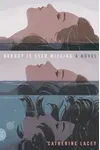
- Nobody Is Ever Missing (2014)
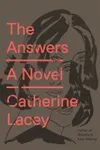
- The Answers (2017)
- Certain American States: Stories (2018)
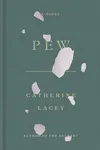
- Pew (2020)
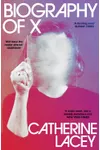
- Biography of X (2023)
Path 2: The Gateway Path (For First-Time Readers)
If you prefer to start with a book that matches your typical reading preferences, consider these two starting points:
- For fans of intimate, voice-driven character studies: Start with her debut, Nobody Is Ever Missing. It is a raw, deeply introspective novel about a woman escaping her life to hitchhike across New Zealand. It serves as the perfect introduction to Lacey’s distinct, winding sentence structures and existential themes.
- For fans of high-concept, ambitious historical fiction: Start with Biography of X. This novel is styled as a fictional biography of a late, enigmatic artist in a reimagined, divided 20th-century America. It is her most structurally complex work and features embedded fake documents, photographs, and historical details.
The Standalone Novels in Detail
Nobody Is Ever Missing (2014)
Lacey’s debut novel introduces Elyria, a woman who suddenly abandons her stable life in New York and her husband to travel to New Zealand on a one-way ticket. Wandering the country, hitchhiking, and staying with eccentric strangers, Elyria wrestles with the grief of her sister's suicide and the suffocating feeling of domestic life. The novel is celebrated for its breathless, sentence-long paragraphs that capture the exact rhythm of a mind unraveling, offering a powerful look at what it means to run away from oneself.
The Answers (2017)
Set in a slightly heightened version of our reality, The Answers follows Mary, a young woman suffering from chronic pain who turns to a expensive, alternative therapy called Pneuma Adaptive Kinesthesia. To fund her treatments, she takes a job as the "Angry Girlfriend" in a bizarre experiment orchestrated by a wealthy, famous filmmaker named Kurt Sky. Kurt seeks to engineer the perfect relationship by hiring different women to fulfill distinct emotional and physical roles (the Emotional Girlfriend, the Placating Girlfriend, the Maternal Girlfriend, etc.). The book is a sharp, satirical, yet deeply melancholic exploration of the commodification of love and the impossibility of fully understanding another person.
Pew (2020)
In Pew, a small religious community in the American South discovers a person of indeterminate age, gender, and race sleeping on a church pew. The townspeople name the stranger "Pew," but the protagonist remains entirely silent, refusing to reveal their background, identity, or story. As the town prepares for a mysterious annual festival, they project their own fears, prejudices, and expectations onto Pew. The novel is a sparse, fable-like examination of labels, morality, and how quickly communities turn on those they cannot easily categorize.
Biography of X (2023)
Lacey's most critically acclaimed and ambitious novel to date, Biography of X, is written as a biography of "X," a shape-shifting, confrontational artist, musician, and writer who has recently died. The book is narrated by X's grieving widow, Lucca, who uncovers a web of secrets, fake names, and fabrications as she travels the world to write her late wife’s life story. Set in an alternate timeline where the American South became a fascist, isolated state (the Southern Territory) after World War II, the novel uses real literary figures alongside fictional history to create a stunning meditation on art, grief, and the myths we construct about those we love.
Short Stories and Collaborative Non-Fiction
Certain American States: Stories (2018)
For readers who want to experience Lacey’s writing in shorter bursts, this collection of short stories captures quiet, domestic moments of grief and isolation. The characters in these stories are often reeling from divorces, losses, or the simple difficulty of communicating with their loved ones. It highlights her sharp observational skills and ability to find unexpected humor in dark situations.
The Art of the Affair (2017)
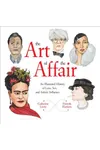
Co-created with illustrator Forsyth Harmon, this unique non-fiction book maps the complex, real-life romantic and platonic relationships of 20th-century artists, writers, and musicians. Through Harmon's beautiful portraits and Lacey's concise relationship chains, readers can trace how creative minds like James Baldwin, Louise Bourgeois, and Miles Davis influenced and collided with one another.
The Möbius Book (2025)
Published in mid-2025, The Möbius Book is a hybrid work of non-fiction and memoir. Moving away from traditional novel structures, this book explores loss, platonic love, and the complex bonds that define us, blending personal reflections with philosophical inquiry.
What to Know Before You Start
Before diving into Catherine Lacey’s bibliography, it is helpful to keep a few stylistic elements in mind. Lacey’s prose style is characterized by long, winding, and hypnotic sentences that dive deep into the interior psychology of her characters. She often eschews traditional plot structures in favor of atmospheric and emotional tension. Her endings rarely provide neat resolutions; instead, she embraces ambiguity and leaves readers to ponder the ethical and existential questions raised by her narratives. Additionally, while books like Biography of X contain historical elements, they are heavily fictionalized and should be read as speculative alternate history rather than factual accounts.