
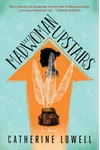
How to Approach Catherine Lowell’s Literary Universe
Catherine Lowell captured the hearts of classic literature lovers with her debut novel, The Madwoman Upstairs. While Lowell has only published one novel to date, her work is deeply woven into the classic nineteenth-century canon of the Brontë sisters: Charlotte, Emily, and Anne. Because of this, approaching her work isn't just about reading a single contemporary book; it is about engaging with a larger literary conversation.
To get the absolute most out of Lowell's witty, fast-paced academic mystery, we recommend a reading path that blends her modern fiction with the classic novels that serve as the foundation for her clues. Reading the Brontë classics beforehand transforms the experience from a fun, suspenseful scavenger hunt into a deeply satisfying game of literary decoding.
The Recommended Reading Path
Here is our suggested reading order to fully appreciate the themes, character dynamics, and historical jokes in Catherine Lowell’s writing:
- Jane Eyre by Charlotte Brontë (1847) – Essential for understanding the central romance dynamic and the origin of the book’s title.
- Wuthering Heights by Emily Brontë (1847) – Crucial for the gothic, wild atmosphere and the debate over Emily's untamable genius.
- The Tenant of Wildfell Hall by Anne Brontë (1848) – Vital for the clues surrounding family secrets, female independence, and Lowell's ultimate defense of the youngest Brontë sister.
- The Madwoman Upstairs by Catherine Lowell (2016) – The modern literary mystery that synthesizes these classics into a contemporary treasure hunt.
Deep Dive: The Madwoman Upstairs (2016)
Catherine Lowell’s debut stands as a unique entry in modern bibliomystery. The story follows Samantha Whipple, a young American woman attending Oxford University. Samantha is rumored to be the last living descendant of the Brontë family. When her eccentric, book-loving father, Tristan Whipple, dies in a mysterious fire, he leaves her no money—only a massive library and a trail of cryptic clues hidden inside annotated copies of nineteenth-century novels.
As Samantha moves into her drafty rooms at Oxford, she finds herself targeted by someone who believes she possesses the long-lost, priceless Brontë family archives—containing unpublished manuscripts, letters, and personal items. Forced to team up with her brilliant, frustratingly handsome, and intimidatingly young literature professor, James Orville, Samantha must use her father’s annotations to solve a series of elaborate, bookish puzzles. The journey takes her deep into the heart of Victorian literary criticism, forcing her to confront her family's complicated legacy and her own grief.
The Three Pillars of the Mystery: Crucial Brontë Works to Read First
While you can read Lowell’s novel as a standalone, the entire plot is built upon three classic pillars. Understanding these books will help you spot the clues and appreciate the sharp academic banter between Samantha and her professor:
1. Jane Eyre (Charlotte Brontë)
The title The Madwoman Upstairs is a direct nod to Bertha Mason, the famous "madwoman in the attic" from Charlotte Brontë's masterpiece. Furthermore, the relationship between Samantha Whipple and her professor, James Orville, heavily mirrors the intense, power-dynamic-testing romance between Jane Eyre and Mr. Edward Rochester. Recognizing these parallels adds a rich layer of romantic tension and subtext to their academic arguments.
2. Wuthering Heights (Emily Brontë)
Emily Brontë's solitary, passionate classic plays a major role in how the characters analyze the creative minds of the Brontë family. In the novel, Samantha and Orville frequently debate whether the sisters were isolated geniuses who wrote purely from imagination, or if their writing was heavily influenced by their real-life experiences, including their troubled brother Branwell. The wild, untamed nature of Emily's work provides a stark contrast to the structured, stuffy environment of Oxford.
3. The Tenant of Wildfell Hall (Anne Brontë)
One of the most refreshing aspects of Lowell's novel is her passionate defense of Anne Brontë, who is historically overshadowed by Charlotte and Emily. The Tenant of Wildfell Hall, with its bold themes of marital abuse, alcoholism, and a woman's right to run away and make her own living, is treated by Lowell not as a minor work, but as a masterpiece of social realism. The clues in the scavenger hunt often hinge on Anne's lesser-known works, including her debut novel Agnes Grey.
What to Know Before You Start
Before diving in, readers should know that Catherine Lowell's writing style is highly intellectual, fast-paced, and satirical. Rather than writing a traditional, slow-burning gothic romance, Lowell delivers a modern, snappy collegiate novel filled with dry humor and rapid-fire dialogue. The book operates under the framework of "New Historicism," a school of literary theory that looks at a text through the lens of its historical context. If you enjoy debates about authorial intent, biography vs. fiction, and the way history constructs myths around famous writers, you will feel right at home. The setting of Oxford—complete with ancient libraries, damp rooms, and eccentric academics—acts as a character in its own right, grounding the book in an atmospheric, collegiate reality.
Practical Reader Advice
Can it be read as a standalone? Yes, absolutely. The novel provides enough plot summary and biographical context about the Brontës that a reader unfamiliar with the classics can still follow the mystery. However, you will miss out on the clever subtext and the sheer fun of trying to solve the puzzles alongside Samantha.
Are there spin-offs or sequels? Currently, there are no sequels or companion works by Catherine Lowell. The Madwoman Upstairs remains a standalone novel, and Lowell has not released further books in this universe. For readers looking to capture a similar vibe after finishing, we suggest exploring other campus bibliomysteries or diving directly into the Brontës' poetry and lesser-known works.