
How to Read Cathy Park Hong: The Recommended Reading Paths
If you are new to Cathy Park Hong's work, the best starting point depends entirely on whether you prefer narrative prose or experimental poetry. Because all of her books are stand-alone publications with distinct concepts, you do not need to follow a strict chronological sequence. Instead, consider these two primary entry pathways:
The Nonfiction Route (Recommended for Most Readers)
For most readers, the best place to start is with Minor Feelings: An Asian American Reckoning (2020). This essay collection is her most widely read and accessible book. Blending memoir, cultural criticism, and history, it explores the psychological and social realities of being Asian American. Reading this book first provides a foundational understanding of the themes of identity, language, and racial consciousness that Hong also explores in her poetry collections.
The Poetry and Speculative Route
If you are a fan of contemporary poetry or speculative fiction, you can dive directly into her poetry collections. We recommend starting with Dance Dance Revolution (2007). It is a highly imaginative, book-length narrative poem that showcases her experimental language and world-building skills. From there, you can proceed to Engine Empire (2012) to experience her thematic trilogy on industrialization, before concluding with her raw debut, Translating Mo'um (2002).
Cathy Park Hong’s Books in Order of Publication
Although Cathy Park Hong's works do not share a single narrative continuity, reading them in order of publication allows you to witness the evolution of her style, from her early linguistic experimentation to her mature socio-political critique. Here is her bibliography in chronological order:
- Translating Mo'um (2002) – Poetry Collection
- Dance Dance Revolution (2007) – Poetry Collection / Speculative Narrative
- Engine Empire (2012) – Poetry Collection / Lyric Trilogy
- Minor Feelings: An Asian American Reckoning (2020) – Creative Nonfiction / Essay Collection
Deep Dive Into Cathy Park Hong’s Poetry and Prose
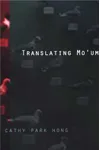
Translating Mo'um (2002)
Published by Tupelo Press, Translating Mo'um is Hong's debut poetry collection. The title plays on the Korean word "mo'um," which translates to "body" or "consonant." This dual meaning forms the core of the collection, which explores how language shapes the body and identity. The poems are marked by "code-switching," blending English, Korean, and colloquial slang to challenge traditional notions of standard English. This collection won the Pushcart Prize and established Hong as a bold, innovative voice in contemporary poetry.
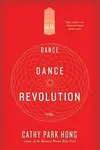
Dance Dance Revolution (2007)
Selected by Adrienne Rich for the Barnard Women Poets Prize, Dance Dance Revolution is a tour de force of speculative poetry. Set in a near-future, dystopian global metropolis called "the Desert," the book is structured as a series of interviews. A visiting "Historian" interviews a "Guide" who was formerly a dissident in the real-world Gwangju Democratization Movement of 1980 in South Korea. The Guide speaks in "Desert Creole," an invented dialect that blends English, Korean, Spanish, and various dialects. Through this unique linguistic lens, Hong explores memory, political trauma, globalization, and the evolution of language. The setting functions as a surrogate for highly globalized spaces where migrant workers and refugees converge, exposing the psychological scars of political violence and state narratives.
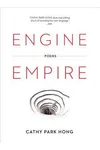
Engine Empire (2012)
In Engine Empire, Hong presents a trilogy of lyric sequences that trace the rise and fall of boomtowns across different eras. The collection is divided into three distinct parts: the first is set in the 19th-century American West during the Colorado Gold Rush; the second is set in a contemporary, rapidly industrializing fictional boomtown in China; and the third takes place in a futuristic, digital-age San Francisco Bay Area where human consciousness is subsumed by a data-saturated "World Cloud." Across these settings, Hong investigates how technology, capitalism, and the promise of prosperity transform human behavior and communication. By linking the physical violence of the frontier West to the virtual surveillance of the digital future, the collection reflects how human connection becomes increasingly mediated by technology.
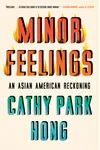
Minor Feelings: An Asian American Reckoning (2020)
Hong’s first book of creative nonfiction, Minor Feelings, was a major cultural milestone, a finalist for the Pulitzer Prize, and the winner of the National Book Critics Circle Award for autobiography. The book consists of seven essays that dissect the "minor feelings" of shame, irritation, and melancholy experienced by Asian Americans living under the pressure of the "model minority" myth. By combining personal memoir with art criticism, literary analysis, and historical contexts, Hong offers a raw, sharp, and humorous interrogation of race, female friendship, and the creative process in America. The essays cover topics ranging from her friendship with other female artists during her college years to an analysis of the tragic life and death of avant-garde artist Theresa Hak Kyung Cha, making the book both an intimate memoir and a powerful political statement.
The Anthology Confusion: "American Journal"
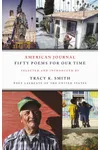
Readers researching Cathy Park Hong's bibliography will sometimes find American Journal: Fifty Poems for Our Time (2018) listed as one of her books. However, it is important to clarify that this anthology was selected and edited by Tracy K. Smith, who was serving as the 22nd Poet Laureate of the United States. Cathy Park Hong did not edit or write this collection; rather, she is one of the fifty contemporary American poets whose work is featured in the anthology. It serves as an excellent introduction to her shorter poetry alongside other prominent modern poets, but it is not a standalone work by Hong herself.
What to Know Before You Start Reading
Cathy Park Hong’s writing is intensely rewarding, but it can be challenging for readers unfamiliar with experimental literature. Here are a few tips to keep in mind before diving in:
- Embrace the Linguistic Play: Hong frequently employs code-switching, fragmented grammar, and invented dialects (such as "Desert Creole"). Do not worry if you do not understand every word or phrase on the first read. The musicality and emotional resonance of the language often convey the meaning.
- Understand the Historical Contexts: Several of her works reference real historical events, such as the Colorado Gold Rush or the 1980 Gwangju Uprising. Having a brief understanding of these events can add significant depth to your reading of Dance Dance Revolution and Engine Empire.
- Hybrid Genres: Hong’s writing resists easy categorization. Her poetry collections contain narrative structures, while her essay collection contains elements of memoir and art criticism. Approach her books with an open mind regarding genre boundaries.