
Where to Start Reading Chaim Potok
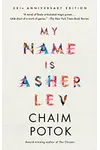
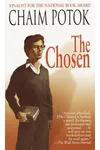
For readers new to Chaim Potok’s powerful storytelling, the single best starting point is his debut novel, The Chosen (1966). This landmark book is Potok’s most famous and beloved work, serving as a perfect introduction to his core themes: the intense struggles between traditional religious communities and the modern secular world, complex father-son relationships, and deep intellectual friendships. If you want an alternative entry point focusing on the sacrifices of artistic expression, My Name Is Asher Lev (1972) is equally brilliant and widely taught.
The Reuven Malter Duology
Chaim Potok wrote two main character-focused cycles. The first is the Reuven Malter series (sometimes listed in libraries as the Reuven Malther books), which follows two Jewish boys growing up in Brooklyn during and after World War II. They must be read in order:
- The Chosen (1966) – Introduces Reuven Malter, the son of a modern Orthodox scholar, and Danny Saunders, the brilliant heir to a Hasidic dynasty. A freak accident during a baseball game sparks an unlikely but life-altering friendship.
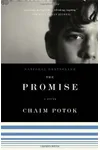
- The Promise (1969) – The direct sequel following Reuven and Danny into young adulthood. As Reuven studies to become a rabbi and Danny trains as a clinical psychologist, they face new intellectual challenges and the task of helping a deeply troubled young boy.
The Asher Lev Duology
Potok’s second series centers on the conflict between artistic genius and religious duty. Although written nearly two decades apart, these books form a continuous, chronological story:
- My Name Is Asher Lev (1972) – A young Hasidic boy in Brooklyn possesses a prodigious gift for painting. As his talent grows, he is forced to choose between the religious community he loves and the artistic destiny he cannot escape, culminating in a devastating family crisis.
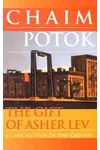
- The Gift of Asher Lev (1990) – Picking up years later, Asher is now an internationally acclaimed artist living in France. When a family tragedy forces him to return to Brooklyn, he must confront his past and decide what he is willing to sacrifice for the next generation.
The Ilana Davita Chandal Cycle
While often categorized as standalones, these two books are closely linked by the character of Ilana Davita Chandal and should be read in sequence:
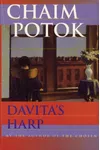
- Davita's Harp (1985) – The only Potok novel featuring a female protagonist. Set in the 1930s and 1940s, it follows Davita's coming-of-age in a politically active household where secular Communism and traditional faith clash, prompting her to search for her own path.
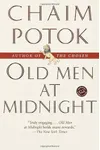
- Old Men at Midnight (2001) – Potok’s final major fiction release, comprised of three interconnected novellas. An adult Ilana Davita acts as the central link and listener, helping three different men process the historical traumas of World War II and the Holocaust.
Publication Order of Standalone Novels
Once you have read the primary duologies, Potok’s standalone novels can be read in any order. They continue to explore similar struggles of faith, exile, and cultural confrontation:
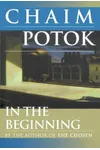
- In the Beginning (1975) – One of Potok's most personal and autobiographical novels, tracking David Lurie's childhood in the Bronx during the Great Depression and his struggle to reconcile traditional Talmudic study with modern historical criticism.
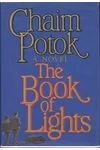
- The Book of Lights (1981) – Follows Gershon Loran, a young man studying Kabbalah, who serves as a military chaplain in post-war Korea. The book contrasts the mystical light of Jewish creation with the destructive light of the atomic bomb.
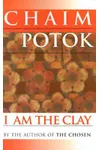
- I Am the Clay (1992) – A unique departure from Potok’s typical Brooklyn settings, this novel follows an elderly Korean couple and an injured war orphan fleeing the devastation of the Korean War.
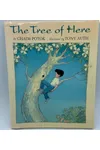
- The Tree of Here (1993) – A children's picture book illustrated by Tony Auth about a young boy named Jason dealing with the emotional challenges of moving away from his favorite tree.
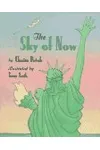
- The Sky of Now (1995) – Another children's book illustrated by Tony Auth, following a boy named Brian who learns to overcome his fear of heights through a glider ride.
Short Story Collections, Plays, and Anthologies
To round out your reading of Potok's fiction, these compilations and theatrical works offer a deeper look at his narrative range:
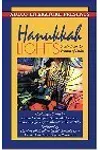
- Hanukkah Lights of Stories and Narrative About Hanukkah (1995) – A seasonal anthology featuring Jewish storytelling.
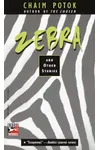
- Zebra and Other Stories (1998) – A collection of young adult short stories that explore trauma, healing, and resilience in everyday life.
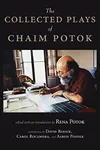
- The Collected Plays of Chaim Potok (2018) – A posthumous collection compiling Potok's stage adaptations of his own works, including the theatrical versions of The Chosen and Out of the Depths.
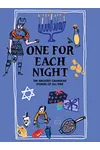
- One for Each Night (2023) – A modern anthology exploring Hanukkah themes and historical narratives.
Chaim Potok’s Non-Fiction
Potok was a trained rabbi, historian, and philosopher, and his non-fiction works provide invaluable context to the real-world history behind his novels:
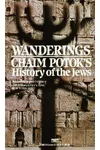
- Wanderings: Chaim Potok's History of the Jews (1978) – A massive, beautifully written historical survey tracing the survival and cultural encounters of the Jewish people over four millennia.
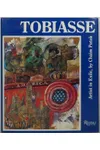
- Tobiasse: Artist in Exile (1987) – An art-critical monograph exploring the life and works of the French-Jewish artist Theo Tobiasse.
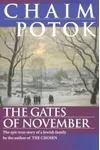
- The Gates of November (1996) – A true story based on interviews, detailing the generational rift between a loyal Soviet father and his dissident "refusenik" son, Volodya Slepak.
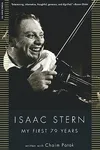
- My First 79 Years: Isaac Stern (1999) – A collaborative biography co-authored with the legendary violinist Isaac Stern.
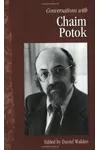
- Conversations with Chaim Potok (2001) – A collection of transcripts and interviews that shed light on Potok’s literary choices and theological perspectives.
What to Know Before You Start
Chaim Potok’s prose is famous for its deceptive simplicity. He rarely uses overly complex sentence structures, yet the emotional and philosophical weight of his stories is immense. Readers should prepare for deep dives into theology, art history, and military trauma. Potok’s time as a military chaplain in Korea heavily influenced the settings and themes of The Book of Lights and I Am the Clay. Furthermore, his novels are rarely about choosing one side over another; instead, they focus on what Potok called "core-to-core" confrontations, where characters must find a way to live in the tension between two worlds they love.