

Where to Start Reading Charles Belfoure
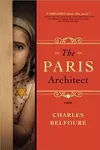
If you are new to Charles Belfoure, the absolute best place to start is his bestselling debut novel, The Paris Architect (2013). This book established his signature style: an ordinary architect protagonist swept up in extraordinary historical circumstances, forced to use their design skills to survive. It remains his most popular and critically acclaimed work, serving as a perfect introduction to his themes of reluctant heroism, moral compromise, and meticulous historical detail.
Because all of Belfoure's novels are completely standalone stories set in different eras and locations, you can read them in any order. However, following his publication order allows you to see how his writing style and thematic scope evolved over time.
Publication Order of Charles Belfoure's Novels
Charles Belfoure began publishing fiction later in life, drawing from his professional career as a historic preservation architect. Here is the order in which his novels were released:
- The Paris Architect (2013) – Set in Nazi-occupied Paris, where an architect is hired to design secret hiding spaces for Jews.
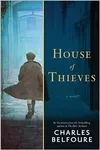
- House of Thieves (2015) – Set in Gilded Age New York, where an architect must help a criminal gang rob the mansions he and his peers designed to pay off his son's debts.
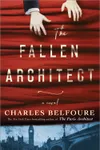
- The Fallen Architect (2018) – Set in Edwardian England, following a disgraced architect trying to clear his name after a theater collapse.
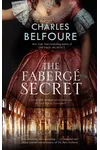
- The Fabergé Secret (2020) – Set in late Imperial Russia, focusing on a court architect who becomes involved in the revolutionary movement following a violent pogrom.
- Monsters With Human Faces (2022) – A modern-day thriller following an embassy architect kidnapped by terrorists to exploit vulnerabilities in his own secure designs.
Chronological Order by Historical Setting
For readers who prefer to journey through history linearly, you can read Belfoure's novels chronologically by the time period in which they are set. This alternative order offers a fascinating progression through different architectural eras:
- House of Thieves (Set in 1886) – Explores the opulent mansions of Gilded Age New York alongside the gritty criminal underworld of the Bowery.
- The Fallen Architect (Set circa 1900) – Captures the decline of the Victorian era and the dawn of Edwardian England, focusing on the construction and collapse of grand variety theaters.
- The Fabergé Secret (Set in 1903) – Takes readers inside the glittering Imperial court of St. Petersburg and the impoverished, tense Jewish quarters during the Kishinev pogrom.
- The Paris Architect (Set in 1942) – Focuses on Nazi-occupied France, depicting the daily paranoia, collaboration, and resistance in Paris during World War II.
- Monsters With Human Faces (Set in the Modern Era) – Shifts to contemporary espionage, secure modern embassy design, and international terrorism in Uzbekistan.
Deep Dive: The Standalone Novels
The Paris Architect (2013)
Belfoure's debut novel tells the story of Lucien Bernard, an ambitious but struggling French architect during the German occupation of Paris. Lucien does not care about politics or the war; he simply wants commissions and recognition. When a wealthy Jewish man offers him a large sum of money to design ingenious, undetectable hiding spaces in Parisian apartments, Lucien takes the job despite the extreme risk. As he creates increasingly creative designs—incorporating spaces behind walls, under floorboards, and inside furniture—Lucien is drawn into the human tragedy around him, shifting from a self-interested businessman to a reluctant hero.
House of Thieves (2015)
Set in 1886 New York City, this thriller centers on John Cross, a high-society architect who designs homes for the city's wealthiest elites. When his son runs up massive gambling debts with a ruthless criminal gang in the Bowery, John is forced to pay them off by joining their crew. His role? To use his architectural blueprints and intimate knowledge of Gilded Age mansions to help the gang execute daring heists. The book provides a striking contrast between the opulent drawing rooms of upper-class Manhattan and the dangerous slums of the late 19th-century criminal underworld.
The Fallen Architect (2018)
In Edwardian London, Douglas Layton is a brilliant theatrical architect whose reputation is destroyed when the grand theater he designed collapses on opening night, killing several people. After serving a prison sentence, Douglas is released into a world that despises him. Assuming a false identity, he takes a job painting backdrops for variety halls. However, when he discovers that the theater's collapse may have been sabotaged, he embarks on a dangerous quest to uncover the truth and restore his architectural legacy.
The Fabergé Secret (2020)
This novel moves the architectural action to St. Petersburg in 1903. Prince Dimitri Markhov is a court architect and close friend to Tsar Nicholas II. Dimitri lives a life of absolute luxury until he witnesses the horrific Kishinev pogrom against the Jewish population. Horrified by the Tsar's indifference and complicity, Dimitri is drawn toward a secret circle of reformers and revolutionaries, led by a doctor named Katya Golitsyn. Dimitri must use his access to the winter palace and Imperial designs to aid the resistance, risking his status, his career, and his life.
Monsters With Human Faces (2022)
Belfoure's first foray into the modern thriller genre follows Jeffery Travers, a world-renowned architect who specializes in designing high-security government installations and U.S. embassies. When Jeffery is kidnapped by a terrorist cell, they demand that he use his inside knowledge to help them breach the secure embassy he designed in Tashkent, Uzbekistan. With his daughter's life held hostage and intelligence agencies suspecting him of treason, Jeffery has to rely on his own wits and architectural knowledge to save his family and prevent a devastating attack.
Non-Fiction Architectural Histories
Before writing fiction, Charles Belfoure was a respected architectural historian and historic preservationist who published several academic works. For readers interested in the real-world history behind his architectural knowledge, his non-fiction books offer detailed looks at regional architecture and history:
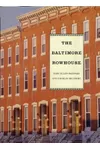
- The Baltimore Rowhouse (1999, co-authored with Mary Ellen Hayward) – An in-depth study of Baltimore's iconic residential architecture.
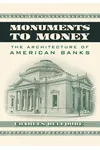
- Monuments to Money: The Architecture of American Banks (2005) – A comprehensive history of bank designs in the United States and how they reflected financial power.
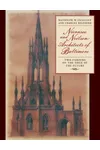
- Niernsee & Neilson, Architects of Baltimore: Two Careers on the Edge of the Future (2006) – A biographical and historical study of two influential 19th-century architects.
- Edmund G. Lind: Anglo-American Architect of Baltimore and the South (2009) – An examination of the life and work of the famed Victorian architect.
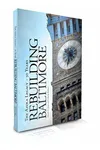
- The Azola Legacy: 50 Years Rebuilding Baltimore (2018) – A chronicle of historic preservation efforts in Baltimore.
What to Know Before You Start
Belfoure's novels are often compared to the historical epics of Ken Follett, but they carry a unique, gritty edge reminiscent of John Grisham's legal thrillers. Rather than noble, flawless heroes, Belfoure writes protagonists who are morally grey, pragmatic, and frequently self-serving at the start. Their redemption arcs are hard-earned and realistic. Additionally, readers should expect highly descriptive passages focusing on structural layouts, historic building materials, and construction techniques, which Belfoure uses to anchor his suspenseful plots in reality.