







Where to Start with Charles Bukowski
Entering the whiskey-soaked, cigarette-burned literary landscape of Charles Bukowski can feel intimidating. With over sixty books spanning novels, short stories, poetry, and letters, it is hard to know where to drop your anchor. Fortunately, there is a clear roadmap to his work, primarily centered around his famous alter ego, Henry Chinaski.
For most readers, the best place to start is with one of two novels:
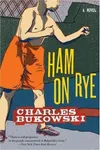
- Ham on Rye (1982): If you want to understand the psychological roots of Bukowski's cynicism, start here. It is a raw, brutal coming-of-age story that details Chinaski's childhood, his struggles with severe acne, an abusive father, and his alienation during the Great Depression.
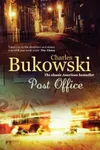
- Post Office (1971): If you want to experience Bukowski's signature style at its most immediate and darkly funny, start here. It was his first novel, written in a matter of weeks after he quit his soul-crushing job at the U.S. Postal Service, and it remains his most famous work.
The Henry Chinaski Novels: Chronological vs. Publication Order
Five of Bukowski’s seven novels (plus the screenplay Barfly) form a continuous, semi-autobiographical series following Henry Chinaski. While you can read them as standalone books without getting confused, reading them in sequence shows either the evolution of Bukowski as a writer (Publication Order) or the lifespan of his alter ego (Chronological Order).
The Chronological Order (Henry’s Life Path)
Reading in chronological order allows you to follow Henry Chinaski’s life linearly from childhood to old age:
- Ham on Rye (1982): Focuses on his childhood, high school years, and early college days.
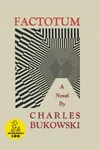
- Factotum (1975): Covers his early adulthood, job-hopping across America, and his first serious attempts at writing.
- Post Office (1971): Covers his years working as a mail clerk and carrier, drinking away his off-hours.
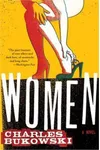
- Women (1978): Details his middle-aged years when literary success finally arrives, leading to a whirlwind of chaotic romantic relationships.
- Hollywood (1989): Chronicles his elder years as he navigates the absurdities of the film industry during the production of a movie based on his life.
The Publication Order (Writer’s Evolution)
Many fans prefer reading in order of publication to see how Bukowski’s writing style, confidence, and perspective matured over time:
- Post Office (1971)
- Factotum (1975)
- Women (1978)
- Ham on Rye (1982)
- Hollywood (1989)
Standalone Novels, Screenplays, and Meta-Fiction
Beyond the core Chinaski saga, Bukowski’s final novel and his work in cinema offer fascinating detours:
Barfly (1983 / 1984)
Though categorized under novels in some databases, Barfly is Bukowski's original screenplay. It was published in book form around 1984, before the movie starring Mickey Rourke was released in 1987. The script follows a young Henry Chinaski drinking and fighting in Los Angeles bars. It serves as a bridge between the grit of Factotum and the meta-commentary of Hollywood, which details the nightmare of getting this very film made.
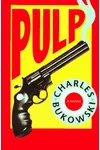
Pulp (1994)
Bukowski's final novel, completed just before his death, is a wild departure. Instead of Chinaski, it stars Nick Belane, a down-on-his-luck private investigator hired by 'Lady Death' to find the classic French author Louis-Ferdinand Céline. It is a satirical, absurd parody of hard-boiled detective fiction. While Belane shares Bukowski's cynical, drinking persona, the book is a surreal reflection on mortality. Notably, Henry Chinaski makes a brief cameo appearance, bringing the universe full circle.
The Short Story Collections
Bukowski was a master of the short-form narrative, blending dirty realism with dark humor. If you prefer bite-sized slices of life, these collections are essential. The most famous include:
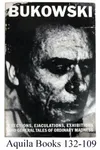
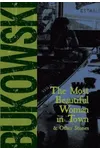
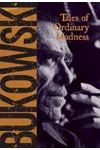
- Tales of Ordinary Madness (1983) and The Most Beautiful Woman in Town (1983): Originally published together in 1972 as Erections, Ejaculations, Exhibitions, and General Tales of Ordinary Madness, these stories showcase Bukowski at his most raw, experimental, and shocking.
- South of No North (1973): A tighter, more focused collection that contains some of his best-written prose, detailing the lives of down-and-out laborers, grifters, and dreamers.
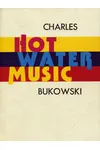
- Hot Water Music (1983): A late-career collection focusing on themes of struggle, artistic frustration, and the bizarre nature of human relationships.
What to Know Before You Start: The Posthumous Editing Controversy
Before diving into Bukowski’s massive catalog of posthumous poetry and prose (which includes collections like What Matters Most is How Well You Walk Through the Fire and The Continual Condition), readers should be aware of a major controversy. After Bukowski died in 1994, his long-time publisher John Martin of Black Sparrow Press edited and released dozens of posthumous volumes.
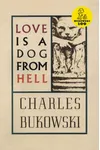
Scholars and fans comparing the original manuscripts to the published books discovered that Martin had heavily edited the poems—altering titles, cutting stanzas, and changing Bukowski’s trademark minimalist style to sound more conventional. If you want to read his poetry exactly as he typed it on his manual typewriter, seek out collections published during his lifetime (such as Love Is a Dog from Hell or The Last Night of the Earth Poems) or look for Storm for the Living and the Dead (2017), which was edited by Abel Debritto to faithfully restore Bukowski's original manuscripts.