
How to Read Charles M. Blow's Books
As an acclaimed columnist for The New York Times, Charles M. Blow has published two major non-fiction books. Because these works represent distinct styles—one being an intimate personal memoir and the other a bold socio-political manifesto—readers often wonder where to start. We recommend reading them in publication order to fully appreciate how his personal history shapes his political views.
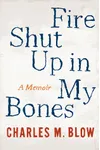
- Fire Shut Up in My Bones (2014) – This memoir covers Blow's upbringing in Louisiana, detailing his personal struggles, trauma, and journey of self-acceptance.
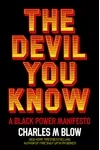
- The Devil You Know: A Black Power Manifesto (2021) – This political manifesto builds on historical patterns to propose a major demographic shift for Black Americans.
Detailed Breakdown of the Books
Fire Shut Up in My Bones (2014)
Blow's debut book is a lyrical, deeply vulnerable memoir about growing up in the small, segregated town of Gibsland, Louisiana. The narrative follows his childhood and adolescence during the 1970s and 80s, exploring themes of poverty, childhood abuse, and his evolving identity as a bisexual Black man. The book received widespread critical acclaim for its poetic prose and emotional honesty, winning a Lambda Literary Award and establishing Blow as a major voice in contemporary American literature.
The memoir's impact extended to the stage when it was adapted into a landmark opera composed by Terence Blanchard with a libretto by Kasi Lemmons. The production premiered at the Metropolitan Opera on September 27, 2021, making history as the first opera by a Black composer to be performed at the Met in its 138-year history.
The Devil You Know: A Black Power Manifesto (2021)
Shifting from the personal to the political, Blow's second book is a hard-hitting manifesto that encourages Black Americans to reverse-migrate from northern and western cities back to the American South. Blow argues that by consolidating their numbers in Southern states, Black citizens can build substantial, unbreakable political and electoral power to combat systemic racism. The book draws on historic migrations, political demographics, and personal observations to present a tactical roadmap for civil rights in the modern era.
What to Know Before You Start
Although these two books are standalone works and do not share a continuing plot, they are deeply connected. Reading his memoir first provides the crucial emotional context for his manifesto. Understanding Blow's Southern roots, his relationship with his family, and his early experiences with systemic inequality makes the political strategy in his second book feel urgent and personally grounded.
For readers who want to follow Blow's ongoing commentary, his regular columns in The New York Times (where he has written since 2008) serve as excellent companion reading, analyzing current headlines through the same analytical framework found in his books.