






How to Start Reading Charles Walter Williams
Unlike his close friends C.S. Lewis and J.R.R. Tolkien, Charles Walter Stansby Williams did not write secondary-world fantasy. Instead, he pioneered what are frequently called "theological thrillers" or "metaphysical thrillers"—stories where supernatural relics, Platonic archetypes, and spiritual forces disrupt the mundane reality of early 20th-century England. Because these works are conceptually dense and highly symbolic, finding the right starting point is essential for new readers.
While his seven novels are often retrospectively cataloged under the series title Aspects of Power, they do not share a continuous plot or recurring main characters. They are thematic standalones that can be read in any sequence. However, three distinct pathways are highly recommended depending on your reading style:
1. The Plot-First Path (Most Accessible)
If you prefer an engaging narrative with clear stakes to ground the high-concept theology, start here:
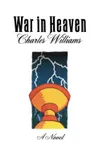
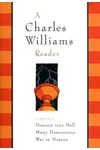
- War in Heaven (1930): Often cited as the most approachable entry point, this novel plays out like a classic detective murder mystery, except the murder investigation leads to the discovery of the Holy Grail in a quiet English country parish. It offers a fast-paced conflict between good and evil that eases readers into Williams's prose style.
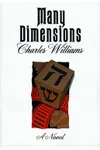
- Many Dimensions (1931): Acting as a thematic companion to War in Heaven, this book follows a mystical stone (the Stone of Suleimon) that allows its possessor to heal the sick, move through time, and teleport. It reads like a supernatural thriller about the ethics of power and greed, featuring a strong, level-headed heroine.
2. The Masterpiece Path (The Deep End)
If you want to experience Williams at the absolute height of his literary and psychological powers, you can start directly with his most celebrated masterpieces:
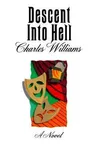
- Descent into Hell (1937): Widely regarded as Williams's finest work, this deeply atmospheric novel explores spiritual isolation, self-destruction, and the haunting reality of a "timeslip" where past and present collide. It is a profound, chilling look at how choices shape a soul's destiny, introducing his core theology of substituted love.
- All Hallows' Eve (1945): Written during the Blitz and published just before his death, this novel begins in a ghostly, dreamlike London where two deceased young women must navigate the afterlife while a sinister occultist attempts to conquer both the physical and spiritual realms. It was highly praised by T.S. Eliot for its redemptive vision.
3. The Intellectual Path (The Platonic Entry)
For readers who appreciate philosophical symbolism and the collision of cosmic ideals with earthly reality:
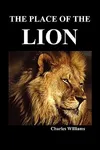
- The Place of the Lion (1931): This novel was so enthusiastically received by C.S. Lewis that it prompted him to write the fan letter that initiated Williams's entry into the Inklings. The story focuses on Platonic archetypes (represented as giant beast forms) breaking into the physical world, threatening to consume and reabsorb earthly reality unless they can be brought back into balance.
The Aspects of Power Novels in Publication Order
If you prefer to watch the progression of Williams's style and the evolution of his complex theological frameworks, reading the novels in publication order is a highly rewarding experience. While written in a slightly different sequence, the publication order spans from 1930 to 1945:
- War in Heaven (1930): The Grail appears in modern England, sparking a battle between occultists and devout believers.
- Many Dimensions (1931): A continuation of metaphysical themes, centered on the dangerous exploitation of a sacred, miracle-working artifact.
- The Place of the Lion (1931): Universal ideas and primeval forces manifest as massive beast spirits, disrupting a quiet English town.
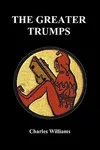
- The Greater Trumps (1932): An exploration of the spiritual and magical forces locked within the original Tarot deck, featuring a mystical dance that holds the universe together.
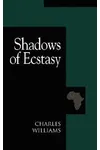
- Shadows of Ecstasy (1933): Although published fifth, this was actually the first novel Williams wrote. It details a mysterious African conqueror who seeks to overthrow Western civilization using raw, primal energy and spiritual vitality.
- Descent into Hell (1937): A brilliant, complex psychological study of damnation and salvation in a quiet suburb, featuring a spectral double and ancestral spirits.
- All Hallows' Eve (1945): A haunting post-war tale of ghosts, redemption, and magical conflict in London.
Beyond the Novels: Standalones, Poetry, and Plays
For readers who wish to explore the full breadth of Williams's bibliography beyond his seven core metaphysical novels, several other works provide valuable depth:
The Playful Standalone
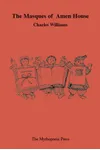
- The Masques of Amen House (Written 1920s, Published 2000): A lighter, posthumously published work written during his time at Oxford University Press. These are playful, verse masques written for his colleagues, reflecting his early poetic experimentation and theatrical sense of humor.
The Arthurian Poetry Cycle
Many scholars consider Williams’s complex Arthurian poetry to be his most ambitious artistic achievement. Rather than retelling Mallory, Williams weaves a dense, mystical mythos where the physical realm of Britain (Logres) is spiritually mapped onto the human body:
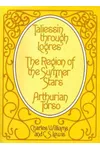
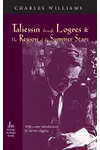
- Taliessin Through Logres (1938) & The Region of the Summer Stars (1944): Often collected together, these poems are notoriously difficult but deeply beautiful. They outline the rise and fall of Camelot, the quest for the Grail, and the poetic vision of the Byzantine Empire as the symbol of divine order.
The Plays
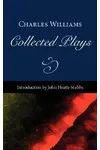
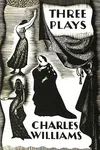
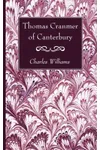
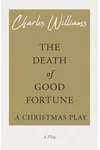
Williams was also a prolific dramatist, writing plays that were often performed at festivals or for religious events. His dramatic works, including Collected Plays (1963), Thomas Cranmer of Canterbury (1936 / published in collections later), and The House by the Stable, explore historical figures and Christian themes through a poetic, highly stylized lens.
What to Know Before You Start
To fully appreciate Williams's writing, it helps to keep a few vital concepts and caveats in mind:
- Co-inherence and Substitution: The core of Williams’s theology is "co-inherence"—the belief that all human beings are spiritually interconnected. In his novels (especially Descent into Hell), characters can practice "substitution," literally carrying another person's fear, grief, or physical burden across time and space.
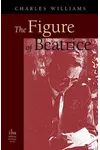
- Romantic Theology: Williams believed that human romantic love is a direct pathway to understanding divine love. This idea is heavily explored in his non-fiction work The Figure of Beatrice (1943), which examines Dante’s love for Beatrice, and it serves as the underlying current of his fiction.
- Tone and Difficulty: Williams's prose can be dense, archaic, and occasionally opaque. He writes with a poetic intensity that demands active attention. If you find yourself lost, focus on the narrative flow of the characters rather than trying to unpack every theological symbol on the first pass.
- The "Other" Charles Williams: When searching for his books online or in catalogs, make sure you do not confuse him with the American hard-boiled crime novelist Charles Williams (author of The Hot Spot and Hell Hath No Fury). The Inkling is always cataloged under Charles Walter Stansby Williams.