

Where to Start Reading Charles Yu
Because Charles Yu writes speculative, genre-bending fiction that plays with form—ranging from tech-support manuals to screenplay formats—choosing where to start depends on your personal taste. We recommend two distinct entry points:
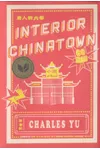
- For Satire and Social Commentary Seekers: Start with Interior Chinatown (2020). Written in the form of a screenplay, this National Book Award-winning novel is an incredibly sharp, fast-paced, and emotional critique of Asian-American stereotypes in Hollywood and broader culture. It is highly accessible despite its unique structure and serves as the perfect introduction to his contemporary work.
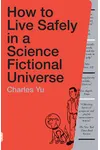
- For Science Fiction and Time-Travel Fans: Start with How to Live Safely in a Science Fictional Universe (2010). If you love existential sci-fi, quantum physics jargon mixed with family drama, and self-referential humor, this novel is the ultimate starting point. It reads like a mix of Douglas Adams and Kurt Vonnegut.
The Standalone Novels
Unlike many science fiction authors, Charles Yu does not write sprawling multi-volume series. Instead, his long-form work consists of standalone novels that experiment heavily with formatting and perspective.
How to Live Safely in a Science Fictional Universe (2010)
This debut novel introduces us to a protagonist also named Charles Yu, a time-machine repairman who spends his days traveling through Minor Universe 31. The story is structured partly as a personal narrative and partly as a user manual. When Charles accidentally shoots his future self, he becomes trapped in a time loop and must find a way to escape while searching for his missing father. It is a deeply touching exploration of memory, regret, and family dynamics disguised as a high-concept time-travel adventure.
Interior Chinatown (2020)
Yu’s second novel won the National Book Award for Fiction and solidifies his reputation as a literary innovator. The book follows Willis Wu, a bit-part actor stuck playing generic roles like "Generic Asian Man" or "Background Oriental Making a Gesture" on a procedural cop show called Black and White. Willis dreams of one day becoming "Kung Fu Guy," the pinnacle of achievement for an Asian actor in this world. The novel uses screenplay formatting to blur the lines between performance, media representation, and real-world racial identity.
The Short Story Collections
Before and between his novels, Charles Yu established himself as a brilliant short-form writer. His collections are highly recommended if you want to sample his style in bite-sized chunks.
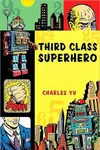
Third Class Superhero (2006)
This debut collection contains eleven stories that showcase Yu’s early experimentation with speculative concepts. The title story follows a low-tier superhero named "Moisture Man" who struggles to get promoted to the big leagues. Other stories in the collection explore themes of bureaucracy, identity, and the mundane struggles of ordinary people living in absurd, heightened realities.
Sorry Please Thank You (2012)
Yu's second collection features stories that blend deadpan humor with technological anxieties. Key stories include "Standard Loneliness Package," which depicts a near-future where wealthy individuals outsource their painful emotions (grief, anger, embarrassment) to underpaid workers in India. It also contains "Hero Absorbs Major Damage," a meta-fictional take on a video game character facing an existential crisis.
Standalone Stories and Digital Novellas
In addition to his collections, Yu has published several notable standalone pieces in digital formats and anthologies:
- "Hero Absorbs Major Damage" (2012): While included in his 2012 collection, this story also received a special interactive release by Electric Literature. It details the struggle of "The Hero" in a classic fantasy role-playing game who begins to question the point of his endless combat loops.
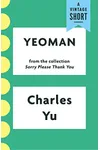
- "Yeoman" (2015): Released as a standalone "Vintage Shorts" eBook, this story is a direct nod to Star Trek's classic "redshirt" trope. It tells the story of an expendable crew member aboard a starship navigating the dangers of space exploration under a highly unpredictable captain.
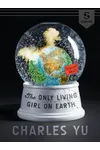
- "The Only Living Girl on Earth" (2021): Published as a Scribd Originals digital novella, this story is set in the year 3020. The narrative follows Jane, a young woman who runs a souvenir shop on a largely abandoned Earth, catering to alien tourists who visit the planet to experience human history.
Complete Publication Order
If you prefer to watch Charles Yu's style and themes evolve over time, the best path is to read his works in chronological order of publication:
- Third Class Superhero (Short Story Collection, 2006)
- How to Live Safely in a Science Fictional Universe (Novel, 2010)
- Sorry Please Thank You (Short Story Collection, 2012)
- "Hero Absorbs Major Damage" (Short Story/Novella, 2012)
- "Yeoman" (Short Story/eBook, 2015)
- Interior Chinatown (Novel, 2020)
- "The Only Living Girl on Earth" (Digital Novella, 2021)
What to Know Before You Start
Charles Yu's writing style is highly metatextual, meaning he frequently references the structure of the story itself. You will encounter diagrams, fake instruction manuals, screenplay headers, and characters who are conscious of their status as fictional constructs. If you prefer traditional linear plots with straightforward prose, his work might take some adjusting to. However, beneath the structural tricks lies a deep emotional core centered on immigrant experiences, father-son relationships, and the search for authentic identity. Additionally, Yu is an active television writer who has written for HBO's Westworld and served as the creator and showrunner for the 2024 TV adaptation of Interior Chinatown, which makes his screenwriting influences in the books even more fascinating to observe.