

Where to Start with Charlie Kaufman
Charlie Kaufman is widely celebrated for rewriting the rules of cinema with his surreal, introspective, and metafictional screenplays. However, his work extends beautifully onto the printed page. Whether you are looking to read his published screenplays to experience his raw literary voice before it was translated to film, or you want to dive straight into his dense, maximalist prose, there are distinct starting points depending on your preference.
For those interested in his prose, starting with his short story "This Fact Can Even Be Proved by Means of the Sense of Hearing" in the 2024 anthology A Cage Went in Search of a Bird: Ten Kafkaesque Stories is highly recommended. It offers a shorter, more digestible taste of his signature existential anxiety and self-reflective humor. If you want to jump straight into his long-form fiction, his 705-page debut novel, Antkind (2020), is your only option—though it is a challenging, chaotic journey that rewards patience.
For film lovers and screenwriters, the absolute best place to start is the published shooting script for Eternal Sunshine of the Spotless Mind (released in book form in 2003/2004) or Being John Malkovich (2000). These scripts showcase Kaufman's brilliant pacing and thematic depth in a format that is incredibly accessible, serving as the perfect gateway to his more complex published scripts like Adaptation. or Synecdoche, New York.
Charlie Kaufman Books in Publication Order
Kaufman's bibliography spans stand-alone prose, official screenplay books (often featuring production notes and interviews), and anthologies. Here is the chronological publication order of his books:
The Standalone Novels
- Antkind (2020) – Kaufman’s massive debut novel follows a neurotic, film-obsessed critic named B. Rosenberger Rosenberg who stumbles upon a three-month-long stop-motion film. When the film is tragically destroyed, he attempts to reconstruct it entirely from memory, spiraling into a bizarre, hilarious, and surreal landscape of clones, time travel, and consumerism.
The Screenplay Books and Companion Volumes
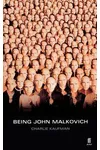
- Being John Malkovich: The Shooting Script (2000) – The screenplay of Kaufman's breakout film, released by Newmarket Press, offering a look at the puppeteer who discovers a portal into the mind of actor John Malkovich.
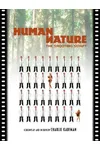
- Human Nature: The Shooting Script (2002) – The published screenplay for the film directed by Michel Gondry, detailing a comical study of human sexuality, civilization, and wild upbringing.
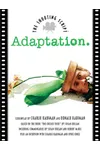
- Adaptation.: The Shooting Script (2002) – A masterclass in meta-writing, where Kaufman writes himself into the script as a struggling writer trying to adapt Susan Orlean's book The Orchid Thief.
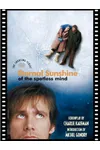
- Eternal Sunshine of the Spotless Mind: The Shooting Script (2003/2004) – A detailed publication of his Oscar-winning script, containing production notes, director Michel Gondry's introduction, and an insightful Q&A with Kaufman.
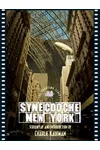
- Synecdoche, New York: The Shooting Script (2008) – The official companion script to Kaufman's directorial debut, following a theater director who constructs a life-size replica of New York inside a massive warehouse.
- Scenes of Anomalisa (2016) – Published by Universe Publishing, this serves as an official visual and textual companion book to the stop-motion animated film, featuring an abridged version of the screenplay, puppet construction photos, and a foreword by Kaufman.
Anthologies and Short Stories
- A Cage Went in Search of a Bird: Ten Kafkaesque Stories (2024) – A collection commissioned to mark the centenary of Franz Kafka's death. Kaufman contributed the short story "This Fact Can Even Be Proved by Means of the Sense of Hearing."
Reading Order Caveats & Thematic Connections
Because all of Charlie Kaufman's works are standalones, there is no strict continuity or narrative order you must follow. However, his work contains strong thematic evolutions that make certain reading orders highly rewarding. You can think of his career as moving from structured, collaborative screenplays to completely uninhibited, maximalist solo prose.
If you read his screenplays in chronological order (from Being John Malkovich to Synecdoche, New York), you can track how Kaufman slowly broke free of traditional cinematic boundaries. This makes the transition to his novel Antkind feel like a natural, if extreme, next step. Antkind takes the meta-commentary of Adaptation. and the overwhelming, reality-bending scale of Synecdoche, New York, and stretches them to their absolute limits without the constraints of a film budget or run-time.
The Appeal of the Newmarket "Shooting Script" Series
For readers deciding whether to buy the physical screenplay books, it is worth noting that they are not mere transcripts of the movies. Newmarket Press's Shooting Script editions were curated specifically for cinephiles and writers. These books are highly sought-after collector's items because they contain material you cannot find online, including original scene layouts that were altered in the final cut, detailed production diaries, and exclusive Q&As where Kaufman discusses his creative blocks, his collaboration with directors, and the underlying philosophy of his stories.
What to Know Before You Start
Before diving into Kaufman's writing, it helps to prepare for his specific style. His narratives frequently feature unreliable, deeply neurotic, and self-loathing protagonists who struggle with identity, aging, and artistic integrity. You should expect sudden shifts in reality, dreams blending with waking life, and a heavy dose of dark, existential humor. If you are starting with his novel Antkind, be prepared for a dense stream-of-consciousness style that parodies modern film criticism, gender politics, and commercial culture, often changing its logic page by page.