

Where to Start Reading Charlotte Brontë
For most readers, diving straight into the windswept moors of the Victorian era begins with a single masterpiece. If you are new to Charlotte Brontë, there is a clear and universally recommended starting point, followed by pathways that lead into her more complex, psychological, and autobiographical works.
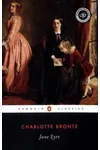
1. The Essential Start: Jane Eyre (1847)
Without question, you should start with Jane Eyre. Published under the pseudonym Currer Bell, this novel is the most accessible, emotionally resonant, and famous of her works. It introduces you to Brontë's signature themes: independent women defying social expectations, intense psychological realism, Gothic atmosphere, and raw romance. Reading this first establishes a benchmark for her style and voice.
2. The Brussels Experience: The Professor and Villette
After experiencing Jane's journey, the next logical step is to explore Brontë's Brussels-inspired writing. While living in Belgium, Charlotte fell in love with her married tutor, an experience that heavily inspired two novels. You have two options here:
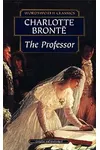
- Option A (Chronological by Composition): Read The Professor first. Written before Jane Eyre but rejected by publishers, it was only published posthumously in 1857. It offers a male perspective on the Brussels school system and shows Brontë's developing voice. Following it with Villette (1853) shows how she masterfully reworked the same themes into a much darker, richer, and more complex narrative.
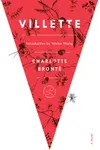
- Option B (Thematic / Quality-First): Jump straight to Villette. Many scholars consider Villette to be Charlotte's true artistic masterpiece, even surpassing Jane Eyre in its psychological depth, handling of loneliness, and unreliable narration. Save The Professor as an interesting curiosity for the end of your reading journey.
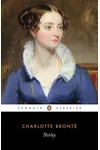
3. The Industrial Transition: Shirley (1849)
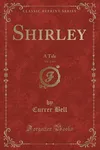
Read Shirley after Jane Eyre or Villette. It is Charlotte's only historical novel, set during the industrial Luddite riots of the Napoleonic Wars. It is unique in her bibliography as it is written in the third person (unlike the intimate first-person narratives of Jane and Lucy Snowe) and focuses heavily on female friendship and social class issues. It is a slower burn but highly rewarding for its historical detail.
Publication Order of Standalone Novels
Reading Charlotte Brontë's novels in publication order allows you to see how her public persona as Currer Bell evolved. Although The Professor was written first, its posthumous publication means it is traditionally placed after her major works. The list below follows the order in which the books were first presented to the public:
- Jane Eyre (1847) – Charlotte's debut published novel and an immediate literary sensation.
- Shirley (1849) – Written during a period of immense personal tragedy as Charlotte lost her siblings Branwell, Emily, and Anne in rapid succession.
- Villette (1853) – The final novel published during her lifetime, centering on the fiercely independent yet isolated Lucy Snowe.
- The Professor (1857) – Published posthumously by her husband, Arthur Bell Nicholls, though it was the first novel she ever completed.
- Emma (1860) – A two-chapter manuscript fragment published posthumously in Cornhill Magazine, introduced by William Makepeace Thackeray.
Understanding the Angrian Juvenilia (Short Stories and Novellas)
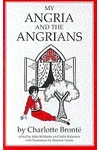
Before publishing her classic novels, Charlotte and her brother Branwell created a massive, highly detailed imaginary federation called Glass Town, which eventually evolved into the kingdom of Angria. Meanwhile, their sisters Emily and Anne created their own world of Gondal. The Angrian tales are full of political intrigue, high-society gossip, passion, and military campaigns.
How to Approach the Angrian Cycle
Because these stories were written in tiny, hand-bound notebooks for personal amusement, they were not intended for formal publication. The years attached to them reflect when Charlotte composed them, though most were not published for the general public until the 20th and 21st centuries. The best way to read these is not by seeking out individual original manuscripts, but by purchasing a curated, scholarly collection such as Tales of Glass Town, Angria, and Gondal (edited by Christine Alexander).
The writing in these stories is chaotic and experimental, serves as a literary laboratory for her mature novels. For example, the recurring character of the Duke of Zamorna in the Angrian tales is a clear precursor to the brooding Mr. Rochester in Jane Eyre.
Chronological Composition of Major Juvenilia
If you want to track the development of Angria, read these key pieces in the order they were written:
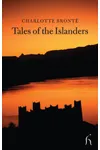
- Tales of the Islanders (1830) – Early writings capturing the childhood games and real-life inspirations (like the Duke of Wellington) that sparked their worlds.
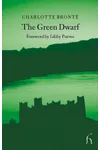
- The Green Dwarf (1830) – A short novel set in Glass Town, blending historical fiction with romance and military conflict.
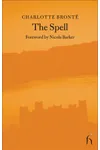
- The Spell (1830) – A tale exploring the division of characters and political struggles in the early kingdom.
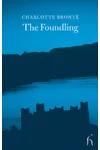
- The Foundling (1830) – A story focused on identity, displacement, and survival in the Glass Town federation.
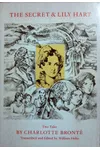
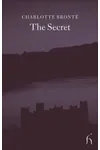
- The Secret & Lily Hart (1830) – Early romantic and domestic tales showing Charlotte's early experiments with character relationships.
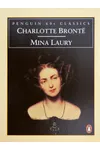
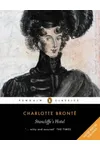
- Mina Laury (1838) – One of the most mature Angrian stories, exploring the emotional complexity of a woman devoted to the Duke of Zamorna.
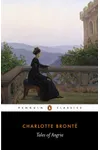
- Tales of Angria (Written 1838–1839, published collectively in 1939) – The culminating narratives of the Angrian saga before Charlotte formally bid farewell to her imaginary world in her essay 'Farewell to Angria'.
Emma: The Unfinished Fragment and its Completions
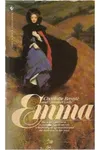
At the time of her death in 1855, Charlotte Brontë was working on a new novel tentatively titled Emma. She completed only two chapters (about 20 pages), detailing the arrival of a mysterious girl named Matilda Fitzgibbon at a boarding school. Because the setup was so intriguing, subsequent writers have taken Brontë's fragment and completed the novel:
- Emma by 'Another Lady' (Constance Savery): Published in 1980, this version was completed by children's author Constance Savery. It stays true to the traditional Victorian tone and resolves the mystery of Matilda's true identity in a classic romantic style.
- Emma Brown by Clare Boylan: Published in 2003, this completion uses Brontë's chapters as the foundation for a much darker Victorian mystery, delving into the gritty underworld of London and the exploitation of children.
Poetry, Non-Fiction, and Crucial Prequels
To fully appreciate the Brontë canon, readers should look beyond prose fiction:
- Poems by Currer, Ellis, and Acton Bell (1846): The collaborative poetry book that marked the first time the Brontë sisters appeared in print. Charlotte contributed 19 poems. It initially sold only two copies, but remains a vital piece of literary history.
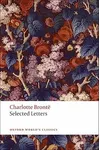
- Selected Letters: To understand the real woman behind Currer Bell, reading her letters to her friend Ellen Nussey and her publisher George Smith is highly recommended. They detail her grief, her struggles with fame, and her sharp opinions on Victorian society.
- Wide Sargasso Sea by Jean Rhys (1966): While not written by Brontë, this famous postcolonial and feminist novel serves as a prequel to Jane Eyre, telling the tragic backstory of Antoinette Cosway (Bertha Mason, the 'madwoman in the attic') in Jamaica. It is widely considered essential companion reading.