


Where to Start with Charmaine Craig
Because all of Charmaine Craig’s novels are standalone works, there is no single "correct" order to read them. However, depending on what type of reader you are, there are two ideal entry points into her work:
- For Lovers of Epic Historical Sagas: Start with Miss Burma (2017). This is Craig’s most famous and critically acclaimed novel, drawing deeply from her own family history. It is a sweeping, emotional, and politically complex look at the history of modern Burma through the eyes of one family.
- For Fans of Taut Psychological Drama: Start with My Nemesis (2023). If you prefer concise, character-driven stories with intense focus on interpersonal relationships, subtext, and moral ambiguity, this 50,000-word contemporary novel is the perfect introduction.
Charmaine Craig Books in Publication Order
Reading Craig's novels in order of publication reveals her evolution as a writer—moving from a multi-perspective medieval historical recreation, to a deeply personal and epic mid-20th-century historical saga, and finally to a sharp, concise, first-person modern psychological drama.
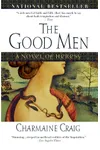
- The Good Men (2002) – Set in 14th-century France, exploring the Cathar heresy and the Inquisition.
- Miss Burma (2017) – Set in Burma from the 1930s through the 1960s, detailing the struggles of the Karen people through the lens of her maternal family.
- My Nemesis (2023) – Set in modern Los Angeles, focusing on an intense intellectual affair and feminine rivalry.
A Closer Look at the Novels
The Good Men (2002)
Craig’s debut novel, The Good Men, is set in the early 14th century in the Pyrenean mountain village of Montaillou, France. The book is inspired by actual Inquisition records—specifically the registers of Jacques Fournier, the bishop who interrogated the town's citizens. The story focuses on the Cathars, dualist heretics who referred to themselves as "the Good Men." They believed the material world was corrupt and created by Satan, while the spiritual world belonged to God.
The novel follows several characters caught between spiritual devotion, carnal desires, and the threat of the Catholic Inquisition. The core of the story revolves around Grazida Lizier, a young woman tried for heresy, and her complex, transgressive relationship with Pierre Clergue, the village rector. Clergue is a hypocritical and manipulative priest who uses his spiritual authority to seduce several women in the village. Through multiple perspectives, including a young Dominican friar named Bernard and a doctor's son named Arnaud, Craig paints a vivid, morally ambiguous picture of how religious persecution turns neighbors and families against one another.
Miss Burma (2017)
Longlisted for both the National Book Award for Fiction and the Women's Prize for Fiction, Miss Burma is Craig's most celebrated work. It is based heavily on the real lives of her mother, Louisa Benson Craig, and her maternal grandparents, Benny and Khin. Benny, a Jewish-Burmese man, and Khin, a woman from the persecuted Karen ethnic minority, marry just as World War II begins, throwing their family into the path of Japanese occupation, British colonial collapse, and the subsequent civil war.
Their daughter, Louisa, grows up to become a two-time Miss Burma pageant winner. However, instead of remaining a simple public figure, she becomes a Karen rebel leader fighting for her people’s sovereignty. The book offers an essential, humanized window into the history of Burma, shifting the narrative away from generic political summaries to highlight the personal sacrifices and resilience of individuals caught in decades of violent ethnic conflict.
My Nemesis (2023)
Craig’s third novel, My Nemesis, represents a significant stylistic shift. Moving away from historical epics, this novel is a concise, 50,000-word contemporary story set in Los Angeles. It is written as a first-person monologue by Tessa, a successful writer who prides herself on her intellect and independence.
Tessa develops an intense, emotionally charged intellectual correspondence with Charlie, a philosophy professor, which slowly evolves into an emotional affair. Tensions boil over when Tessa meets Charlie's wife, Wah, a woman of mixed-race Asian heritage who appears to embody traditional, submissive femininity. Tessa views Wah’s devotion to her husband and their adopted daughter, Htet, as a betrayal of feminist values, leading to a deep, obsessive rivalry. As Tessa's narrative progresses, her reliability as a narrator is called into question, forcing readers to examine the boundaries of envy, intellectual superiority, and personal projection.
What to Know Before You Start
Before diving into Charmaine Craig’s bibliography, keep these elements in mind:
- Extensive Historical Grounding: Both The Good Men and Miss Burma are backed by intense historical research. While The Good Men uses translated medieval court records, Miss Burma is built on family interviews, diaries, and historical archives.
- Unreliable Narrators and Perspective: Craig excels at writing characters who are flawed and self-deceiving. In My Nemesis, the entire story is filtered through Tessa's biased lens, requiring the reader to read between the lines to find the truth.
- Diverse Settings: Craig does not limit herself to one geographic area or time period. She transitions seamlessly from 14th-century rural France, to mid-20th-century war-torn Southeast Asia, to modern-day academic Los Angeles.