
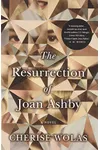

The Recommended Reading Path
Cherise Wolas has written two highly acclaimed, deeply psychological novels: The Resurrection of Joan Ashby (2017) and The Family Tabor (2018). While these books are technically standalone works set in different environments, they share a fascinating, nested connection that rewards readers who approach them in a specific order.
We highly recommend starting with Wolas's debut, The Resurrection of Joan Ashby, before moving on to The Family Tabor. In her debut, the titular character—a literary prodigy named Joan Ashby—writes a short story collection titled Fictional Family Life. These stories feature a family named the Tabors. By reading Joan Ashby first, you are introduced to the early, fictionalized iterations of these characters as conceived by Joan. When you subsequently read The Family Tabor, you experience these characters fully realized in a modern, standalone setting, giving you a unique appreciation of Wolas's creative evolution.
Publication Order of Cherise Wolas's Books
For readers who prefer to follow the exact trajectory of Cherise Wolas’s career, the publication order is straightforward:
- The Resurrection of Joan Ashby (Published: August 29, 2017)
- The Family Tabor (Published: July 17, 2018)
Chronological and Nesting Continuity Explained
The timeline of Cherise Wolas’s characters is a unique case of literary nesting rather than a straightforward chronological timeline. The Tabor family did not start with their namesake 2018 novel. Instead, their development span across multiple earlier works and draft iterations by Wolas:
1. "Aramaic" (Short Story, 2009)
The very first iteration of the Tabor family appeared in a brief short story titled "Aramaic," published in the Winter 2009 edition of Narrative magazine. In this early draft, the family possessed quasi-magical elements, such as the ability to speak Aramaic, and featured a youngest child who was a hemophiliac and created various alter egos.
2. "An Unexpected Conversion" (Short Story Draft)
Wolas continued developing the family in a longer, unpublished story draft titled "An Unexpected Conversion." In this draft, the quasi-magical components began to fade, and the characters started to solidify into the contemporary, realistic family we meet later.
3. The Resurrection of Joan Ashby (2017)
Wolas decided to "tuck" this family into her debut novel. Inside the narrative of The Resurrection of Joan Ashby, they exist as fictional characters within Joan's own written stories. Specifically, Joan's anthology Fictional Family Life includes a central figure named Simon Tabor, a 15-year-old hemophiliac, and his family.
4. The Family Tabor (2018)
The characters eventually "refused to be ignored" by Wolas, demanding a book of their own. Wolas expanded the family, stripped away any remaining metafictional layers, and placed them at the center of their own standalone story. In The Family Tabor, they are fully realized, independent protagonists dealing with legacy, identity, and secrets in Palm Springs.
Detailed Guide to the Novels
The Resurrection of Joan Ashby (2017)
Wolas's debut is a sprawling, multi-layered masterpiece that follows Joan Ashby, a brilliant young writer who achieves early literary fame with two short story collections. Joan intends to never marry or have children, dedicating her life entirely to her art. However, she falls in love with Martin, an eye surgeon, and an unexpected pregnancy shifts her trajectory. The novel explores the tension between maternal duty, personal ambition, and the burning need to create, weaving Joan's own fictional stories and drafts into the overarching narrative of her life.
The Family Tabor (2018)
Set over a single weekend in Palm Springs, California, this novel centers on the Tabor family. The patriarch, Harry Tabor, is a respected figure set to be honored as "Man of the Decade" for his work in resettling Jewish refugees. As the family gathers to celebrate, the perfect facade of their lives begins to crack. Each member of the family—Harry, his wife Roma, and their adult children Phoebe, Simon, and Camille—harbors deep-seated secrets and lies that are finally forced into the light.
What to Know Before You Start
Before diving into Cherise Wolas's bibliography, here are a few tips to enhance your reading experience:
- Expect a Slow-Burn, Character-Driven Pace: Wolas writes dense, literary fiction that focuses heavily on psychology, internal monologues, and complex family dynamics. Her style has been compared to J.D. Salinger and Joan Didion.
- Standalone Nature: Despite the metafictional link between the two books, you do not need to read one to understand the other. Both novels function perfectly as self-contained stories.
- Upcoming Work: Wolas has indicated in interviews and biographical updates that she is working on a third novel, which is planned to feature a character who first appeared in The Resurrection of Joan Ashby. However, Wolas has noted that this character will embark on an entirely new journey in their own separate world, maintaining her tradition of independent yet subtly interconnected storytelling.