






How to Read Chevy Stevens: The Recommended Reading Path
If you are diving into the intense, claustrophobic world of Chevy Stevens, you have two primary ways to approach her work: by following the psychiatrist character who loosely links her early novels, or by treating each book as an independent standalone thriller. Because of how her narratives weave subtle character threads and build emotional intensity, we recommend the following reading path to get the absolute best experience:
- Start with the Debut: Begin with Still Missing (2010). This landmark debut introduces Stevens’ signature raw, first-person storytelling style and introduces the off-screen psychiatrist character "Doc."
- Follow the Therapist Connection: Next, read Never Knowing (2011). This book brings the psychiatrist—now named Dr. Nadine Lavoie—on-screen as a supporting character helping a new protagonist.
- Read the Companion Novella: Dive into the ebook short story The Other Side (2013). This companion piece follows detective Sandy McBride and Dr. Lavoie, resolving some character details from Never Knowing.
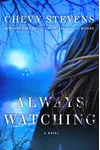
- Complete Nadine's Story: Read Always Watching (2013). In this book, Dr. Nadine Lavoie takes center stage as the main protagonist, and her own traumatic past is finally explored.
- Explore the Standalone Thrillers: Once you have finished the Nadine Lavoie trilogy, you can read the remaining standalone novels in any order. However, reading them in publication order lets you watch Stevens' style evolve as she crafts increasingly complex domestic suspense set against the rugged wilderness of Western Canada.
The Dr. Nadine Lavoie Series
While Chevy Stevens’ books are marketed and can easily be enjoyed as standalone novels, her first three full-length books and one short story share a common universe linked by psychiatrist Dr. Nadine Lavoie. Reading them in order offers a rewarding look at Nadine's progression from a silent sounding board to a fully realized hero struggling with her own deep-seated trauma.
Still Missing (2010)
Stevens' debut novel is told through the perspective of Annie O'Sullivan, a Vancouver Island realtor who is abducted during an open house and held captive in a remote mountain cabin for a year. The story is structured entirely as a series of therapy sessions between Annie and her psychiatrist, whom she refers to only as "Doc." While "Doc" remains silent and off-page, Stevens later confirmed this therapist is indeed Dr. Nadine Lavoie. The book is an intense, gritty look at survival and the aftermath of severe trauma.
Never Knowing (2011)
In her second novel, Stevens officially names her recurring psychiatrist. The story follows Sara Gallagher, an adopted woman who searches for her biological parents only to discover that her birth father is an active serial killer known as the Campsite Killer. When the killer makes contact with her, Sara turns to Dr. Nadine Lavoie for therapy and support. Nadine plays a crucial, active on-page supporting role as Sara navigates this terrifying ordeal.
The Other Side (2013)
This digital-only short story is a companion piece to Never Knowing. It shifts focus to Staff Sergeant Sandy McBride, the lead detective tracking the Campsite Killer. Sandy's professional investigation is derailed when a cold case lead regarding her mother's murder emerges. Dr. Nadine Lavoie appears to offer psychiatric insight. Note for readers: "The Other Side" contains major spoilers for Never Knowing, so it is highly recommended to read the novel first before starting this short story.
Always Watching (2013)
Nadine Lavoie finally steps into the spotlight as the main character. In this installment, Nadine treats a new patient, Heather Laurent, who has survived a group suicide and is blocked by trauma. As Nadine tries to help Heather, the details of the case mirror Nadine's own childhood growing up in a commune, forcing her to confront her own severe claustrophobia, past trauma, and the daughter she was forced to leave behind. This novel serves as a satisfying conclusion to the Nadine Lavoie thread.
The Standalone Thrillers
Following her third novel, Chevy Stevens pivoted entirely to standalone domestic thrillers. Each book is self-contained, requiring no prior reading, but they all share Stevens' signature hallmarks: high-stakes survival, family secrets, and atmospheric Canadian settings.
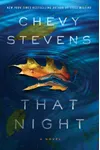
That Night (2014)
This thriller follows Toni Murphy, who, along with her boyfriend Ryan, was wrongfully convicted of murdering her younger sister when they were teenagers. Out on parole after serving seventeen years, Toni returns to her hometown on Vancouver Island. She must navigate a hostile community, avoid violating her parole, and try to find the real killer to clear her name.
Those Girls (2015)
Praised by Stephen King as "incredibly scary," this novel centers on three sisters—Jess, Courtney, and Dani—fleeing their abusive stepfather. When their car breaks down in a small town, they fall prey to a pair of depraved men. Though they manage to escape, the trauma follows them. Years later, when their past catches up with them, they must fight to protect the lives they have rebuilt.
Never Let You Go (2017)
This novel splits its timeline between the past and present. Eleven years ago, Lindsey Nash escaped an abusive, obsessive husband, Andrew, who was subsequently sent to prison. Now, Lindsey has rebuilt her life with their teenage daughter. But when Andrew is released, Lindsey is convinced he is stalking her again, leading to a tense exploration of domestic abuse and lingering fear.
Dark Roads (2021)
Set along a remote stretch of highway in British Columbia inspired by the real-life Highway of Tears, this mystery follows Hailey Shockley, who vanishes after her father dies. A year later, Hailey’s cousin Beth arrives in the small town to search for her, taking a job with the local police. Beth must piece together the town's dark history of missing women before she becomes the next victim.
The Hitchhikers (2025)
Set in the summer of 1976, this road-trip thriller follows a married couple, Alice and Tom, who are traveling across Western Canada in an RV to heal from a recent personal tragedy. They pick up two young hitchhikers, Ocean and Blue, only to discover they are actually Simon and Jenny, a violent couple on the run. Trapped in their own vehicle, Alice and Tom must engage in a psychological battle of survival against their captors.
What to Know Before You Start
Chevy Stevens’ thrillers are famous for their dark, heavy themes. Her books frequently deal with kidnapping, physical and emotional abuse, serial killers, and post-traumatic stress disorder. Stevens uses her home of Vancouver Island and the remote highways of British Columbia to evoke isolation and danger, turning the beautiful Canadian landscape into an active threat.
A key stylistic hallmark of her writing is the use of non-traditional narratives, such as constructing an entire novel through therapy sessions (as seen in Still Missing) or jumping between past and present timelines to mirror the fractured memories of traumatized characters. If you are sensitive to themes of domestic abuse or abduction, be aware that Stevens does not shy away from the gritty, painful realities of these experiences, though her focus is always on the strength and resilience of her female protagonists.