




How to Start Reading Chinua Achebe
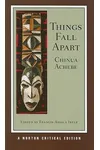
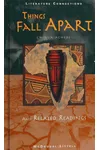
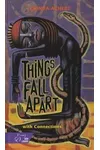
If you are looking to explore the work of Chinua Achebe, the legendary father of modern African literature, the best starting point is undisputedly Things Fall Apart. As the first book in his famous African Trilogy, it is not only his most celebrated masterpiece but also serves as the perfect gateway to his vivid portrayal of Igbo society and the complex shifts brought by British colonialism.
While his bibliography spans novels, short stories, poetry, essays, and children's literature, his work is best approached by grouping them into thematic and structural categories. Here is the ultimate guide to navigating Chinua Achebe's books in both publication and chronological order.
The African Trilogy
The centerpiece of Achebe’s literary legacy is the African Trilogy (also known simply as the Trilogy). These three novels trace the history of a changing Nigeria, from the arrival of the first white missionaries in the late nineteenth century to the eve of independence in the mid-twentieth century. Although they are connected thematically and share family lineage, they are not a continuous narrative with the same protagonist. Instead, they act as a generational saga of the Igbo people.
Option 1: Publication Order (Recommended)
Reading the trilogy in the order it was published allows you to experience how Achebe's style, narrative voice, and political critique evolved. The publication order is as follows:
- Things Fall Apart (1958) – Introduces the proud Igbo warrior Okonkwo and depicts the initial impact of British colonialism and Christian missionaries on the fictional village of Umuofia.
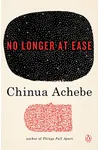
- No Longer at Ease (1960) – Jumps forward to the 1950s in Lagos and Umuofia, following Obi Okonkwo (Okonkwo's grandson) as he returns from an education in England to face the corruption of a civil service role on the eve of Nigerian independence.
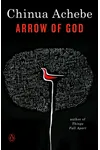
- Arrow of God (1964) – Travels back in time to the 1920s, focusing on Ezeulu, the chief priest of the god Ulu in the village of Umuaro, as he struggles against colonial administration and local political rivalries.
Option 2: Chronological / Historical Order
For readers who want to follow the historical timeline of colonial interference in Nigeria sequentially, the chronological order shifts the final book to the middle of the reading path:
- Things Fall Apart (1958) – Set in the late 1890s / early 1900s (initial colonial contact).
- Arrow of God (1964) – Set in the 1920s (deepening British administrative grip and cultural clashes).
- No Longer at Ease (1960) – Set in the late 1950s (pre-independence transition and modernization).
While the chronological order makes logical sense historically, reading Arrow of God second can feel like a sudden stylistic shift, as it is Achebe's most complex and spiritually dense novel. Reading No Longer at Ease second offers a direct ancestral bridge because the protagonist is Okonkwo’s grandson, keeping the familial thread fresh in the reader's mind.
Post-Colonial Standalone Novels
After completing the African Trilogy, Achebe turned his focus to the immediate aftermath of Nigerian independence, writing two powerful standalone political novels. These books are highly recommended for readers who want to understand the political evolution of West Africa after the colonial powers departed.
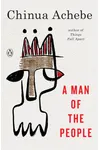
- A Man of the People (1966) – A biting satirical novel that follows a young, idealistic teacher named Odili who clashes with his former teacher, the corrupt but highly charismatic Minister of Culture, Chief Nanga. Written on the eve of Nigeria's real-life military coup of 1966, this book was so prescient that the military initially suspected Achebe of being a co-conspirator.
- Anthills of the Savannah (1987) – Published over twenty years later, this novel is set in the fictional West African nation of Kangan. It tracks the tragic paths of three childhood friends—one who becomes a military dictator, one a government minister, and one a reformist editor. It deals with the grim realities of military rule, the power of storytelling, and the critical role women play in national healing.
Short Stories and Poetry
Achebe was also an accomplished short story writer and poet. His shorter works are excellent companions to his novels, offering briefer, punchier insights into the human cost of the Nigerian Civil War (the Biafran War, in which Achebe actively campaigned for Biafra's independence).
- The Voter (1965) – A standalone short story highlighting local political bribery and electoral pressure.
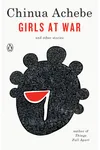
- Girls at War and Other Stories (1972) – A collection of 13 stories, with the title story "Girls at War" exploring the compromised morals and tragic choices made by ordinary citizens during the Biafran conflict.
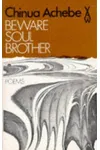
- Beware, Soul Brother and Other Poems (1972) – A collection of poetry that reflects the physical and spiritual toll of the civil war. It won the Commonwealth Poetry Prize.
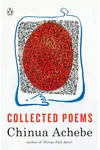
- Collected Poems (2004) – A comprehensive volume compiling his poetic works over several decades.
Children's Literature
Achebe wrote four children's books to combat the Eurocentric stories that dominated Nigerian schools during and after the colonial era. These books are accessible to younger readers but carry deep cultural lessons that adults can appreciate:
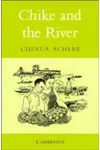
- Chike and the River (1966) – Follows an eleven-year-old boy named Chike who moves from his village to the city of Onitsha and dreams of crossing the great Niger River. It is a standalone novella.
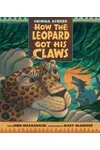
- How the Leopard Got His Claws (1973) – A co-authored story (with John Iroaganachi) that functions as a political fable about unity, power, and betrayal in the animal kingdom.
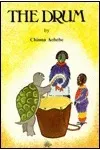
- The Drum (1977) – A fable explaining the origins of greed and sharing through a magical drum.
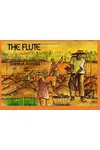
- The Flute (1977) – A traditional folk tale adaptation focusing on honesty and respect for spirits.
Essential Non-Fiction and Memoirs
For readers who want to delve into Achebe's critical mind and personal experiences, his non-fiction is essential reading. He was a fierce critic of colonialist bias in Western classics and a passionate advocate for African self-determination.
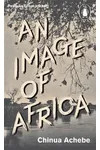
- An Image of Africa: Racism in Conrad's Heart of Darkness (originally an essay in 1975) – A groundbreaking critique that permanently changed how Joseph Conrad's work is taught in academic circles.
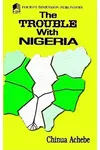
- The Trouble with Nigeria (1984) – A brief, direct analysis of the leadership failures holding Nigeria back from achieving its true potential.
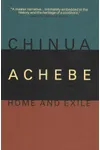
- Home and Exile (2000) – A collection of lectures detailing his childhood, the impact of empire, and the importance of Africans reclaiming their own narratives.
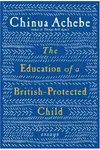
- The Education of a British-Protected Child (2009) – A collection of personal essays exploring his upbringing under colonial rule and his journey as a writer.
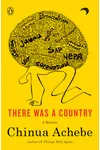
- There Was a Country: A Personal History of Biafra (2012) – Achebe's final book, a powerful memoir that combines personal recollection with historical analysis of the tragic Nigerian-Biafran War.
What to Know Before You Start
Before diving into Achebe's works, it is helpful to keep a few key concepts in mind. First, Achebe’s prose heavily incorporates Igbo proverbs and oral storytelling traditions. In Igbo culture, proverbs are "the palm-oil with which words are eaten," meaning they are essential for smoothing social interactions and conveying complex wisdom. Do not rush through these passages; they are the key to understanding the characters' motivations.
Second, Achebe chose to write in English—a decision that was controversial among some of his contemporary African writers. Achebe argued that English could be fashioned into a new, unique form that could carry the weight of his African experience while reaching a global audience. Lastly, his stories do not shy away from showing the flaws within traditional Igbo society as well as the destruction wrought by colonial forces. His goal was to present a balanced, honest portrait of his culture.